No matter how much of a jet-setter they are, Fido likely won’t earn frequent flier miles, but that doesn’t mean you have to leave them at home when you travel by air. Many pets learn to adjust to airplanes and even airports, provided you bring along everything they need. When it comes to taking your dog (or cat) on an airplane, there are two options — one for smaller pets and the other for larger ones.
With the proper preparation, you can bring a small dog or cat into an airplane cabin within a carrier and place them under the seat in front of you for the duration of a flight. Keep in mind this only applies to domestic flights in the continental United States (Hawaii has different rules as do international destinations). Additionally, we’re not covering here the guidelines for service animals.
All the major domestic airlines have their own rules for traveling with a small dog or cat, and it’s important to understand them before leaving. You must follow these rules precisely, or you and your pet will not be allowed to board the aircraft, even if you’re a ticketed passenger.
Take a trip to the vet first
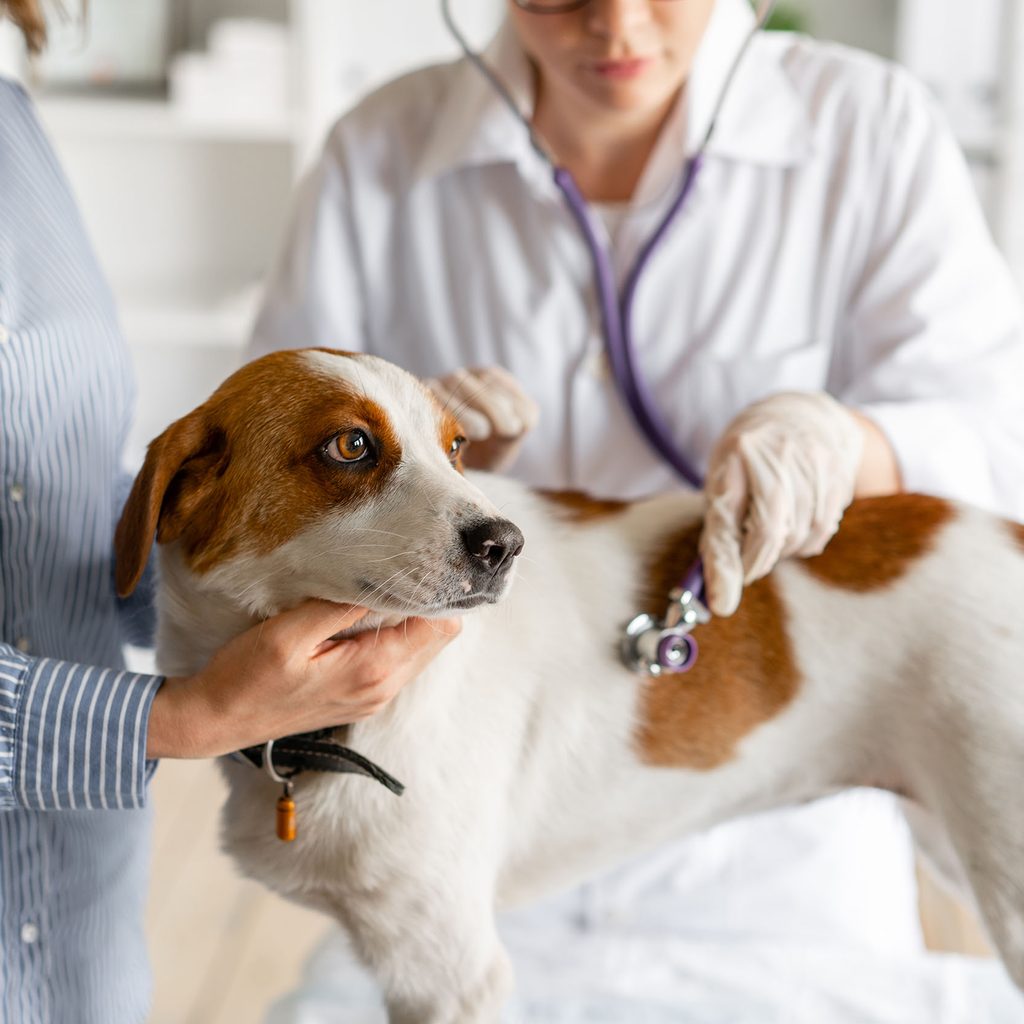
Your pet isn’t ready to hop aboard until they get approval from the vet. In most cases, this routine checkup won’t sound any alarm bells or require further testing. However, you should confirm that your pup will do well on the plane. Elderly animals and those with breathing problems or heart conditions are most at risk and must be evaluated carefully. If your vet recommends against taking them, find a really good sitter or postpone your trip until they can travel safely.
Before you both embark, ensure they are up to date on all vaccines, and bring that documentation to the airport. It’s also a good idea to request a health certificate from your veterinarian, as some airlines require you to present this document upon checking in for a flight.
In addition to providing a once-over, your dog doctor can help you navigate your beastie’s travel anxiety. Many dogs find airports overstimulating (frankly, we do, too), so they might benefit from a little assistance staying calm. This could include a ThunderShirt , dog CBD treats, or pharmaceuticals. Some vets have no problem with you giving a pet a prescribed sedative before or during a flight, while others may have concerns about the animal’s ability to adjust for changes in cabin air pressure if they are heavily sedated. Once your pet gets accustomed to air travel, chances are they’ll fall asleep on their own after takeoff and sleep for most of the flight. Never give a pet medicine before clearing it with a professional.
Consult with your veterinarian about whether you should feed your pet and give them access to water before a long flight as well. Typically, not feeding your pet for 6 hours prior to a flight is a good strategy.
Lastly, use your intuition. If your best bud doesn’t seem up to a ride in the sky, make other plans, such as driving or leaving them at home with their favorite minder. The morning of your departure, give her your own checkup — if they’re coughing and sneezing excessively or have doggie diarrhea, it means they don’t feel well enough to go.
Safe airline travel begins with the right carrier
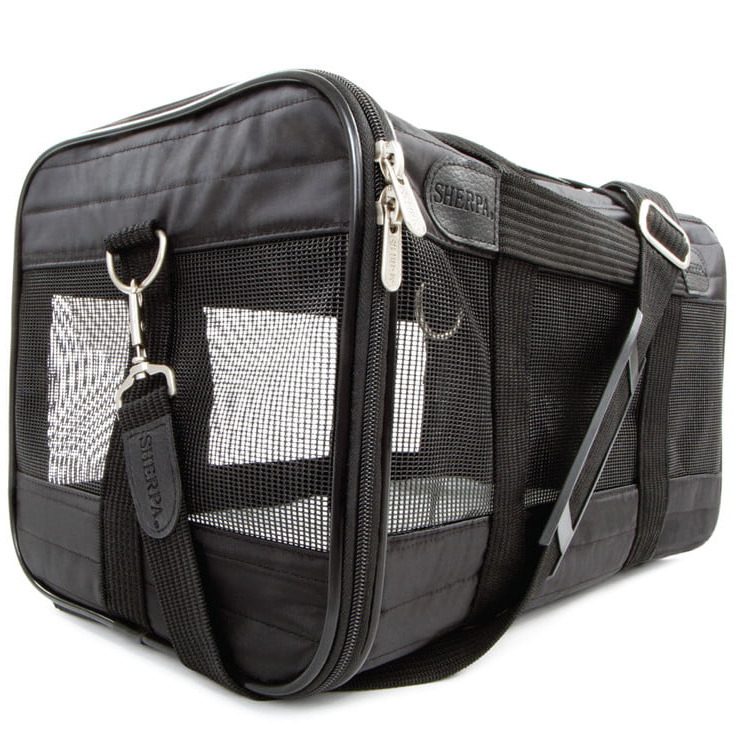
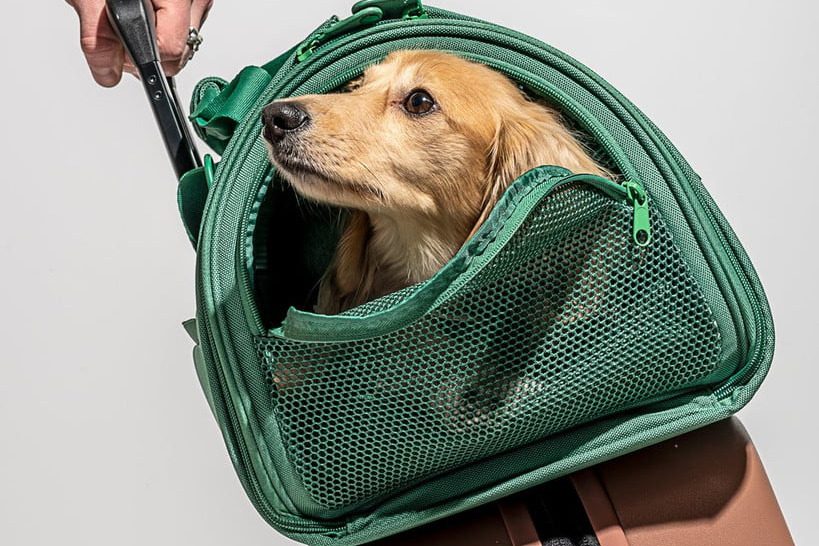
Long before your pet’s first flight, start preparing them for the travel experience by getting them accustomed to spending time in their airline-approved pet carrier. You’ll need to purchase a case designed for airline travel, that easily fits under the airline seat, that offers proper ventilation, and that your pet will be comfortable staying in. These carriers are designed for your pet to lie down in, but they need to be able to reposition themselves comfortably as well. Companies like Sherpa and Wild One offer carriers designed for airline travel that can double as general-purpose pet carriers.
“Whether in transit or trying to create a cozy space for your dog in a new environment, you want to make sure they feel at ease,” explained Veronica Becchetti, co-founder of Wild One. “It’s always important to make sure your dog’s weight and length can be accommodated by a carrier. You don’t want them to feel cramped! A good sign of a nice fit is if your pup can comfortably lie down inside, with all the panels closed. When it comes to air travel, each airline has its own set of standards for what size dog carriers they allow on planes. Choose a travel carrier designed to fit universal airline standards.”
When choosing the perfect carrier for your pet, Becchetti added, “Don’t overlook the carrier’s perks that make traveling with a pet more comfortable for you. Extra pockets, padded handles, a shoulder strap, a handy travel leash, and a luggage sleeve [for attaching the pet carrier to a wheeled carry-on] are the features included in Wild One’s Travel Carrier that can make your experience traveling with a pet so much smoother.”
“Also, you know your pet best, including their likes, dislikes, fears, and typical behaviors,” she added. “For example, if you have a pet that squirms frequently and doesn’t love being in a carrier, find one with mesh walls and zip-open flaps that are more breathable, and that includes a tether or buckle for securing them inside. For nervous pups, make sure there are multiple easy access points between you and them, so you can reach inside and give pets and treats while on the go.”
After acquiring a suitable carrier, get them acclimated to being in the case for extended periods. If you’re not sure how to do this properly, consult with a certified trainer.
Preparing for a flight
As you make your travel plans, keep your dog’s needs in mind. For example, consider the pros and cons of a nonstop flight versus a flight with one or more segments. Can your pet stay within the case long enough for a coast-to-coast, non-stop flight, or would it be better to book a flight with at least one stop where you can leave the aircraft, take the dog out of their carrier, and allow them to relieve themselves within an airport’s pet relief area (located inside many terminals), for example?
Since most domestic airlines limit the number of pets that can travel aboard a single flight, it’s important to make your reservations as early as possible. Once you book your flight, call or chat with the airline directly and inform them you’ll be traveling with a pet.
As you’re researching available flights, know that once you pass through TSA security checkpoints at an airport, you will not be allowed to go outside with your pet, so determine if and where animal relief areas can be found within the airport. These will be noted on an airport map.
When choosing your airplane seat, many pet parents prefer a window seat for several reasons. If you sit in an aisle seat, every time your pet senses another passenger walking to the bathroom, they’ll perk up or even start barking. Also, know that planes with video monitors built into the seatbacks often house the electronics for this equipment under the center seat. Not only does this leave less space for your pet’s carrier, but these housings generate extra heat and should be avoided.
What to do on the day of the flight
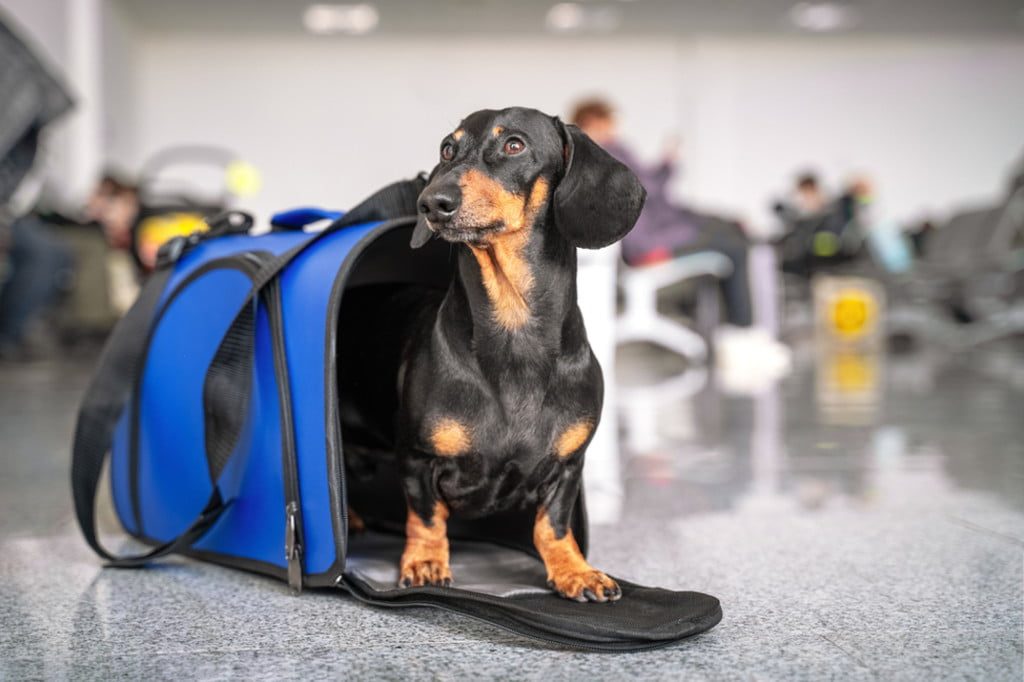
On the day of your flight, arrive at the airport early to check in. After finishing at the ticket counter, take your dog for a walk outside before passing through TSA security. Sitting in the airport can be the most stressful time for a little dog. Try to find a quiet corner where you can sit and feed them treats through the flaps. While you need to maintain some airflow, you might also consider covering the carrier with a blanket to muffle sights, sounds, and smells.
Once you place your pet (within their carrier) under the seat in front of you, be sure to inform the passenger who will be sitting in front of you that your dog or cat is directly beneath them. If your pet makes any noise during a flight, you don’t want the other passenger to get startled.

What should you take with you on a flight?
Air travel is unpredictable, so you must be ready for flight delays, canceled connecting flights, and lost luggage. For this reason, within your carry-on, make sure you pack everything you’ll need for your dog for one full day and night, including:
- Favorite toy
- Food (bring an unopened can of dog food or one day’s worth of kibble in a sealable container).
- Health certificate (from the veterinarian showing your pet is fully vaccinated and safe to travel)
- Leash/harness
- Medications (if applicable)
- Paper towels (or pet-safe wet wipes) for cleaning up messes
- Pee pads
- Poop bags
- Portable (collapsible) food/water bowl
- Treats
Keep in mind, you’re not allowed to bring liquids through airport security. You can purchase a bottle of water or use a water fountain to provide your dog with liquids once you pass through TSA security, but be mindful of your pet’s need to pee during a flight if they drink too much. When traveling, it’s best to give your dog bottled water, as local tap water that’s different from what they’re accustomed to can cause an upset stomach.
Follow your airline’s rules
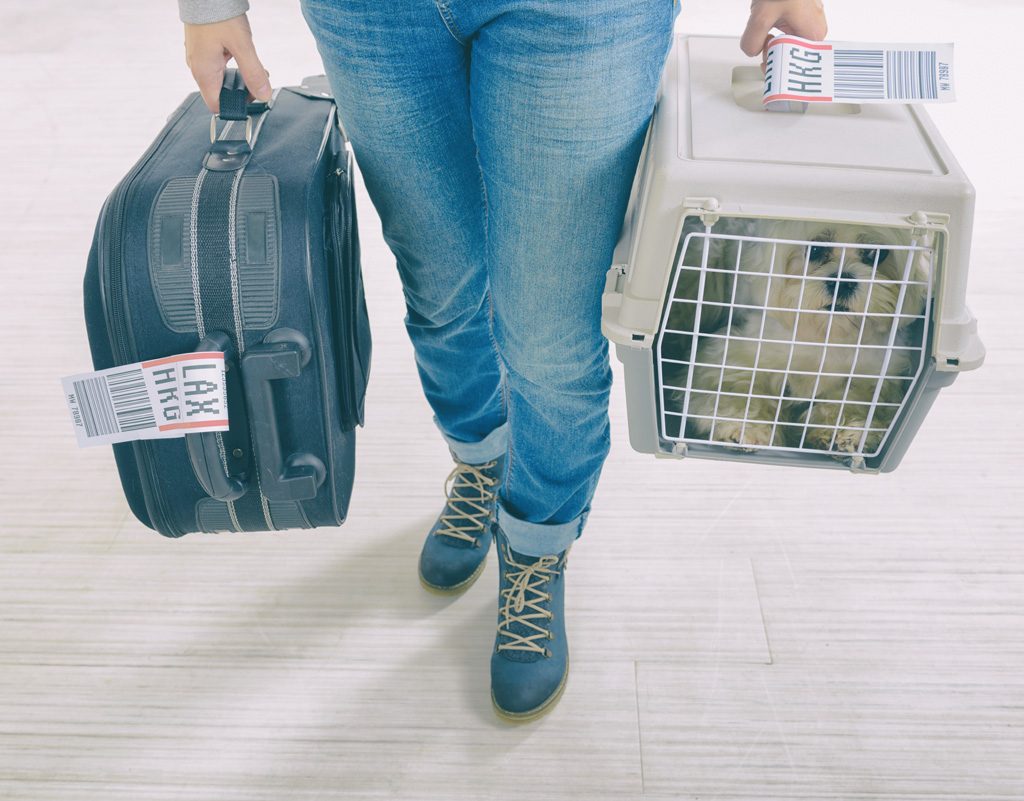
Once you know which airline you’ll be traveling with, review that specific airline’s policy for passengers traveling with a pet. Service animals can always travel for free, but all airlines charge passengers to bring along a regular dog or cat on an aircraft. Depending on the airline, the cost will be anywhere from $50 to $150 each way for in-cabin travel.
As travel guidelines are constantly changing, it’s best to visit an airline’s website prior to a flight. You will discover that some airlines are less expensive and more accommodating to pets than others.
The following websites are where you’ll find the pet policies of popular domestic airlines:
- Alaska Airlines – (800) 252-75522
- American Airlines – (800) 433-7300
- Delta Airlines – (800) 221-1212
- JetBlue – (800) 538-2583
- Southwest – (800) 435-9792
- Spirit – (855) 728-3555
- United – (800) 864-8331
Airline travel for larger (or exotic) pets
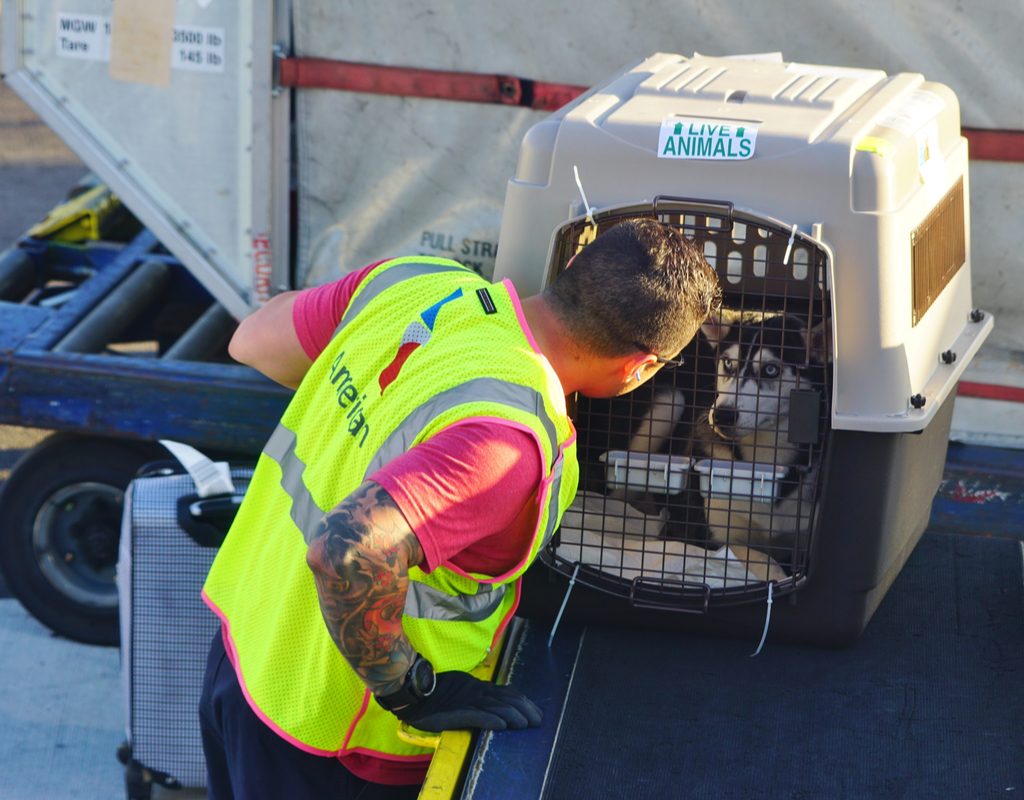
The air travel option for larger animals is much less desirable. It involves your pet being placed within an airline-approved, hard shell crate and turned over to the airline, where they’ll travel in a pressurized area of the airplane’s cargo hold.
Of course, airlines will take extra steps to ensure the safety of an animal, but problems can arise if the pet is placed on the wrong flight, misses a connecting flight, or has an issue during a flight, so be sure to research this option carefully before pursuing it. If your pet is traveling in cargo on the same flight as you, specifically ask the captain to visually confirm your pet is on the airplane prior to takeoff.
In situations when you need to transport a larger pet by air, there are animal transport services that are expensive, but offer a much safer and less stressful travel experience for your larger or exotic pet. To learn more about this option and to access a directory of accredited pet shippers, visit the International Pet and Animal Transport Association website.
When it comes to traveling by air with your pet, research and proper planning are the keys to a successful and safe journey.