Most pet parents know how dangerous it is to leave a dog alone inside a closed vehicle when the temperature outside is extremely high or low. But have you ever considered other ways you might be endangering your pet — and yourself — in the car?
Sure, a dog sticking their head out the car window can make for a cute photo op, but this is dangerous for several reasons. An unrestrained dog can leap out of a moving vehicle, or wind can cause irritation of the dog’s mucous membranes and at the same time blow dirt or other solid flying debris into their eyes or nasal passages (which can get stuck in their windpipe). Passing too close to a tree branch or other solid object can also injure a dog sticking their head and paws out an open window.
And that’s nothing to say of the way this — and other behaviors of unrestrained dogs — can serve to distract drivers, potentially causing accidents.
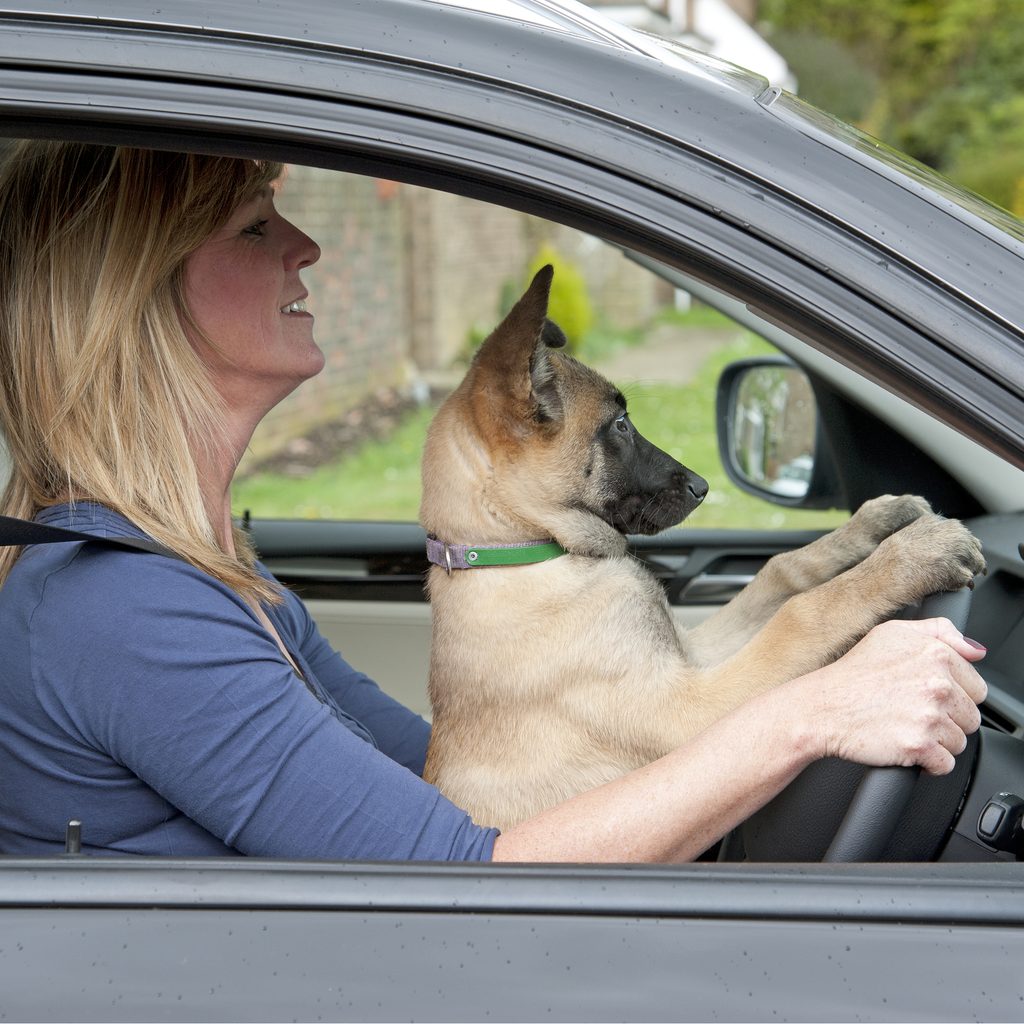
Driving with your dog is distracted driving
When we think of distracted driving, we usually think of behaviors like texting. But your adorable little pooch wiggling around your lap, excitedly attempting to look out the window, or roaming around your backseat, can also be a huge distraction.
The AAA Foundation for Traffic Safety reports that looking away from the road for only two seconds doubles your risk of being in a crash and that upward of 20% of all vehicle crashes are caused by distracted drivers. Thus, it’s essential to make sure your dog doesn’t become a distraction while you’re driving.
“A driver distracted by a pet is as dangerous as texting and driving,” warns Dr. Sara Wooten, a veterinarian at Pumpkin Pet Insurance.
According to a 2019 study from Volvo and The Harris Poll, unrestrained pets in a car more than doubles unsafe driving behaviors, like the dog climbing on the driver’s lap or hanging its head out the window; more than doubles the amount of time drivers were distracted, including the dogs jumping from seat to seat or in some way taking the drivers’ eyes off the road; and increases the amount of stress for both drivers and pups. For instance, unrestrained dogs had a heart rate of 7 beats per minute faster, and drivers’ heart rates dropped 28-34 beats per minute when dogs were buckled up.
And certainly, there are plenty of people out there who drive with unrestrained pets. A survey by AAA and Kurgo found that 31% of respondents admitted to being distracted by their pets while driving. Some 17% of those who drove with their pet allowed their pet to sit on their lap while driving, and 23% used their hands and arms to secure their pet when they went to brake.
Is it illegal to drive with an unrestrained dog?
The answer to this question depends on where you live. In states like Connecticut, distracted driving laws could apply to drivers carrying pets in their lap. States like Rhode Island maintain that dogs must be restrained in some way. In Hawaii, drivers will be fined if they drive with a dog on their lap.
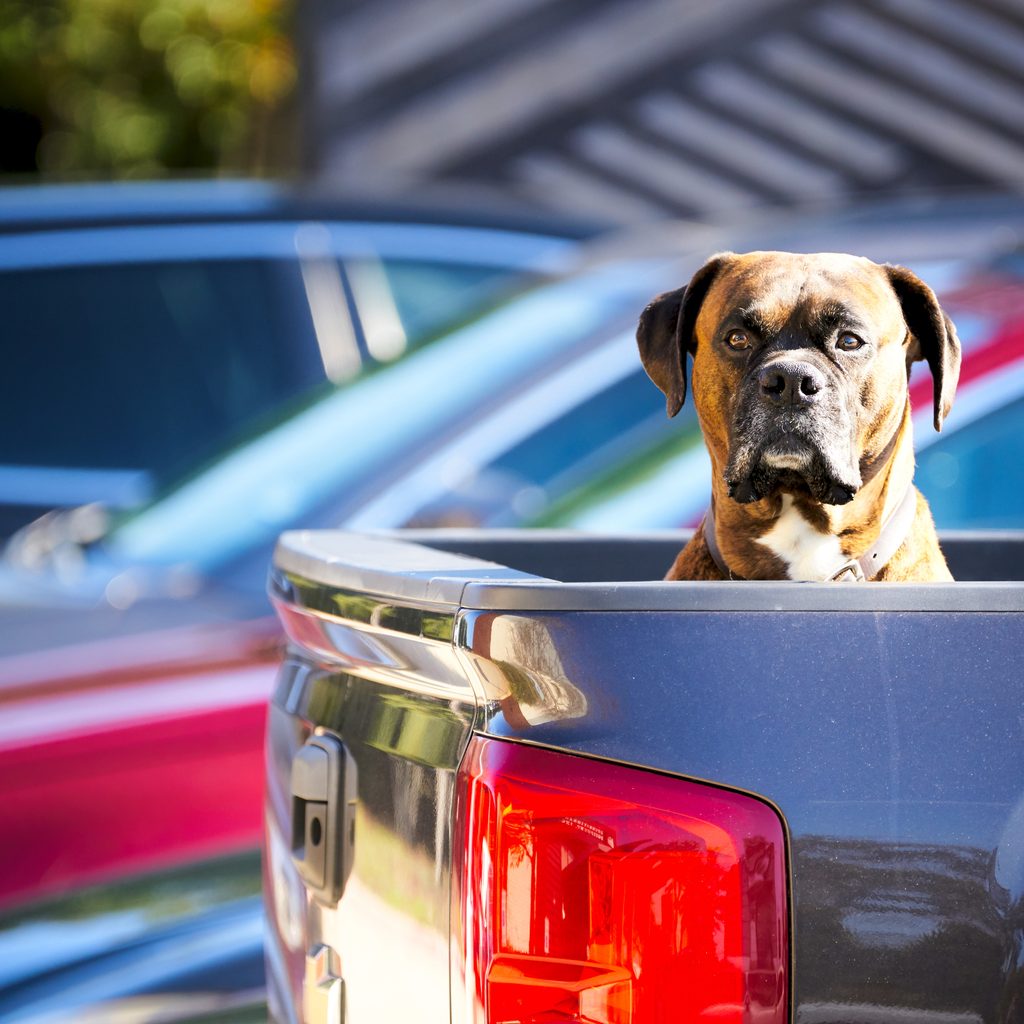
States like Connecticut, Maine, New Hampshire, and Massachusetts all have laws that state dogs transported in an open truck bed must be in a crate, cage, or some sort of restraint. The specifics of the requirements vary by state.
Regardless of whether or not there’s a state law telling you to secure your pet, you should do it anyway. According to American Humane, at least 100,000 dogs die in accidents each year because they ride in truck beds. And as for their counterparts roaming free inside cars? AAA notes an unrestrained 10-pound dog traveling in a car that’s only going 30 mph can exert 300 pounds of pressure in a crash — and those numbers only go up with more speed and larger dogs.
Rick Allenput, a dog obedience specialist for The Pampered Pup, explains, “Other dangers unrestrained dogs face while riding in cars are jumping out of open windows or bumping steering wheels, for example.”
According to The Pet’s Tech, more than 1.2 million dogs are killed on the road every year — from being in a car crash or being hit by a vehicle. By taking the proper precautions and using a bit of common sense, you can easily help protect your dog from becoming a statistic yet still have your furry friend join you as a happy and safe travel companion.
How can you keep your dog safe in a moving vehicle?
Responsible pet parents have a lot of options if they want to ensure their pet’s safety in a car.
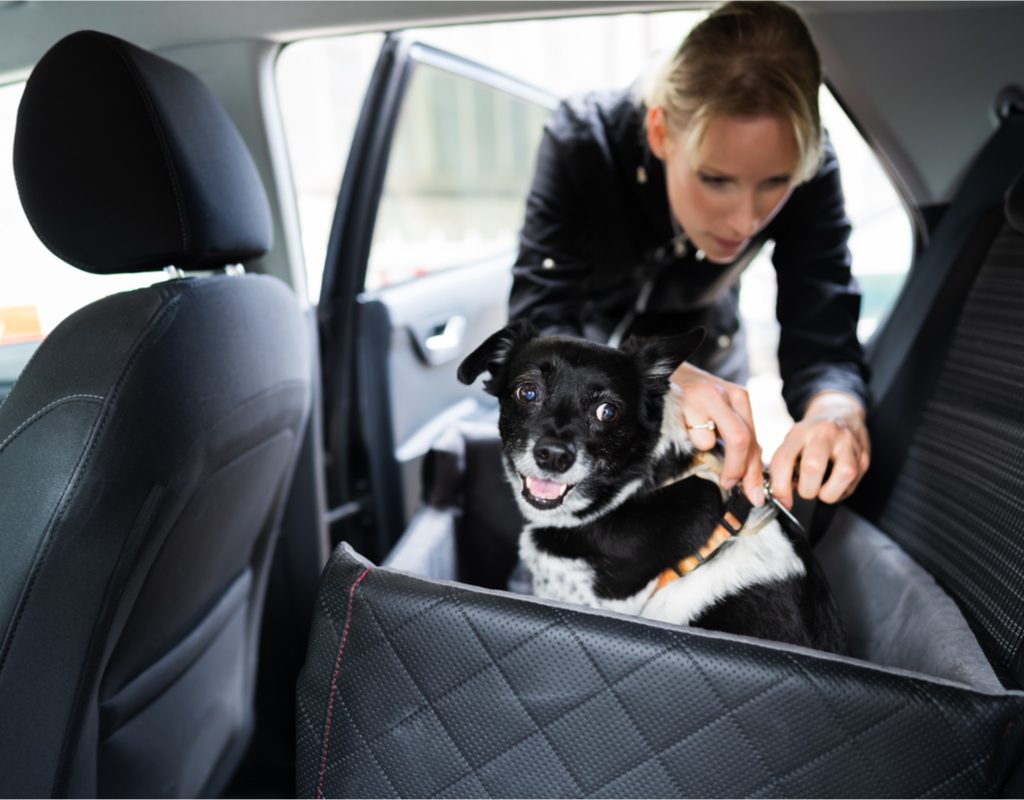
“The best way to avoid car accidents due to distracted driving is to secure your dog in the car instead of letting them move freely around the vehicle,” says Wooten. “Either secure your dog in a canine seat belt or a crate that is secured to the vehicle with a seat belt or strap.”
AAA advises, “Restraint systems that limit a pet’s ability to distract the driver, restrict pet movement in the crash, and mitigate crash forces, such as those utilizing seat belts, are best to use. At the same time, a car’s airbags can prove deadly to a pet. Restraining a pet in the backseat is safest for pets. Padded harnesses with sturdy connectors and straps are available to connect to a vehicle’s seat belt or LATCH system. Both hard- and soft-sided crates can be used in vehicles but should always be strapped down. Pet car seats or basket-style holders can be used with smaller dogs.”
Safety for small dogs
For smaller dogs, WildOne, Sleepypod, and Away, for example, offer well-designed, well-ventilated, and crash-tested pet carriers that can be securely attached to any vehicle using a seat belt.
For added safety, it’s best to place these carriers (with the dog inside them) in the backseat of a vehicle. If a dog is secured in the front seat, be sure to deactivate the passenger-side airbag to avoid certain injuries in the event of a crash.
Safety for large dogs
For larger dogs, using a specially designed seat belt restraint (in conjunction with a harness, not a collar) or a safety harness designed for in-vehicle use that connects to your vehicle’s existing seat belt or LATCH mechanism is a viable option. Be sure to choose an option that’s designed specifically for your dog’s size, shape, and weight. Canine seat belts and harnesses are readily available from Sleepypod and EZYDog, as well as pet stores and online retailers such as Chewy.
For medium-sized and larger dogs, specialty travel crates are also available that, in some cases, can be permanently attached to a vehicle. While a bit costly, the MIM Variocage Single from Pet Pro Supply Company is an example of a hard crate designed for in-vehicle use that comes in 14 sizes and four models.
The Center for Pet Safety is a nonprofit organization dedicated to consumer and companion animal safety. It offers free information about pet safety related to vehicle and airplane travel for dogs and independently tests pet carriers, harnesses, crates, and other travel-related products.
Finally, it’s always a smart strategy to ensure your dog is wearing a dog tag displaying at least your name and phone number in case your pup escapes from the vehicle and runs off.
Don’t leave your pet alone in a car, either
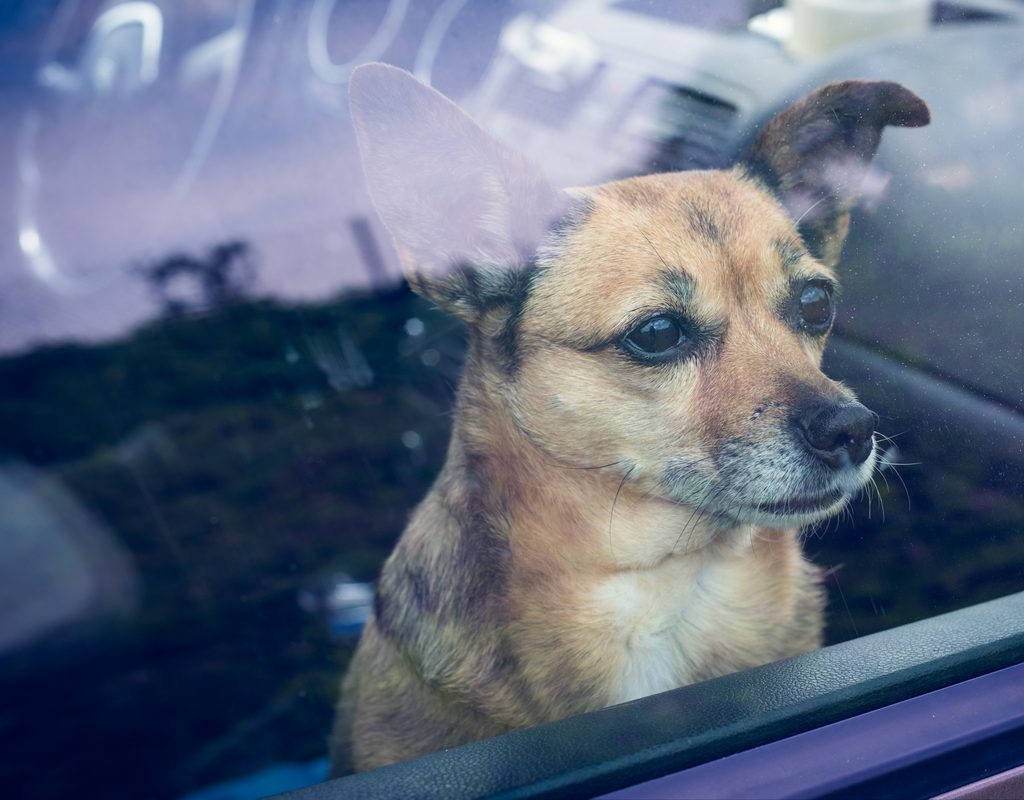
Leaving a pet alone in a car when the temperature outside is extremely high or low is also dangerous for your pet. This is considered a “dangerous condition,” and subjecting a dog to it can get an owner in trouble. According to LegalAdvice.com’s David Reischer, Esq., in 31 states, this action is illegal and has been classified as a misdemeanor offense punishable by up to a year in jail or a fine up to $500.
“A ‘dangerous condition’ has been defined by state legislators to include extreme heat, extreme cold, lack of food or water, lack of proper ventilation, and also based in the length of time the dog is left unattended,” he notes.
Leaving your dog in a vehicle unattended includes leaving a restrained dog outside on an open truck bed — sunlight reflecting off the truck’s metal floor can quickly lead to paw burns and heatstroke.
The American Humane Society (AHS) stresses that a dog should never be left alone in a vehicle, even with the windows open and the air conditioner running. AHS reports, “On a warm day, temperatures inside a vehicle can rise rapidly to dangerous levels. On an 85-degree day, for example, the temperature inside a car with the windows opened slightly can reach 102 degrees within 10 minutes. After 30 minutes, the temperature will reach 120 degrees. Your pet may suffer irreversible organ damage or die.”
Wooten notes, “The most common dog injury I see because of being in a vehicle is either heatstroke from being left in a hot car or vomiting due to motion sickness.” However, she believes it’s generally safe to leave a dog in a car for five minutes or less when the outside temperature is below 70 degrees or above freezing.
If your dog ever shows signs of heatstroke, motion sickness, or is in a vehicle during a car crash, be sure to have him seen and treated by a veterinarian immediately.
We get it. You love to snuggle with your dog, and they’re big fans of sitting on your lap. But driving with a dog on your lap, letting your dog stick their head out the window of a moving vehicle, or placing your dog unrestrained in the bed of your truck can all be incredibly dangerous behaviors for you, your dog, and other drivers on the road.
From making sure your dog isn’t left alone in a hot car to making sure they’re safely restrained, it’s imperative that you keep your dog safe, so the worst thing that happens on your next trip to the vet is… your dog is annoyed they have to go to the vet.