“I spent hours researching the perfect food for my new rescue pup, but how do I know how much food to feed my dog?”
Questions like these are more common than you think, especially for owners of obesity-prone dogs, like bulldogs. The labels on dog food aren’t always helpful or informative, either, so we’ve rounded up everything you need to know about creating the perfect portions and meals for your fur baby.
All you need to know before you get started is your dog’s weight. Visiting your vet to see whether your pooch is at his ideal weight will be helpful in creating his portion sizes, too, though not required to get a head start on the best nutrition possible. Here’s what you need to know.
How much food should I feed my dog?
As you can imagine, a tiny Chihuahua won’t be eating the same amount of food as a Newfoundland does every day. Generally speaking, larger dogs will eat larger amounts of kibble or wet food, though every individual’s appetite depends on several factors.
After working with your veterinarian to rule out any major health concerns that can affect your pet’s diet, you should determine an ideal weight range for your dog. Portion sizes are usually determined by the dog’s current weight, as well as whether your furry friend needs to gain or lose a couple of pounds.
Although breed, activity level, and age also affect the amount your dog eats, you’ll need to know your dog’s weight to interpret feeding charts. Dry food packages often have this chart, which breaks down the right portion sizes per size of the dog, somewhere on the label. Keep in mind that this chart usually shows their ideal daily intake, so if your pup eats multiple times a day, you’ll need to divide the total number by however many meals you feed him.
Remember to adjust your portion sizes if your dog is particularly active or inactive, as no two pups burn the same number of calories every day. Puppies do better with smaller, more frequent meals than their adult counterparts, as do some senior dogs. It may take a little adjustment to find the perfect feeding schedule.
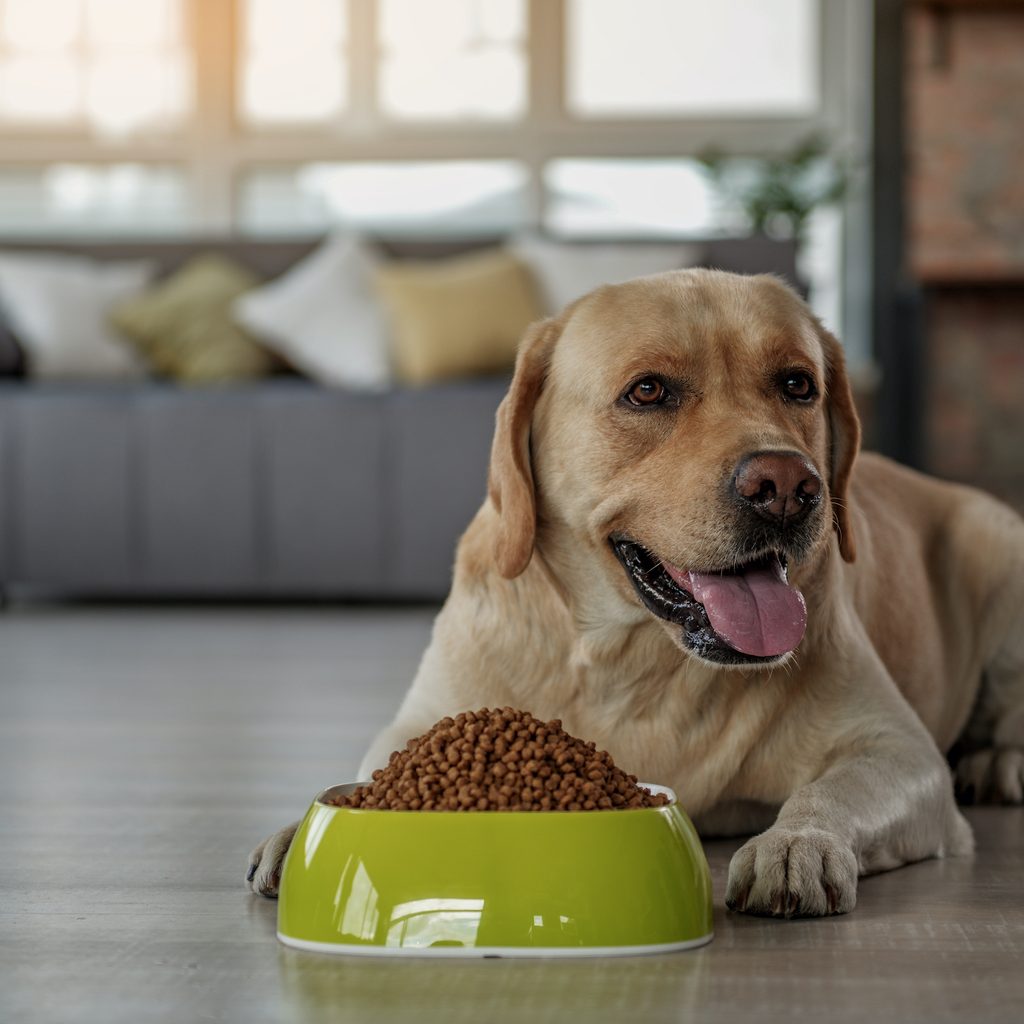
How much canned food should a dog eat in a day?
When it comes to wet, or canned, food, serving your dog will work a bit differently. According to the pet health pros at Purina, one 10-ounce can of wet dog food replaces about 1 cup of dry food. A more exact method of measurement is to read the label of your pup’s specific food, remembering to adjust for your pup’s age and energy level.
If you, like many dog owners, choose to mix wet and dry food for your fur baby, you’ll need to do a little math. To feed your pup a half-and-half mix of wet and dry foods, simply serve half as much kibble as you would normally give. Do the same with the canned food, dishing out half the recommended portion size.
Is it cruel to feed your dog once a day?
If a dog eats only once a day, he runs the risk of several medical problems, some of which can be dangerous. Just like people, canines can get cranky when they’re hungry, but this can be a lot more serious if a dog has preexisting behavioral issues.
Medically, waiting a whole day between meals makes a hypoglycemic — low blood sugar — episode a lot more likely. Your dog may feel fatigued, weakened, and especially hungry. This can be dangerous if your dog scarfs down his entire meal at once, as bloat tends to happen with quick eating. Bloat, in dogs, can be fatal.

How often should my dog eat?
The American Kennel Club notes that most veterinarians recommend feeding dogs twice a day. This will help you avoid any complications or infrequent eating, but it will leave your dog just hungry enough to look forward to his next meal.
It’s not unhealthy, though it may be inconvenient, to give your pup smaller meals more often than twice a day. Puppies, seniors, and tiny dogs may actually prefer this, though no two pets are the same.
When it comes to free-feeding — when food is left out all the time for the dog to eat whenever — there are many conflicting opinions. The greatest concerns are weight gain and overeating, though some dogs do just fine setting their own limits while chowing down. Overall, most veterinarians don’t recommend this method, but it is still a common practice thanks to its convenience.
Now that you have all that you need to know about the ideal feeding portions and schedule for your dog, you can actually implement this knowledge in real life. Before you know it, your canine companion will be fit and happy, all thanks to the perfect feeding schedule you set up. Go, you!