Training your dog is a fantastic way to strengthen the bond between fur baby and pet parent. If you’ve ever grown frustrated with teaching your pup basic commands like “sit” and “stay,” then you may want to give dog agility training a try. While it may sound counterintuitive, it can actually improve your pup’s behavior in the long run. Wait, what? How does that even work? Well, according to the American Kennel Club (AKC), “Agility is just for fun. There’s no need to stress over how quickly your dog learns these new skills.”
Because we know that dogs learn best through positive associations, teaching your pooch a few dog agility skills alongside basic training will help strengthen his mental associations between learning a new skill and having fun. Neat, right? Here’s what you need to know to get started.
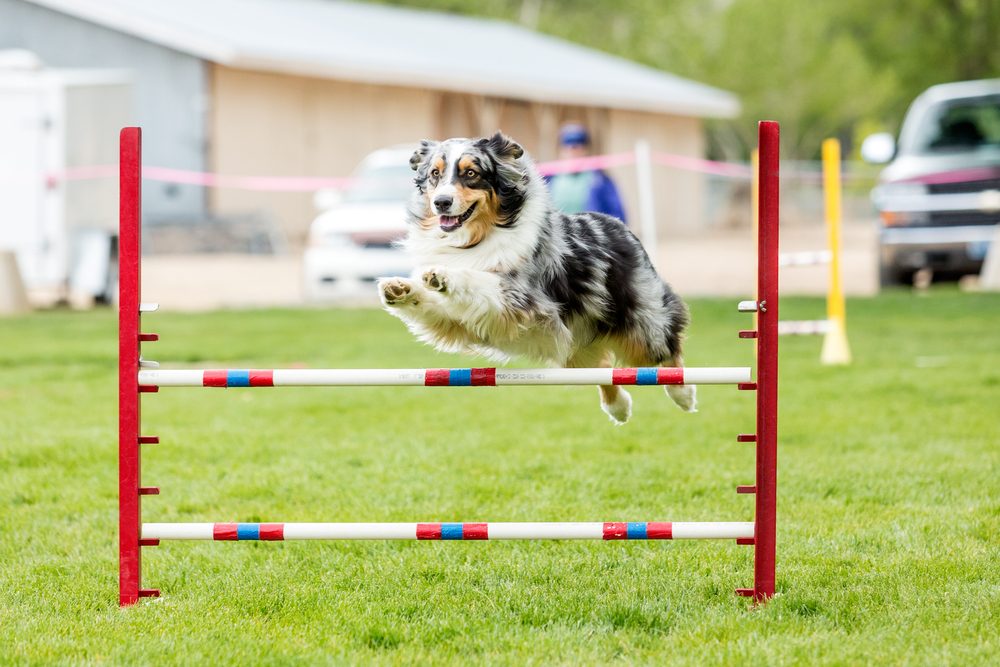
What is dog agility?
With almost nine out of every 10 Americans claiming that they enjoy sports at least somewhat, it’s no surprise that we’ve even developed sports competitions for our dogs. “Dog agility is a sport where you direct your dog through a pre-set obstacle course within a certain time limit. Courses typically have between 14 to 20 obstacles, which can include tunnels, weave poles, tire jumps, seesaws, and pause tables where the dog must stop for a set amount of time,” says the AKC.
How do I teach my dog agility skills?
Before getting started, we recommend consulting your vet. If your dog suffers from certain health issues or has a genetic predisposition to back problems, some agility skills may not be the best fit for your pup. Once you’ve been given the all-clear, you can start your agility training. Here’s how to do it:
Start off in a secure location
If your dog is high-strung or easily distracted, you may not want to work on agility in your local dog park. Small breeds can start off indoors, while your backyard is the best place to start with medium and large breeds.
Make sure Fido’s needs have been met
Try working with your dog after he’s already eaten and used the bathroom, as this will prevent hunger (or other bodily needs) from distracting him.
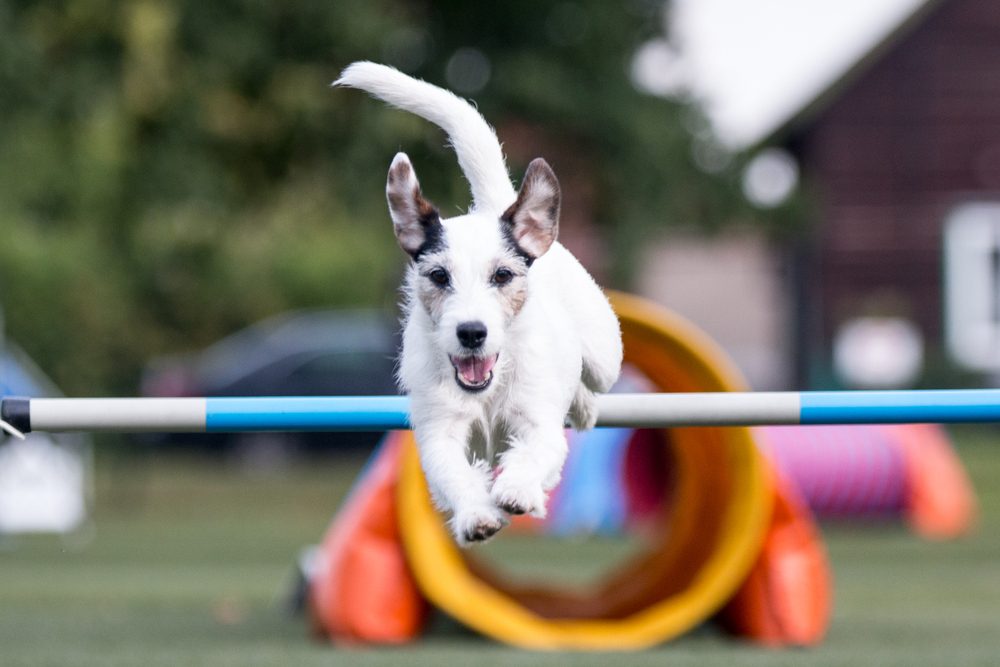
Work basic obedience into his agility lessons
Because you’ll be having fun with your pooch, now is the perfect time to work on (or reinforce) his basic obedience training. Use positive reinforcement, be patient with your dog, and remember to have fun. The whole point of at-home agility training is to enjoy spending time with your dog.
Make sure you have the right equipment
But don’t worry; you don’t need to spend a small fortune. Your coffee table makes a great alternative to a pause table or a standard jump, depending on your dog’s size.
Guide your dog through the course
Showing your dog what you expect of her is the best way to teach her the ropes of an obstacle course. Run with her through the weave poles. If you want her to crawl through a tunnel, try attaching his favorite toy to a string and using that to lure her. Pick her up and help her “jump” over obstacles. Make sure to use lots of praise (and the occasional treat or two), as this will reinforce what you’re teaching.
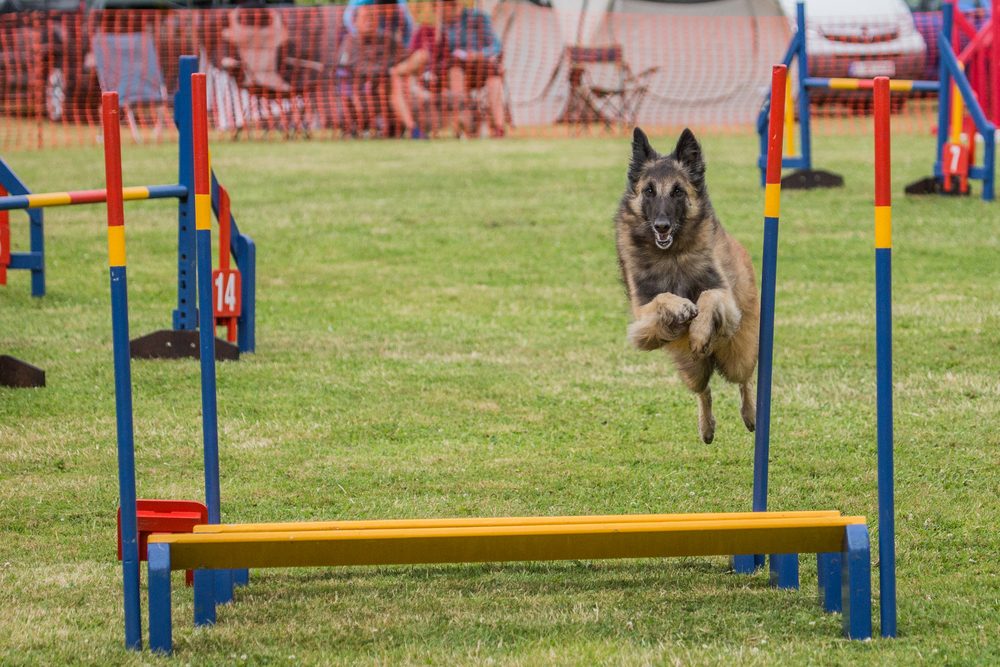
What breeds can learn agility?
Want to teach your dog a few agility skills, but you’re not sure if he’s the right breed to learn? According to the experts, dogs of all ages, breeds, shapes, and sizes can learn at least some form of agility training. The trick is making sure you stick to the right type of agility training for your pup. For example, a leggy German Shepherd may excel at standard jumps, but your stubby-legged Dachshund? Not so much.
Dog-centric website K9 of Mine says that some of the best breeds for agility training are:
- Border collies
- Australian shepherds
- Shetland sheepdogs
- Whippets
- Jack Russell terriers
- Golden retrievers
Because your vet knows your pup’s medical history inside and out, we recommend scheduling a consultation before you start any rigorous training, agility or otherwise, to make sure your dog is healthy enough for strenuous activity.
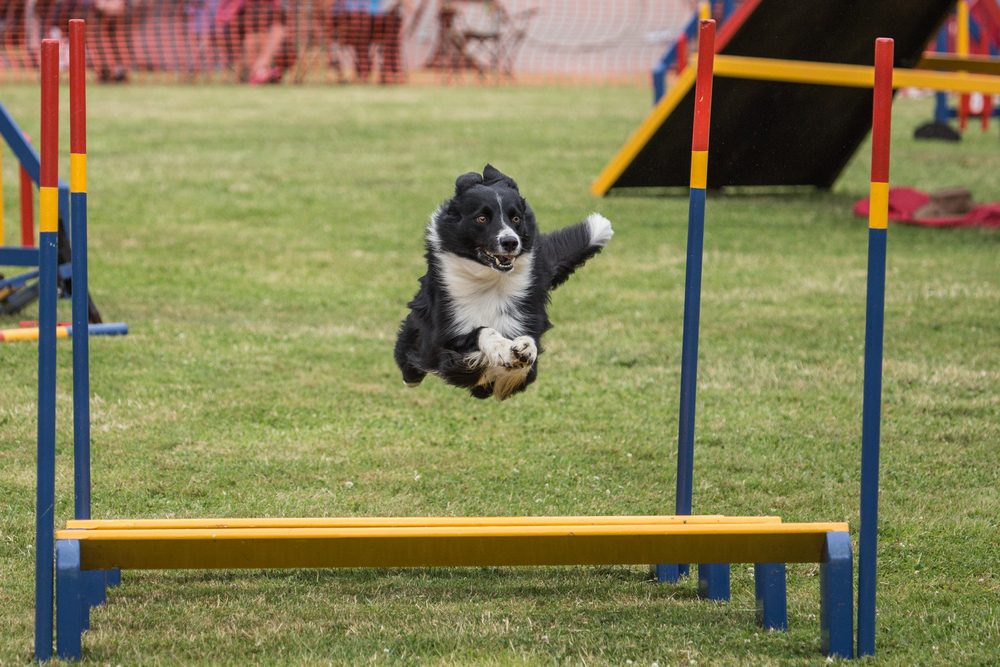
While you probably won’t create such a rigorous obstacle course for your pup in your own backyard, there is a myriad of health benefits to dog agility training. The experts at VCA Hospitals say that teaching your fur baby agility training will not only keep him fit, but will keep his joints flexible, help maintain bone density, give his endurance a boost, and help him stay slim and trim. And, of course, there’s also the benefit of spending more time having fun with your dog. Who doesn’t want that?