
If you have a cat and you’ve decided to add a new kitten to your family, you’re probably hoping that they’ll quickly become the best of friends. Although cats often do bond and get along well, it’s a process that takes time.
No matter how eager you are for your feline friends to get acquainted, it’s important to let them get to know each other on their timeline, not yours. Trying to rush the process can backfire and lead to problems that can be hard to overcome, and there are certain mistakes you’ll want to avoid. Here are some tips on how to introduce a kitten to a cat.

Don’t expect them to get along
Cats have a wide range of personalities, and they respond differently to stress and change. Your current cat may be sweet and affectionate, but its demeanor and behavior may change dramatically when you bring a new kitten home.
Cats are territorial. No matter how adorable your new kitten is, a cat that has had the house to itself may perceive the kitten as a threat. It will need time to get used to the idea of sharing the house with a young newcomer. The kitten may be eager to make a new friend, or it may be frightened and may want to hide.
Don’t rush the process
It’s important to introduce your cat and the new kitten gradually so they don’t feel threatened and overwhelmed. It’s common for cats to need several days, or even weeks, to feel comfortable with each other.
When you bring the kitten home, don’t introduce it to the other cat right away. Instead, put the kitten in a place where it will feel safe. Choose an area where you can close the door to keep the other cat out. Ideally, it should be a room that members of your family don’t use frequently so the kitten won’t be frightened or confused by people coming and going.
Give the kitten its own bowls of food and water, litter box, toys, and a comfortable place to sleep. If possible, buy new items for the kitten. Things that your existing cat has used will have its scent on them. That may frighten the kitten.
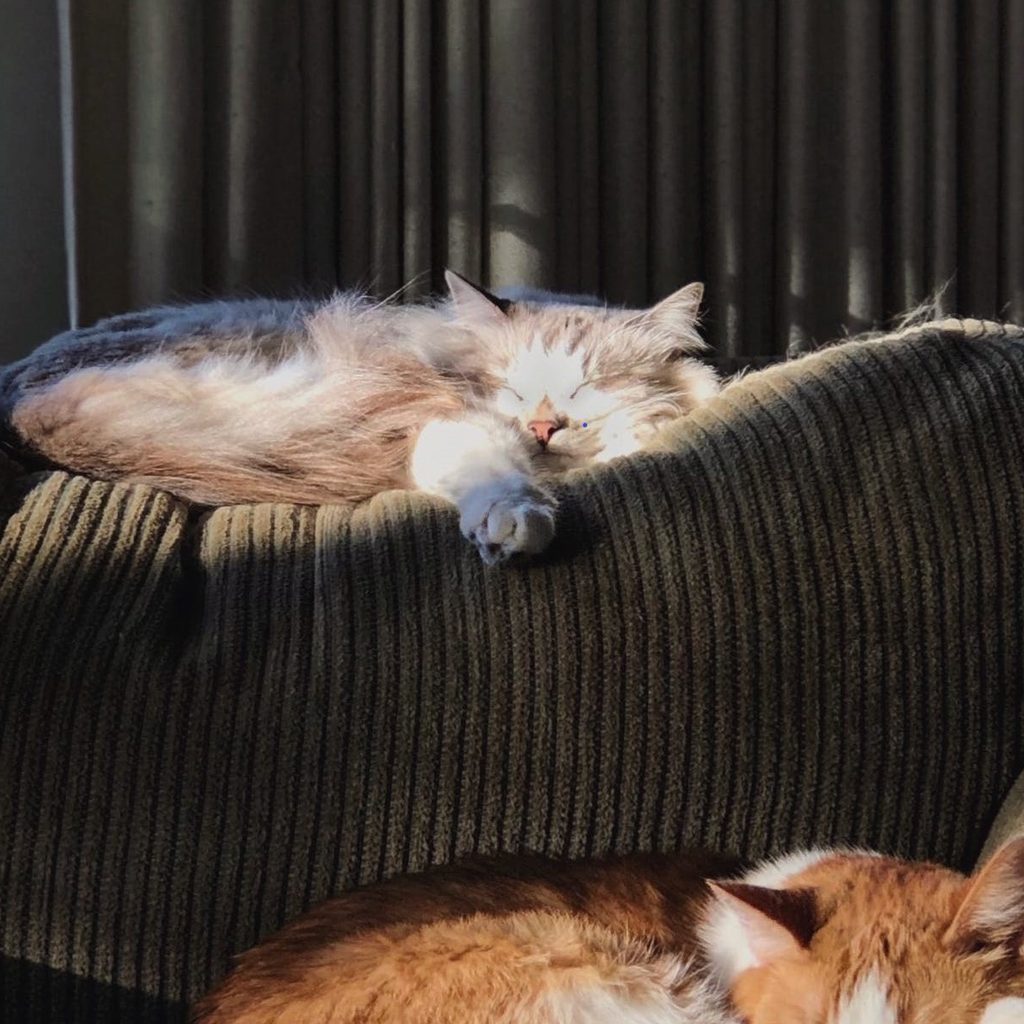
Introduce the cats to each other’s scents before you introduce them to each other
A day or two after you bring the kitten home, give each cat an object, such as a blanket or a toy, with the other’s scent on it. Don’t present the cats with the objects directly because that may feel threatening to them. Simply place an object in each cat’s space and let the cats sniff the objects when they’re ready.
Being exposed to the other cat’s scent will help each feline begin to accept the other before they physically meet. After they’ve had some time to get used to each other’s scent, you can expose them to each other a little more, while still keeping them apart.
Many pet owners find that feeding their cats on opposite sides of a closed door helps them get acclimated to each other. The cats can experience the pleasure of eating and can smell each other without being in the same space and without perceiving each other as a threat.

Introduce the cats and keep a close eye on them
You’ll know that the felines are feeling calm if they eat and drink normally, approach you when you enter a room, purr, and want you to pet them and play with them. Once both cats have reached that stage, you can let them meet face to face.
Bring the cat and kitten into the same room, but don’t force them to get close to each other. It’s better to let them approach each other when they’re ready.
Supervise them closely and observe their behavior. They may be curious or anxious. One may try to approach the other, and the other may retreat. One may attempt to play, and the other may or may not be interested.
Be on the lookout for signs of aggression, such as hissing, biting, or scratching. Normal play may involve some innocent chasing and pouncing, but make sure that your older cat doesn’t get too aggressive and hurt the kitten. If you feel that things are starting to get out of control, or if you sense that one or both cats are getting too stressed out, separate them and try again later.
If the cats are getting along well, you can leave them alone together without supervision, but only for short amounts of time (i.e., a few minutes) at first. If things go well, you can allow more short, unsupervised encounters and gradually make the get-togethers longer and more frequent until you’re confident that the cats can be left alone together without problems.
If your cats have trouble adjusting, talk to your veterinarian
Getting used to a new cat can be difficult for a feline that’s used to ruling the house, and it can be hard for a kitten to leave its mother and siblings and settle into a new home with another cat. Give both cats plenty of attention and petting so they feel loved and secure. If either of your cats seems overly stressed and exhibits signs of aggression or behavioral problems that worry you, contact your veterinarian to discuss how to handle the situation.