Cats may not speak with words, but they have many other ways to communicate just what they’re feeling. One way is with cat tail language. How your cat is holding his tail says a lot about whether he’s comfortable, on edge, or asking you to back off and give him some space. Learning to read cat tail body language can help you better understand your cat so you can respect his wishes and take steps to keep him comfortable. It may take a little practice at first, but if you watch your cat carefully, you should be able to see some of these tail signs.
Tail movement meanings
How your cat moves his tail has an important meaning. A tail that’s moving back and forth slowly means that your cat is relaxed, while a more intense flicking means your cat is focused and may be getting ready to pounce on something, like a toy. If your cat is holding his tail out and is quickly flicking or lashing it about, then he’s showing you that he’s upset.
When you’re spending time with your cat on the couch, his tail will be mostly quiet, save for the occasional flick or twitch. If your cat suddenly starts to twitch his tail repeatedly, he’s telling you that he’s had enough petting and he’d like to be left alone.
Your cat may also walk up to you, slowly waving his tail about, and then wind it around your legs. This is his way of demonstrating affection and showing that he’s bonded to you.
Tail position meanings
How your cat holds his tail can convey messages, too.
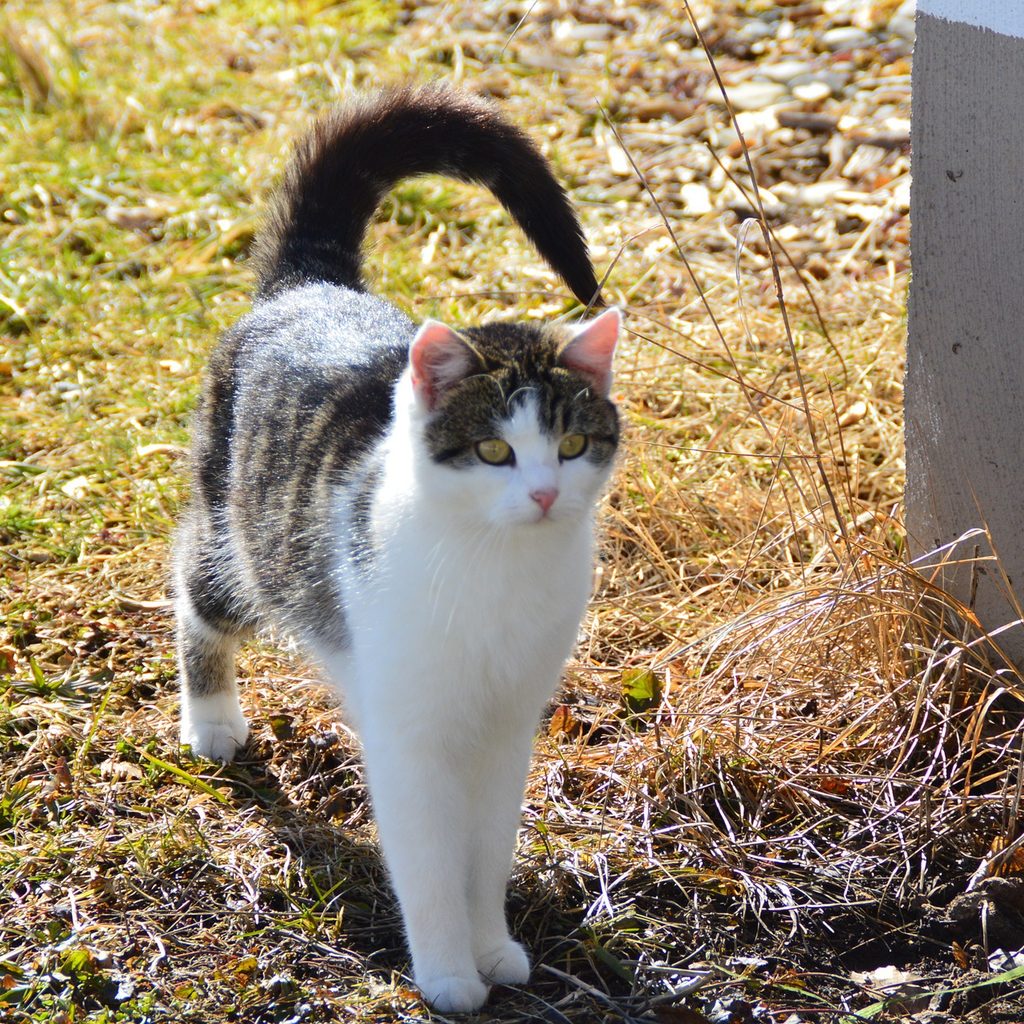
- When your cat holds his tail up and stretches it out, he’s showing that he’s happy and confident. You may notice this when your cat is playing or just strolling through the house.
- Your cat may also hold his tail out while curling up just the tip of it, so his tail resembles a question mark. Often, this is another indicator of happiness, so you should feel welcome to approach your cat and greet him with some pats.
- If your cat is holding his tail straight down so that it’s pointing toward the ground and is carried beneath the level of his back, he’s showing that he’s upset and agitated, and he needs to be left alone.
- Similarly, if your cat wraps his tail around his body, he’s nervous and trying to show that he’s submissive.
- When your cat is frightened, he might puff up all the hair on his tail. This is often accompanied by an arched back.
- Alternatively, your cat might whip his tail back and forth, or pair this motion with his puffed tail. If you see any of these signs, your cat should be left alone and given some time to calm down.
Other cat body language to watch
It’s important to observe your cat’s tail language in context of his other body language. While these tail postures and movements can provide some guidance to how your cat may be feeling, your cat can vary the signals that he’s sending with his tail. So, rather than just watching his tail, look at the entire picture that your cat is giving you.
Cats can communicate with their entire bodies. A tense, crouched posture can indicate your cat is uncomfortable. A more relaxed, stretched-out posture or a relaxed, strolling walk means your cat is happy and comfortable in his surroundings. Watch your cat’s eyes and face for signs of tension, and then see if his tail activity matches those signals.
Learning to read your cat’s body language takes time, but it’s an important part of sharing your life with a cat. Cats are highly reliable in how they communicate with their bodies, so if you can learn to read when your cat is getting tense or is done with being petted, you can avoid making him uncomfortable and feeling like he needs to hiss at you. As you get better at reading your cat’s body language, you’ll be able to give him what he needs, whether that’s attention or some space and a break from socializing for a while. This is the foundation to having a better relationship with your cat and giving him a home where he’s supported and understood.