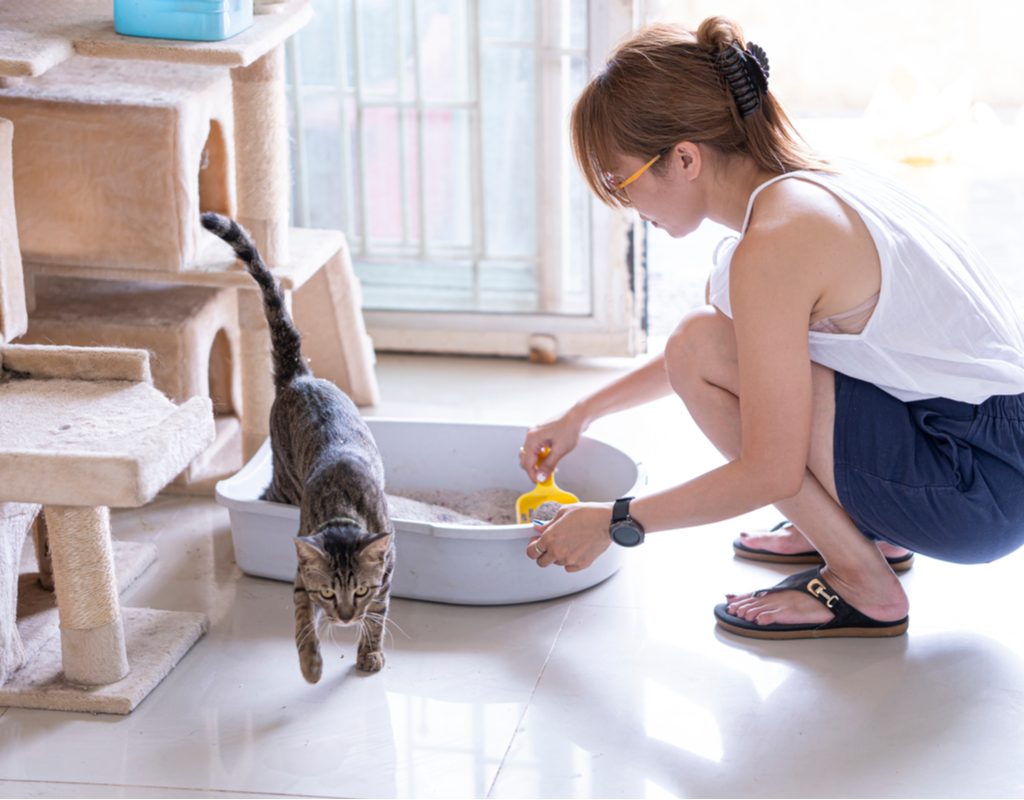
When you share your life with cats, scooping the litter box becomes a daily chore. A trash bag of cat litter weighs a lot, and you might not feel like lugging it out to your trash can each night. Flushing the litter down the toilet might sound like a practical alternative, but this practice can lead to serious problems. If you find yourself wondering, “Can I flush cat litter down the toilet?” then it’s important to learn a bit more about how your toilet and septic system work, as well as the risks that come with improper cat litter disposal. Before you flush cat litter, think carefully about the problems that could result.
Clogged pipes
So, can you flush cat litter or cat poops? It’s not a good idea. Either practice could lead to clogged pipes, making for a big mess and an expensive plumbing bill.
Litter creates several issues for your plumbing. Clumping litter expands when wet, and even if it’s already expanded a bit, it could expand further when exposed to the water in your plumbing. This can lead to clumps. Even non-clumping litter weighs a lot and can be difficult to get all the way through your plumbing system.
And if you have an eco-friendly toilet that uses minimal amounts of water to flush, that water might not be enough to carry litter and hard cat poops through the system, further contributing to clogs and backups.
Keep in mind, too, that clumped litter and hard cat poops may already be so large that they don’t pass through your toilet plumbing correctly. Breaking them up before disposal could help, at least initially, but who really wants to do that?
Additionally, your septic system operates on microbes that break down waste. If that microbe balance is disrupted, your system won’t function as well. When you flush cat litter and waste, you can disrupt that microbe balance and add more waste to the system. In short, your septic system wasn’t designed to handle cat litter, and you’ll be asking for problems if you introduce litter to that system.
Environmental issues
There’s also an issue of potential environmental harm that can come from flushing cat litter. Cats carry Toxoplasma gondii, which is a parasite that can infect humans. People with a compromised immune system, particularly pregnant women, can experience symptoms like painful eyes and blurry vision. The baby can also be affected with potential brain damage.
Toxoplasma gondii is passed through your cat’s feces, which is why it’s so important that pregnant women avoid handling litter boxes. When you flush your cat’s litter, you can introduce that parasite into the public water supply. It could potentially infect other humans, or it could even affect marine life.
The scoop on flushable cat litter
Some cat litters, like those made out of corn or pine, are touted as being flushable. That’s not necessarily the case. Your septic system still isn’t designed to process this type of waste, and some flushable litters just can’t be broken down by your septic system.
These flushable litters can still clog your pipes, especially if you’re using a clumping flushable litter. Just like with traditional litter, your toilet may not effectively flush these flushable litters. You can still run into plenty of problems.
The best way to dispose of cat litter
It’s best to dispose of cat litter the traditional way — in a plastic bag and in a landfill. It’s not the most convenient option, but it could save you significant money compared with the cost of a plumbing fix or even a septic system replacement. Keep in mind that by not flushing the litter, you’ll be saving water every day.
If you’re not wild about the idea of taking your cat’s litter out to the dumpster every night, consider getting a product like a Litter Genie.
These litter disposal systems store litter indoors but enclose the waste. They’re designed to prevent stinky odors, so you can collect your cat’s litter for multiple days in a row before having to take it outside. These products lock tightly to keep other pets and children out of the litter, and they save you time, letting you easily scoop the litter box each night without a trip outside. Plus, these systems mean you’ll use fewer plastic bags, making the process more eco-friendly. They might not be quite as convenient as flushing your cat’s litter, but these storage systems are a much safer option.