
If you suspect that your cat is pregnant, it’s important to learn everything you can about cat pregnancies. Your pregnant cat will undergo many different changes during her pregnancy, and she’ll also have increased nutrition needs. Understanding which symptoms to look for and how you need to support your cat during her pregnancy can help you give your cat the care that she and the kittens will need. Your vet can also provide you with advice that’s specific to your individual cat’s needs. So, how long are cats pregnant, and what should you do if you think your cat might be pregnant? Here’s what you need to know.
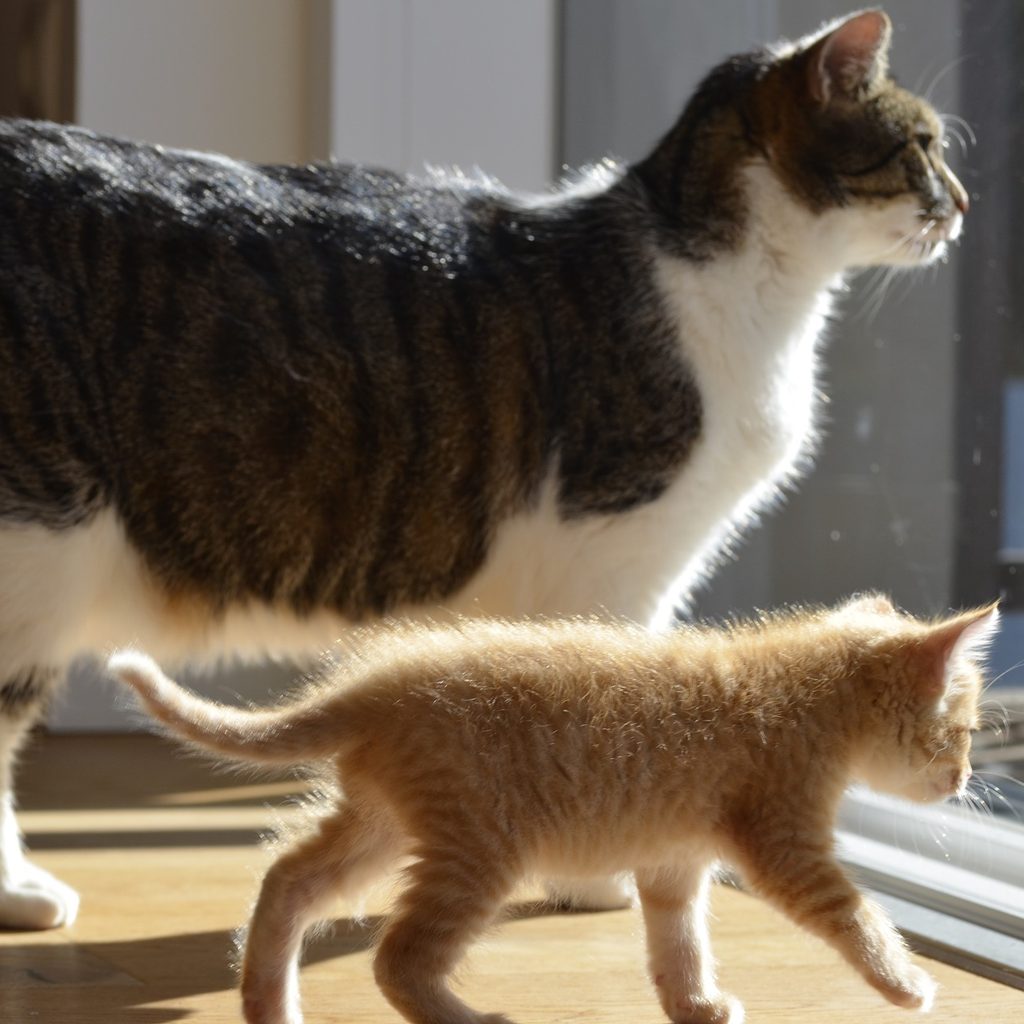
How to tell if a cat is pregnant
You may notice multiple changes that can indicate that your cat is pregnant. Her heat cycles will stop once she’s pregnant, and she might start to eat more. Her nipples may darken in color and appear larger, though this can be hard to see, especially if you have a long-haired cat. As your cat eats more, she should start to gain weight, and about halfway through her pregnancy, you’ll start to notice that her abdomen looks larger or swollen.
You might also notice several behavior changes in your pregnant cat. Many cats tend to sleep longer when they’re pregnant, and some cats become increasingly friendly and affectionate. If your cat is close to giving birth, she might seek out a quiet area and prepare a nest.
Only a vet will be able to tell you for certain if your cat is pregnant. During your appointment, your vet may palpate your cat’s abdomen to feel the kittens. Your vet may perform an X-ray to determine how many kittens your cat is carrying, but this is effective only if your cat has been pregnant for about a month or more. An ultrasound can help a vet identify kittens once your cat has been pregnant for at least three weeks.
How many months is a cat pregnant?
Cat pregnancies can last between 63 and 65 days or just over two months’ time. Since cats can get pregnant when they’re as young as 4 months old, it’s possible that a 6-month-old cat could give birth to her first litter of kittens. That’s quite different from human pregnancies, to say the least!
This highlights the importance of separating male and female kittens before they’re 4 months old, or of spaying and neutering kittens before they’re able to reproduce.
How can I tell how far pregnant my cat is?
One of the most accurate ways of telling how far along your cat is in her pregnancy is to use the date of conception as a guide. However, that’s not always possible.
If you don’t know when your cat got pregnant, then you’ll need to schedule a vet appointment to confirm the pregnancy. Your vet may use an X-ray or ultrasound to confirm the pregnancy, and depending on the findings, the vet may be able to give you an estimate of how far along your cat is. However, determining how far along a pregnancy is always involves some guesswork, so while your vet may be able to give you a range, it’s impossible to pinpoint the day or even the week your cat will deliver.
Since you won’t know precisely when your cat is due to give birth, it’s important to prepare now for it. You’ll want to put together a birthing kit that includes such essential supplies as rubbing alcohol, disposable gloves, a thermometer, a kitchen scale for weighing the kittens, and plenty of blankets and towels. You’ll also need to be prepared with the contact information of your vet and the nearest emergency clinic.
Always be prepared
If you know that your cat is pregnant, this is the time to do your homework. Prepare a nesting box for your cat so that she can get used to it and will be more likely to use it when she gives birth. This is also the time to familiarize yourself with the birthing process, how to know if something is going wrong, and what to do if your cat needs help. Many cats deliver kittens smoothly and easily on their own, but it’s important to be prepared, just in case your fur baby does need help. Be sure to talk with your vet, since they can guide you through your cat’s pregnancy, the birth, and the growth of the kittens.