
A cat harness can let your indoor cat safely explore the outdoors with you alongside. Harnesses come in multiple styles, including the figure 8, H style, and vest harness. They’re designed to keep your cat comfy, but your cat might not be wild about the idea of putting a harness on the first few times you try. This can lead to scratching and biting, so it’s important to understand how to put a harness on a cat safely before you attempt this task. When you take your time, teach your cat that the harness is a good thing, and let your cat get used to wearing it, you can open up a whole new outdoor world for your cat. The following cat harness instructions can help you stay safe when putting your cat’s harness on.
Let your cat get used to the harness
You might be all excited to try the new harness you just got on your cat, but that’s one of the worst things you can do. Your cat will most likely struggle against the harness’s unfamiliar smells, and you might get hurt.
Instead, give your cat time to get used to the harness. Put the harness near his food dish and leave it there for a week or so. Soon, the harness will start to smell like food, and your cat will view it as a familiar object.

Time your session right
When you’re ready to put the harness on your cat for the first time, be strategic about when you try this. Look for a time when your cat is relaxed but not sleeping. Is he sitting next to you on the couch and just hanging out? That’s perfect.
During your first attempt at putting a harness on, it’s helpful to have a second person who can hold your cat. Hold the harness up next to your cat until he loses interest in it. Then, start by quickly but gently putting the head loop over your cat’s head.
How you handle the next steps of putting the harness on will depend on the style of the harness you’re using. Review the directions thoroughly and make sure that you and your helper know just how to fasten the remaining straps.
Your cat might fuss during this first session, and that’s to be expected. Don’t struggle with him and scare him so that he’ll be wary of future sessions. If you get only the initial loop over your cat’s head, that’s fine. Praise your cat, give him a treat, and try again another time.
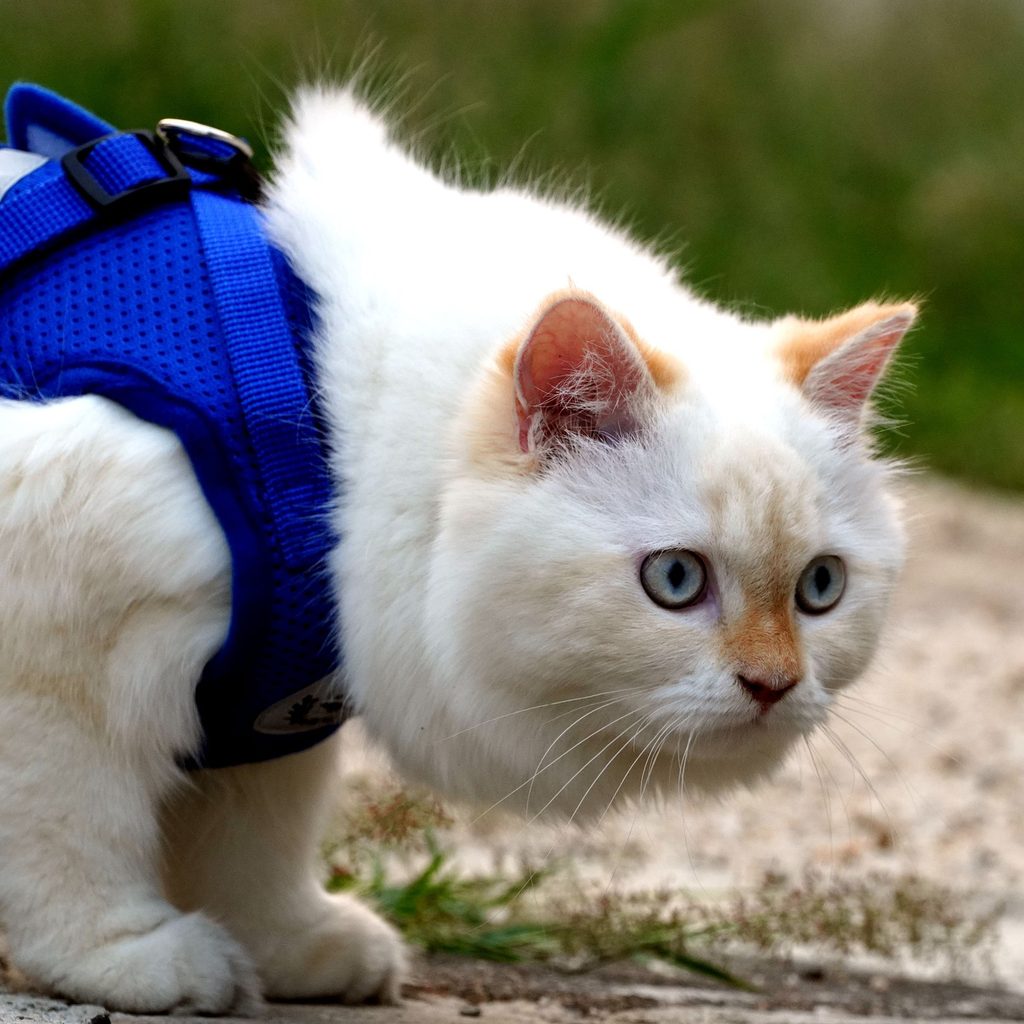
Teach your cat the harness is a good thing
Once you do get a harness onto your cat, he won’t necessarily understand that it’s a positive thing. The harness may feel strange, and some cats can get quite upset. Your furry friend might try to run, or he might refuse to move.
You’ll need to be patient with your cat as he gets used to the harness. Keep things positive — give him food, give him catnip, and praise him lots while he has the harness on. During those first few sessions, let your cat wear the harness for just a minute or two and then remove it. You can gradually lengthen the duration of the sessions as your cat starts to accept the harness more.
Keeping these sessions positive should help your cat start to associate the harness with treats, praise, and other good experiences. This should encourage him to fight it less and even to look forward to these sessions. Once your cat is fully acclimated to the harness and understands how to walk in it, you might venture outside with him.
When you first put a harness on your cat, you might be met with some protesting. That’s pretty natural, but be prepared. You’ll really have to watch your cat’s body language to determine what he’s comfortable with, and some cats might get used to a harness quickly while others might take much more time. Having a helper can help keep you all safe during these initial sessions. Don’t forget to make sure your cat’s claws are trimmed before you start to introduce the harness — if he does swipe at you, this can help keep you from getting too badly hurt.