Warm weather makes most people think of beach vacations, backyard cookouts, and crisp lemonade. For pet parents, though, warm weather also signifies the increased population of one of the most obnoxious pests ever — fleas. While your cat can catch fleas year-round, warmer weather creates a much more welcoming environment for these invaders, and your cat is likelier to spend more time outdoors when the weather is nice.
Fortunately, you can take a few helpful steps to help your cat stay flea and itch-free. Learning how to tell if your cat has fleas only takes a few minutes, but this knowledge will help both you and your cat for years to come.
How do cats get fleas?
More often than not, indoor-only cats don’t get fleas. That’s not to say you can’t bring them home to your cat after petting a flea-infested animal or that Miss Mittens can’t get them at the groomer’s, but it’s much more likely to happen if your cat is an outdoor cat. One way to prevent fleas is to keep your cat inside all the time. If that’s not possible, you still have options for getting rid of these nasty, tiny bloodsuckers.
How to tell if your cat has fleas
Fortunately, it’s usually fairly easy to tell if your cat has fleas. Here’s what you should look for.
Behavioral changes
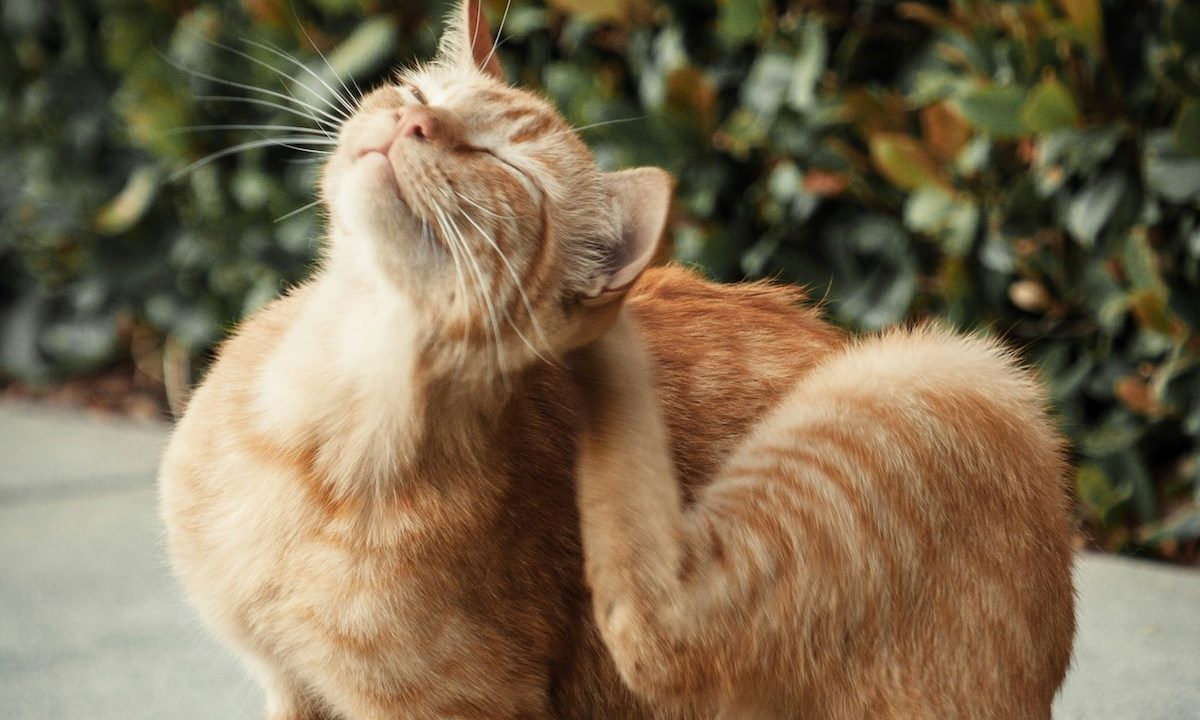
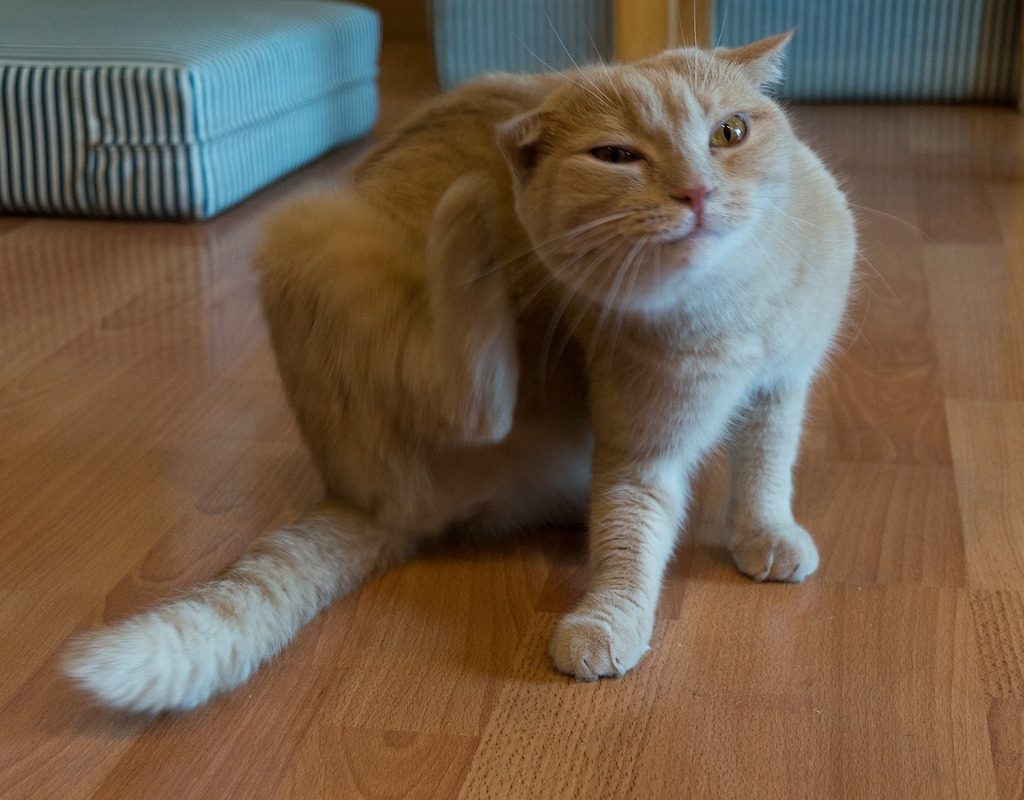
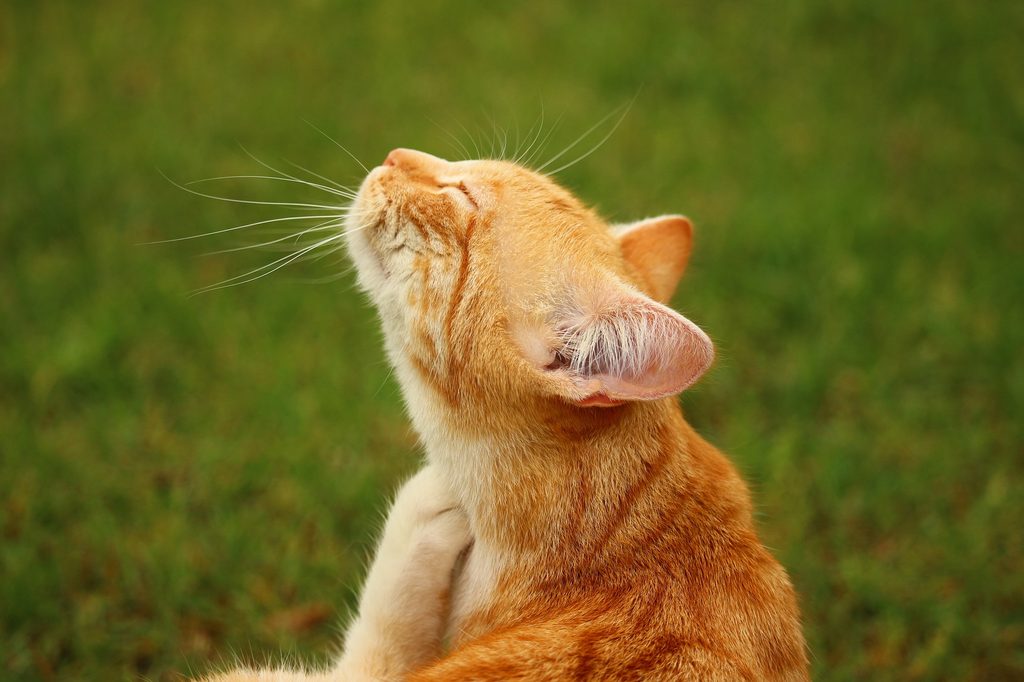
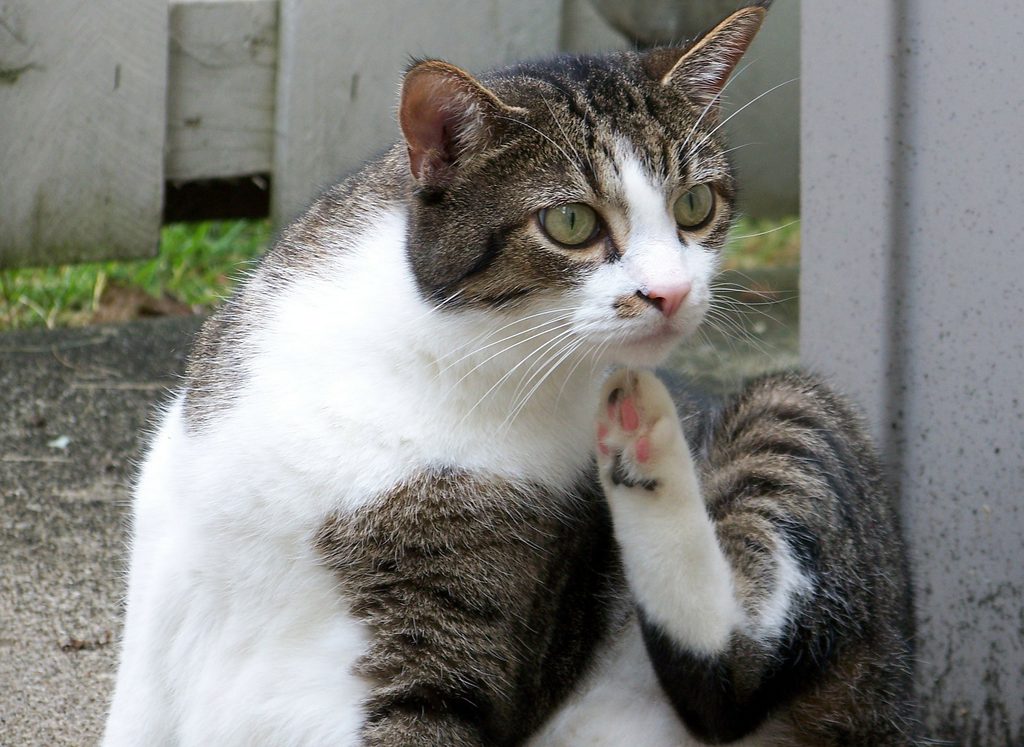
Stress or injury may cause your cat to lick and bite at her fur, but some changes in behavior, such as incessant scratching and biting, are almost always a sure sign that your feline friend has fleas. Fleabites cause horrible itching, which makes your cat scratch or bite at her fur. Fleabites can lead to dermatitis if left untreated, which can cause inflamed skin, matted fur, and even hair loss. If you see any of these signs, your cat has a bath looming in her immediate future.
Fleas in action
Naturally, the most foolproof way to tell if your cat has fleas is to spot the little critters with your own two eyes. However, this is easier said than done, especially if you have a long-haired cat. Fleas range in size; at their smallest, they’re around the size of a pinhead, and at their largest, they measure about an eighth of an inch long — and since their primary method of travel is jumping, they can be hard to spot. The armpit and groin are two places to check, as fleas tend to congregate in warm, dark areas. We recommend using a flea comb to make your job easier.
Specks on your cat’s fur
It can be tricky to catch fleas in action, but you can still find evidence on your cat’s fur. If you see what looks like cracked black pepper on your cat’s coat, what you’re looking at is called flea dirt. Unfortunately, “flea dirt” is a nicer name for flea feces. Because flea dirt primarily consists of freshly consumed blood, it turns red in the water. Yuck.
How to get rid of fleas

Dealing with a flea infestation can be stressful for you and your cat, but you have a few ways to get rid of these tiny vampires and make sure they don’t come back.
Kill existing fleas
The first step is getting rid of existing fleas. To quell an active infestation, spray your flea comb with a flea-and-tick spray and work it through your cat’s fur. If you don’t have any on hand, a combination of hot water and dish soap kills fleas almost on contact.
If you want a surefire option, go with a spot treatment designed to kill fleas. Whether you purchase spot treatments online or from your veterinarian, we strongly recommend speaking to your vet to get the dosage right. Always make sure you’re using a formula designed for cats — flea treatments for dogs can actually have fatal consequences for your feline friend.
Treat your home and yard
Carpets can be a hotbed for flea activity even after you’ve battled the invasion. To keep your home — and your cat — flea-free, you’ll need to use a three-pronged attack.
- Vacuum everything. You’ll have to vacuum your floors to rid your home of adult fleas, eggs, and larvae. If at all possible, change out your vacuum bag once you’ve finished. If you have a canister vacuum, empty it into a trash can filled with hot water and dish soap without touching the contents.
- Once you’ve vacuumed your floors thoroughly, it’s time to tackle your home with a steam cleaner. Heat and soap are lethal to fleas, so steam-clean all pet beds, mattresses, and upholstery. You should also wash your bedding in hot water.
- Lastly, use an aerosol insecticide to kill fleas in places you can’t steam-clean or vacuum. Please note that cats, dogs, and children shouldn’t be around the spray until it has dried, and you’ll probably want to wear gloves while you work.
Preventing future flea infestations
Killing the current flea infestation is only step one. The next thing you need to do is to prevent future problems. There are many resources to turn to when choosing the best flea prevention for your cat, but some flea treatments may also include a preventative medication. If this is the case, you don’t need to double down!
Some cat owners choose a flea collar for cats to provide constant protection against pests, but it’s important to note that these collars can have side effects. Instead, you can try a single-dose medication administered once per month. It’s all about finding what works best for you and your furry friend! If you don’t know where to start, you can always ask your vet for advice.
Getting rid of fleas can be challenging, but it doesn’t have to be. Keeping your cat indoors, investing in a spot treatment to prevent fleas from viewing your cat as a movable feast, and acting quickly at the first sign of fleas all help tackle current infestations and prevent future problems. If your cat refuses to stay indoors only, try lining your yard with cedar chips, which help deter fleas. Discovering that your cat has fleas is upsetting, but if you follow our tips, your cat and your home can stay flea-free.