Cats have all sorts of behaviors that might appear to be strange at first, but often there’s a reason behind these behaviors that makes them purr-fectly understandable. That’s the case when your cat bites your chin. You may have noticed this behavior on occasion, particularly when you’re petting your cat and he’s rubbing against your neck and your face. It might be surprising to suddenly have your cat start biting at you, but when you understand just why this behavior occurs, you can take some steps to prevent it from happening again. In fact, the more you learn to read your cat’s body language and understand his natural behaviors, the better you two will get along.
Love bites
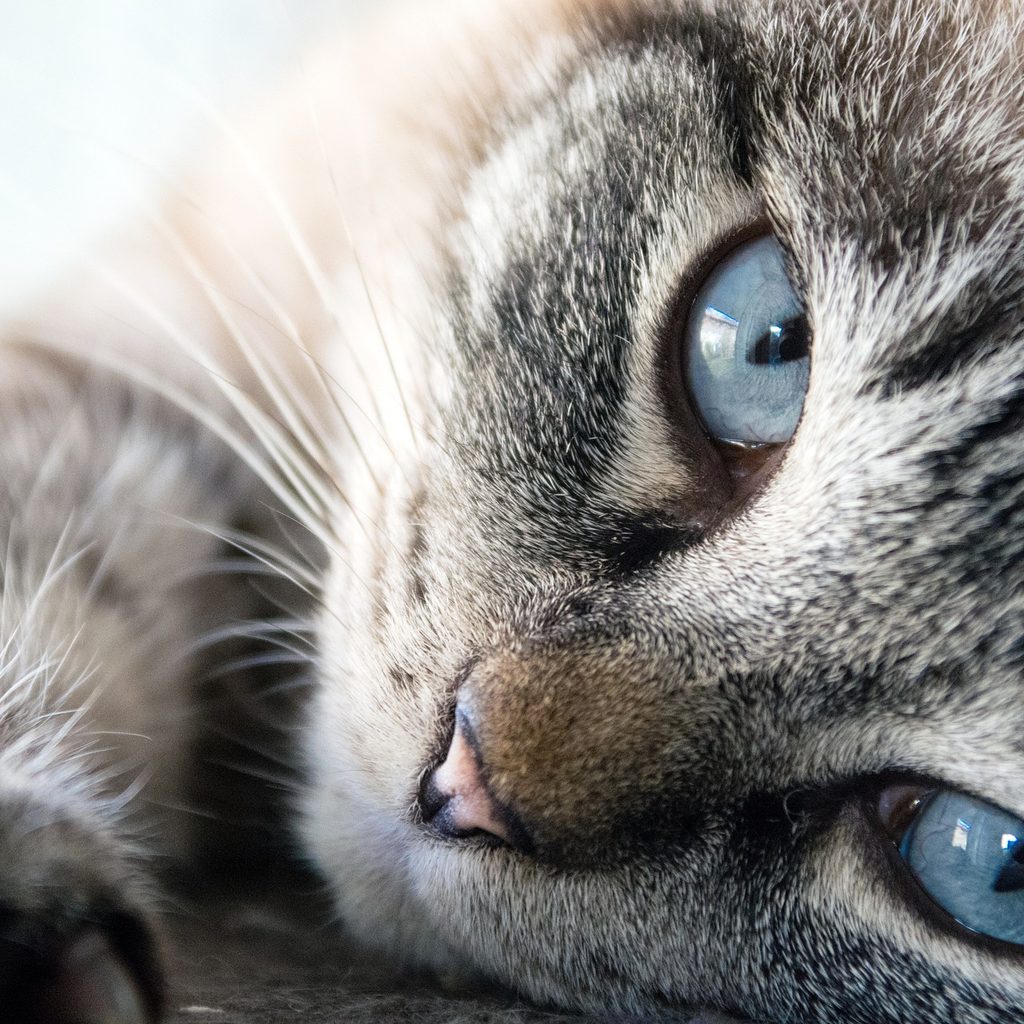
Pet MD explains that if your cat gently nips at your chin, he might be giving you little love bites. Love bites don’t break the skin and they don’t really hurt. Instead, the behavior often starts with your cat licking and grooming your skin. Then, he might move on to using his teeth a little too.
If your cat is giving you love bites, his body will stay pretty relaxed. You shouldn’t notice any hissing or growling, which can be indicative of an aggression-based bite.
We don’t know precisely why cats feel the need to give their owners love bites, but veterinarians and behaviorists have pondered a few ideas. It’s possible that these bites are unintentional and are just an extension of your cat’s grooming efforts. He might be trying to groom you and feel the need to use his teeth to get at a certain spot.
It’s also possible that your cat may be gently letting you know that he’s not enjoying the attention you’re giving him. Your cat might want to lie by or on you without you petting him, and his biting might be his way of protesting your caresses.
Overstimulation
Cat behaviorist Jackson Galaxy explains to the Sydney Morning Herald that cats may also start to bite you if they become overstimulated during a petting session. The receptors in your cat’s hair follicles are stimulated every time your pet your cat. Sometimes, those hair follicles get so overstimulated that they actually start to hurt, prompting your cat to try to get you to stop petting him.
Galaxy notes that many cats will display body language signals indicating that they’re getting uncomfortable. Your cat might flick the end of his tail back and forth and flatten his ears. His eyes might also start to dilate.
How to keep the peace with your cat
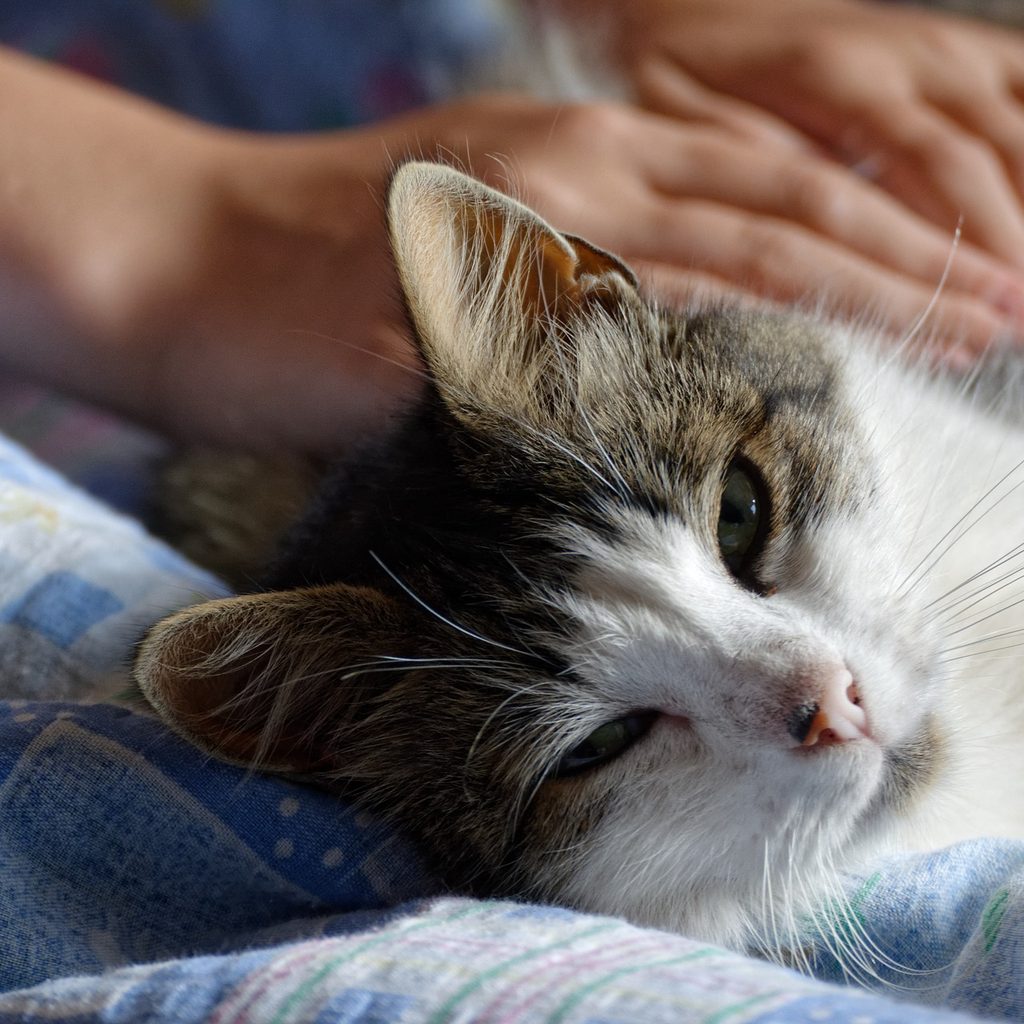
If your cat bites your chin, don’t react angrily or attempt to discipline him. Remember, your cat may be nipping you to get you to back off because he’s uncomfortable or just done with the petting session.
Instead, if your cat bites you, stop petting him and leave him alone. It may help to get up and distance yourself from your cat. Doing this shows that you respect the boundaries that he’s setting and that he’s safe with you around.
You can also learn how to watch your cat’s body language so you may spot signs that he’s getting uncomfortable long before he feels like he needs to give you a little bite. Be on the lookout for a twitching tail and pinned ears, and watch for overall signs of tension in your cat’s body.
Additionally, you can adjust your petting sessions to better suit your cat’s needs. Look at where and how you’re petting your cat before he nips at your chin. Try to determine if he does this when you pet certain areas of his body, like his belly or tail. Think about how much pressure you’re using and how vigorously you’re petting your cat, too. Your cat may respond better to lighter, slower, longer strokes than short, fast ones. Experiment with different approaches to see if you can figure out what your cat most prefers.
If you know that your cat starts to bite you after a certain amount of time, keep your petting sessions short and try to end them before he gets to that point. You may have just reached your cat’s limit for petting, and quitting sooner might keep both of you happier.
Final thoughts
Remember that if your cat bites at your chin, he usually isn’t really trying to hurt you, especially if he’s not showing any signs of aggression at the time. Instead, he is using body language to try to communicate, and it’s up to you to be receptive to his message. Hopefully, your cat doesn’t ever actually break the surface of your skin, but if he does, make sure to thoroughly wash the wound. Cats’ mouths carry significant bacteria, and if the area becomes red or painful it’s important to seek medical treatment right away.