If you own a cat, you’ve probably been hissed at by them at some point — and if not, consider yourself lucky! A fiercely hissing cat can be quite intimidating. You might know that the reasons behind a cat’s hiss could involve feelings of threat or unhappiness, but is there more to the behavior that just that? Indeed, a number of things can cause a cat to hiss.
What is a hiss?
Hissing is an innate behavior seen in all cats, including large wild cats such as lions and tigers. The sound of hissing is made when cats force air through their tongue while it is arched upward toward the center of the mouth. A puff of air is released as a cat hisses. Generally, while hissing, a cat will also arch their body, pull back their lips, and flatten their ears against the head.
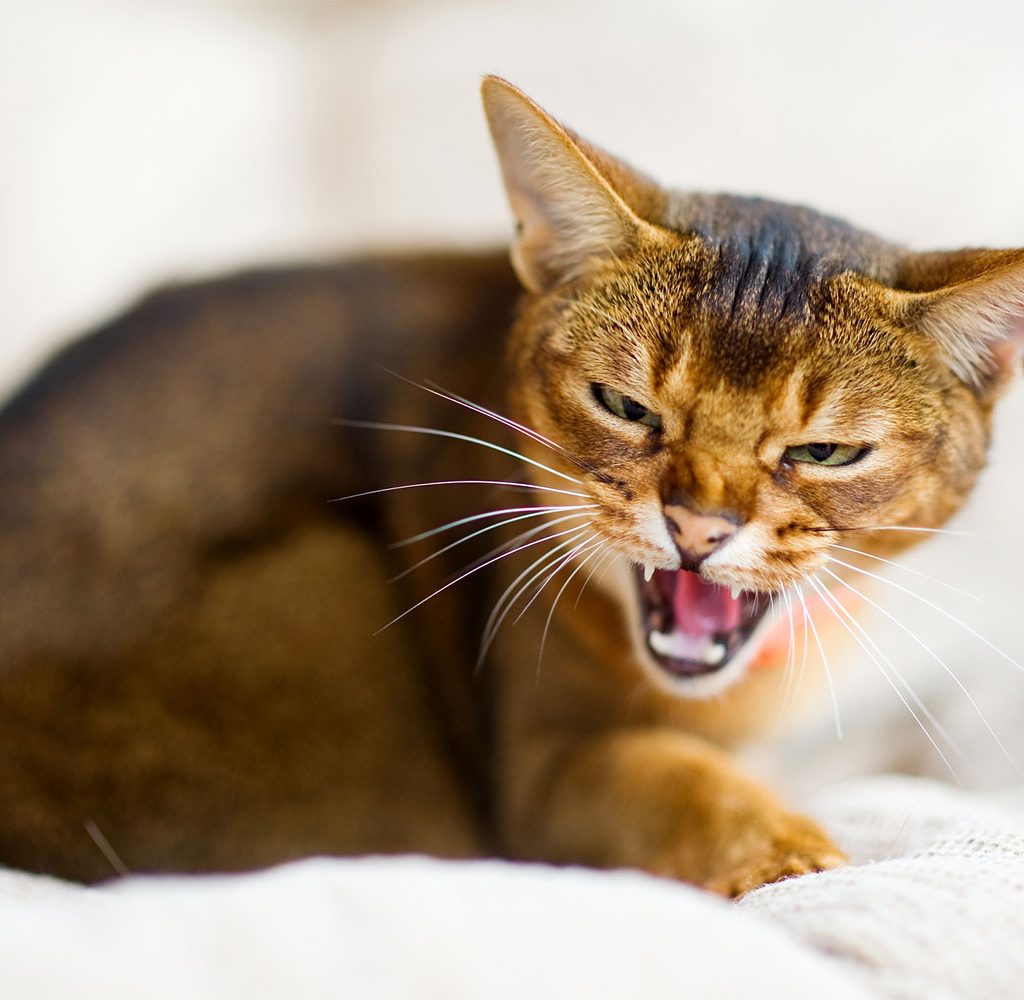
A cat’s fur stands up as another reflexive response to whatever caused the cat to hiss. You might get nervous when your cat hisses — and you’re meant to. Hissing is believed to be a defensive instinct; it mimics a snake’s hiss, and both types of hissing are intended to be unnerving. It serves as a warning, letting subjects know that if they don’t stop what they’re doing, the cat may lash out at them.
The roots of the problem
Cats might feel threatened enough to hiss in a number of different situations. Identifying what the cat is upset about is important in de-escalating the situation and ensuring the feline is comfortable again. The simplest reasons for a cat hissing are that they are either afraid of something or someone or they are hurt.
A common cause of hissing is the presence of unfamiliar objects or animals. A human or object new to the house may have lingering scents. Cats have an excellent sense of smell and can detect odors in miniscule amounts that humans cannot recognize. An unknown smell might signal danger or make a cat feel jealous. So in this instance, cats hiss to assert their dominance and warn the subject to maintain an adequate distance away. This type of hissing helps a cat establish their own territory, which is especially important to outdoor cats.
Another cause of hissing can be the need to put another animal in its place in a multi-cat household. Again, each cat may have their own territory and be willing to defend it. In order for multiple cats to effectively coexist, hissing occurs. Cats sometimes hiss as a way of calming down to prevent biting or fighting to solve problems. Cats from the same household may also hiss at each other when they don’t feel like sharing food, water, toys, or a sleeping space, or when they are tired of playing. Essentially, cats hiss at one another during these moments as a way of maintaining harmony.
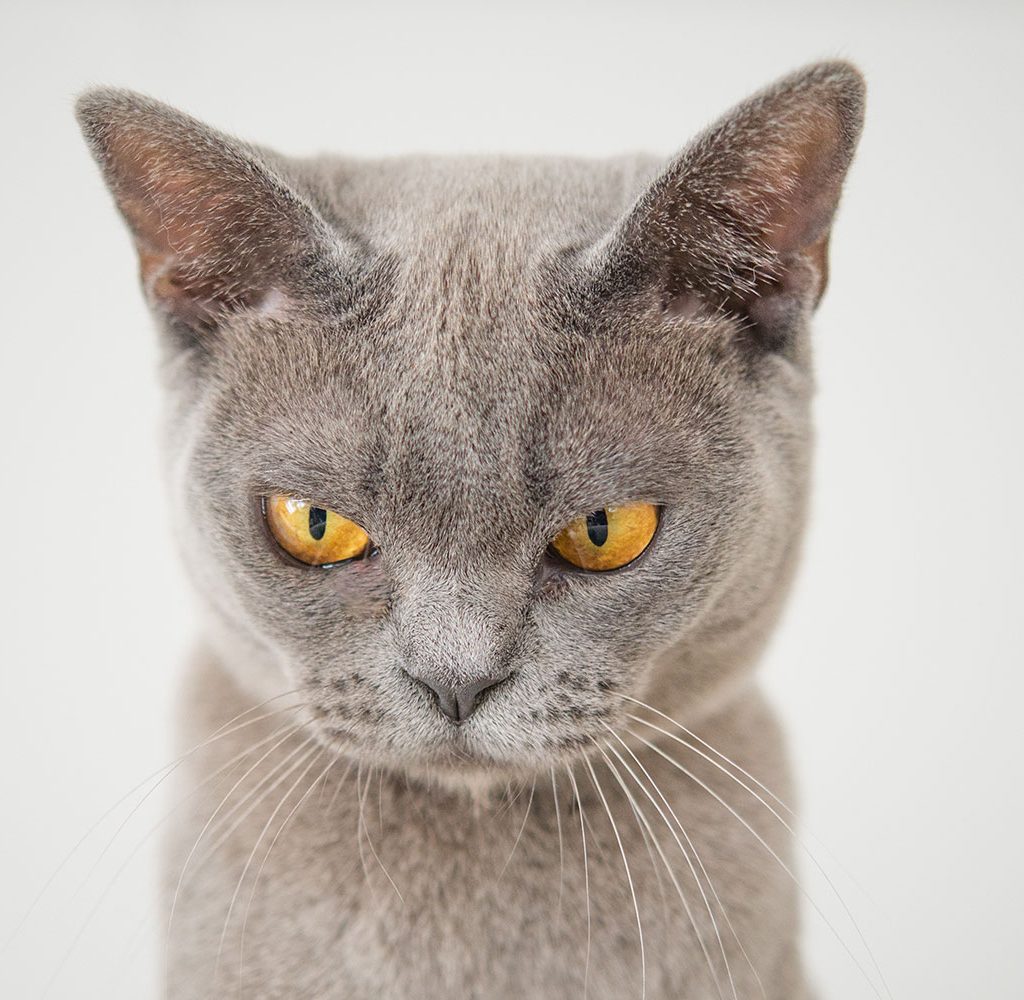
Exposure to new experiences can also elicit a hiss. These situations can be displeasing and uncomfortable, and cats might want to show their unhappiness by hissing. It is recommended that you be protected when introducing a cat to something like bathing, nail clipping, or being placed in a carrier. Wearing thick gloves and a long-sleeved shirt are just two precautions you can take.
Mother cats hiss at their kittens for a few different reasons. Primarily, mothers hiss so that kittens can learn to mimic the sound. Cats also hiss at their kittens to warn them of an incoming threat. Finally, when kittens are weaning at about 4 weeks of age, their mother will hiss at them to discourage suckling.
How to fix hissing
Ideally, give your cat time to cool off before going near or handling them. If your cat hisses while being exposed to something new, ease them into the experience. And always supervise initial interactions between pets. Respect your cat’s boundaries and hissing should be a rarity in your household.
Hissing can be scary to you — so imagine how your cat must feel! This act, as we have learned, is done to show general unhappiness or fear. It can be prevented by giving a cat space when needed and preventing overstimulation or unfamiliar things from upsetting them.
Want to find out how many times a day should you feed your kitten? We’ve got you covered.