The more time you spend around cats, the more you’ll recognize their usual behaviors. You’ll be able to tell when something is off or when they’re acting strange, but you may even have questions about the supposedly “normal” things they do every day. After all, feline behaviors and body language are vastly different from human behavior.
One common behavior you’re likely to see among pet cats is rubbing themselves against almost anything in reach. Cats rub their faces and bodies on furniture, wall corners, and even people — but what’s up with that? Let’s look into why cats do this and whether you need to do anything about it.
Why do cats rub their face on things?
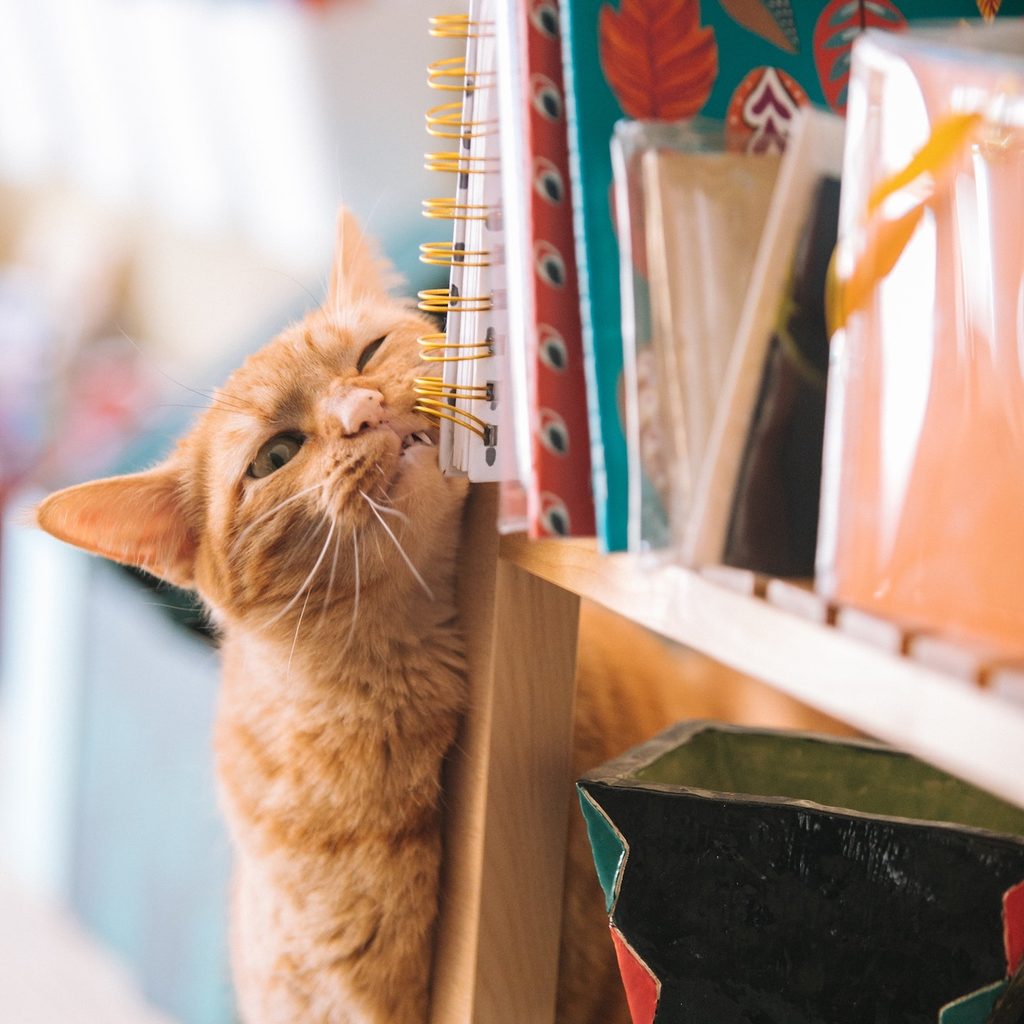
Some cats seem to rub their faces on anything they can get their paws on, even when it means knocking something over. Despite the chaos this can cause, cats are just trying to mark objects with their scent when they do this. Our feline friends have scent glands in their cheeks and chin, and the best way to release the scents from these spots is to rub them against any number of surfaces, including your favorite things.
This is totally normal behavior and not a cause for concern, but it can be inconvenient when your cat breaks something while in the process of leaving their scent. To prevent this, store valuable and breakable items in closed cabinets or containers where your furry friend can’t reach them.
Why do cats rub their face on corners?
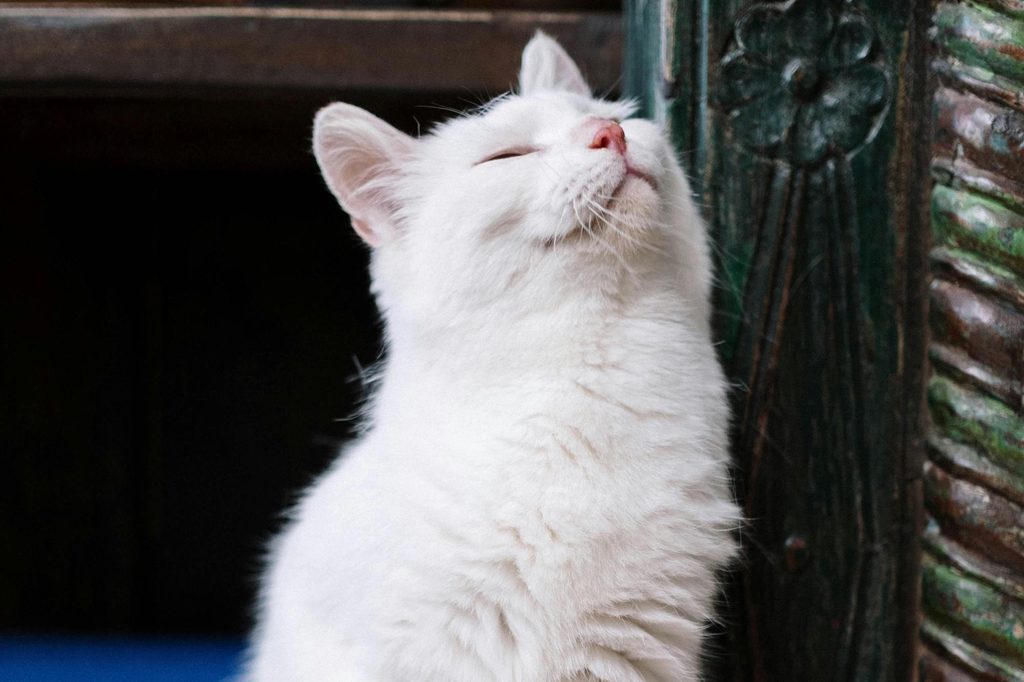
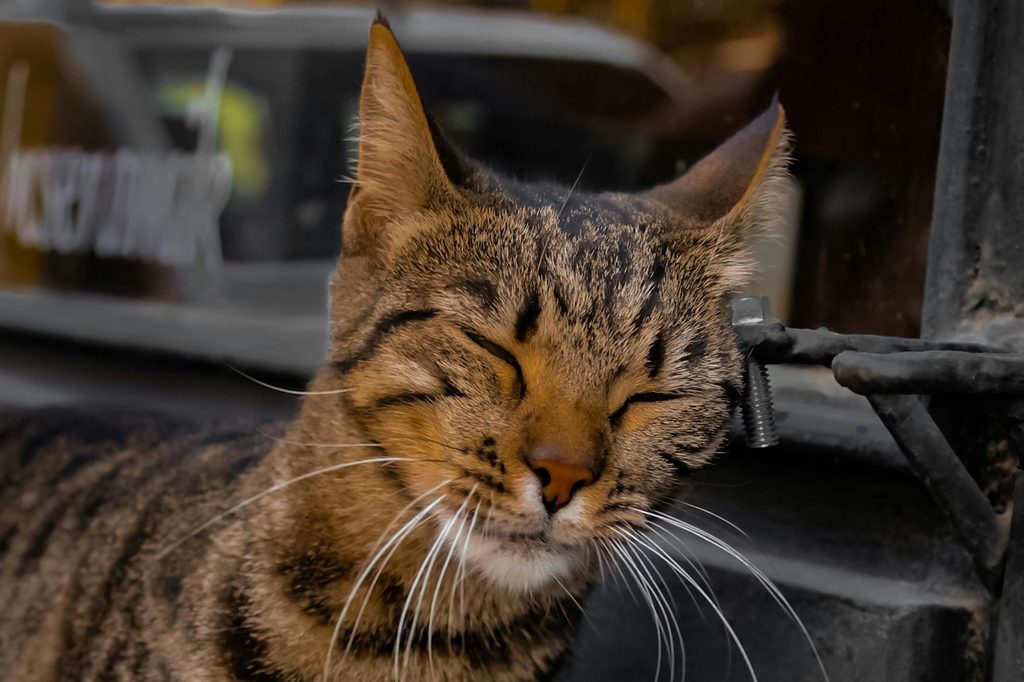
Some cats prefer to rub their faces on the corners of walls, and this can be for territory marking, too. The angled corner provides a deeper, more precise scratch, so it may be more effective than a flat surface at stimulating the scent glands. This kind of rubbing can also help distribute the oils in a cat’s skin throughout their fur, which is one natural way cats keep their coats clean and healthy.
If you’ve ever relieved yourself of an itch in an unconventional way, you can understand why cats may also do this to relieve itches or just to feel good. One theory is that cats rub their face on things as a method of stress relief, so it’s likely that the action produces a number of “feel-good” chemicals in the brain, such as dopamine.
Why do cats rub their face on people?
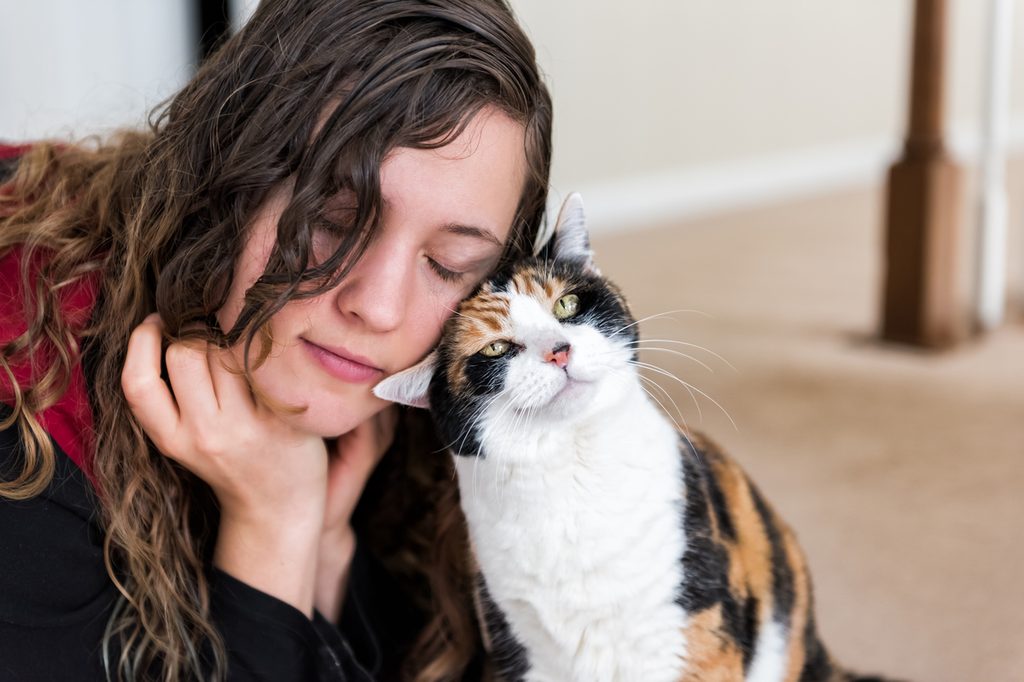
As you may have guessed, cats rub their faces on people for reasons similar to those listed above. They may be marking their human with their scent to tell other cats, “This is mine!” Or, they may simply be saying hello. Cats often greet one another by rubbing faces in order to exchange scents, and they may be trying to do the same thing with a person.
However, this kind of rubbing can also be a sign of affection. By leaving their scent on a person, the cat is claiming them as their own, so you should feel flattered if your feline friend ever rubs against your leg or body.
It’s very rare that you’ll need to be worried about a cat rubbing their face against an object or person. This is a very frequent part of feline body language and communication, but if your cat begins to rub against anything and everything as if trying to soothe an itch, you may want to visit the vet to double-check that everything is normal. But most of the time, they’re just being a cat!