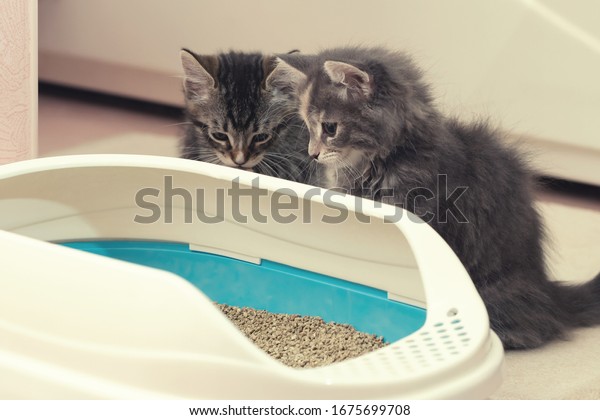
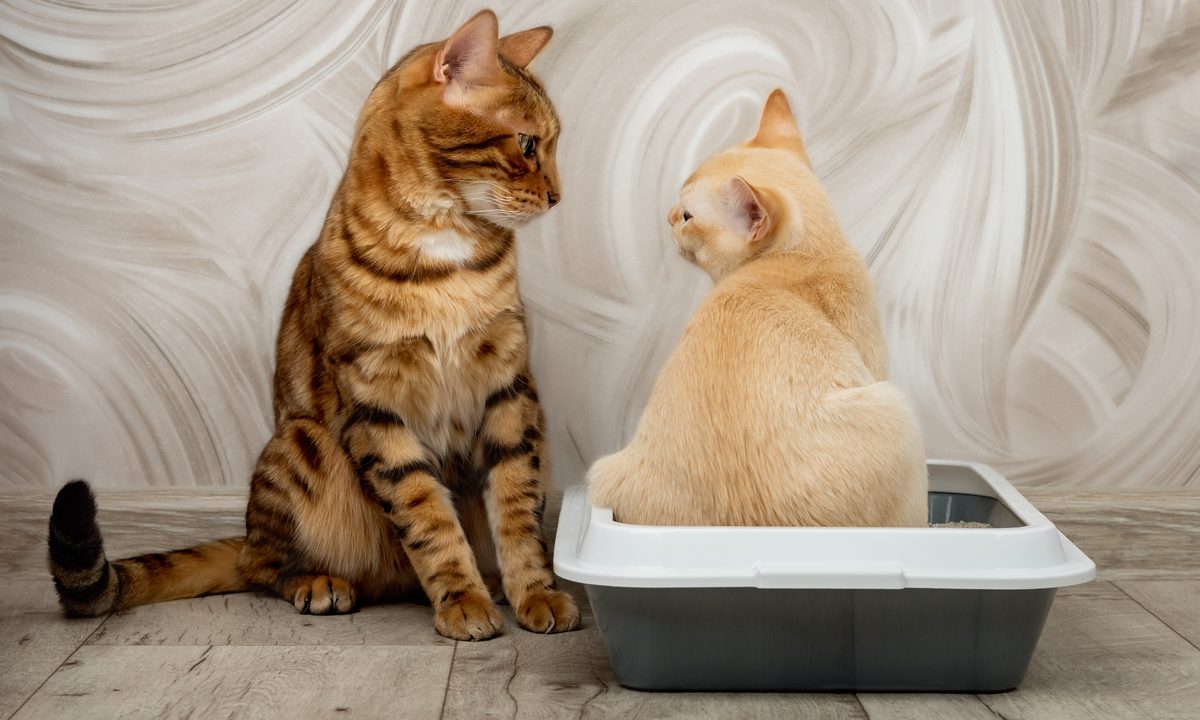
The decision to bring home a new pet can be spontaneous or a well-thought-out process, but you still may find yourself caught off guard by all the shopping you’ll have to do. Are you prepared to buy double the cat food? You might expect to purchase two of everything once your second kitty comes home, but some cat owners wonder, “Will cats share a litter box?”
Navigating the litter situation will take some adjustment from everyone, but your cats will figure out what works best for them. To help them get started, let’s learn about different litter box setups for multi-cat households. Whether or not your cats share a litterbox, you can keep your home organized and clean with just a little planning.
Will cats share a litter box?
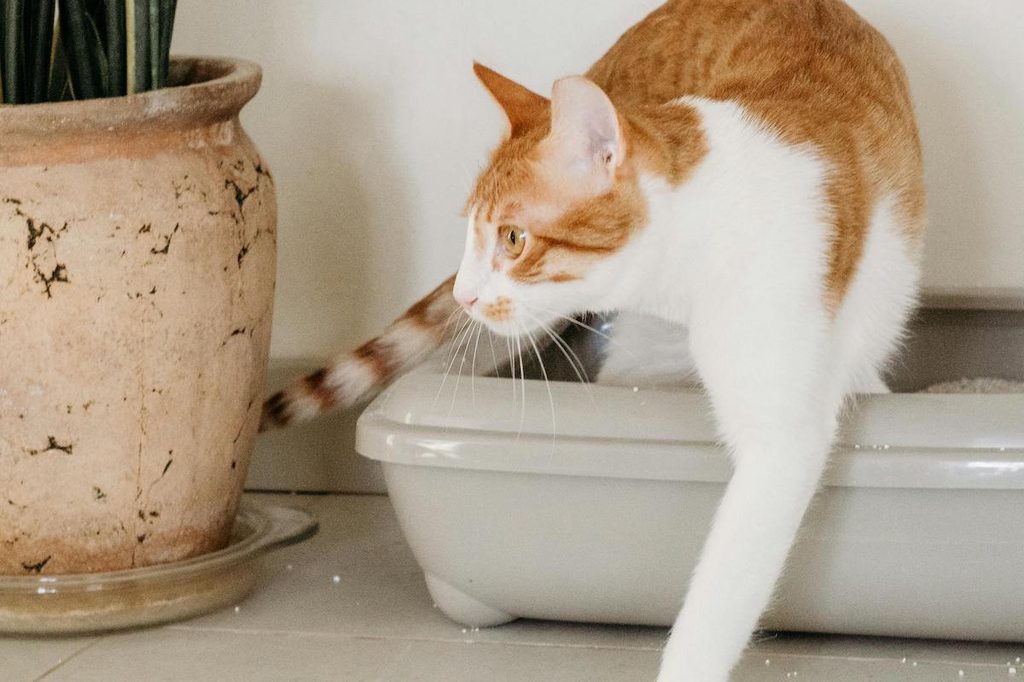
Cats may be known for marking their territory, but many felines aren’t territorial over litter boxes. If there are enough litter boxes in the home, cats that live together almost always share them. Your feline friend doesn’t need their own personal litter box, but they may still want their space while doing their business. It’s understandable!
Is one litter box enough?
One litter box is never enough for two or more cats, but it’s recommended that even single-cat households have at least two litter boxes. This way, your cat always has at least one clean litter box available, and they have the option to go elsewhere if needed. Having two litter boxes can also be helpful in avoiding litter box fatigue.
How many litter boxes is enough?
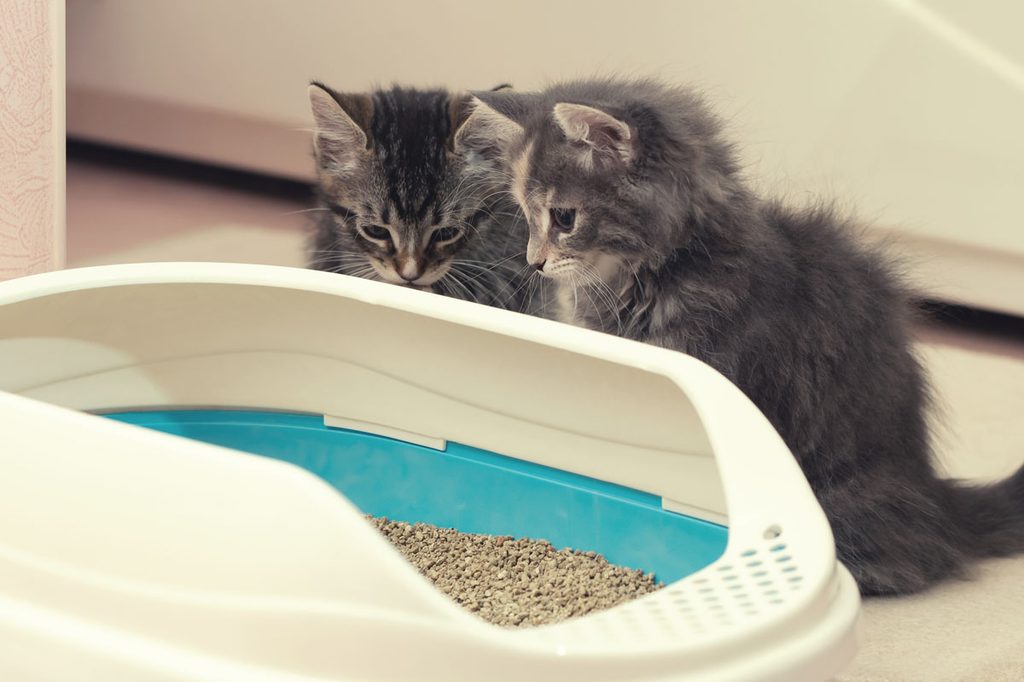
When you have more than one cat at home, you should have at least one litter box for every cat, plus one extra. If you have two cats, for example, aim for three litter boxes spread throughout your home. Not only does this give both cats options for where to relieve themselves, but it also reduces competition, territorial behaviors, and unwanted surprises during vulnerable moments.
If you notice that both cats are primarily using one litter box, try moving the second box to a different location to see if that solves the problem. But if a new litter box location doesn’t do the trick, you may need to provide a little extra encouragement. To do this, scoop a little bit of used litter into the second box to help your cats understand what it’s for. If you truly need to, you can place both litter boxes in the same room — or even next to one another — but keep an eye out for any competition among fur siblings.
Choosing the best litter boxes for multi-cat households
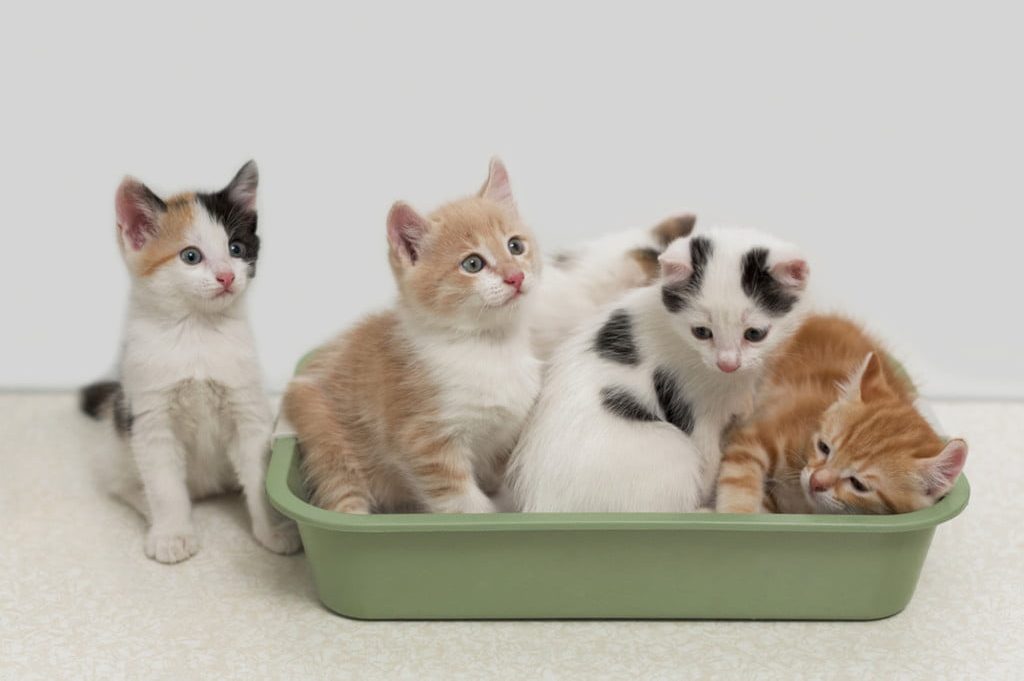
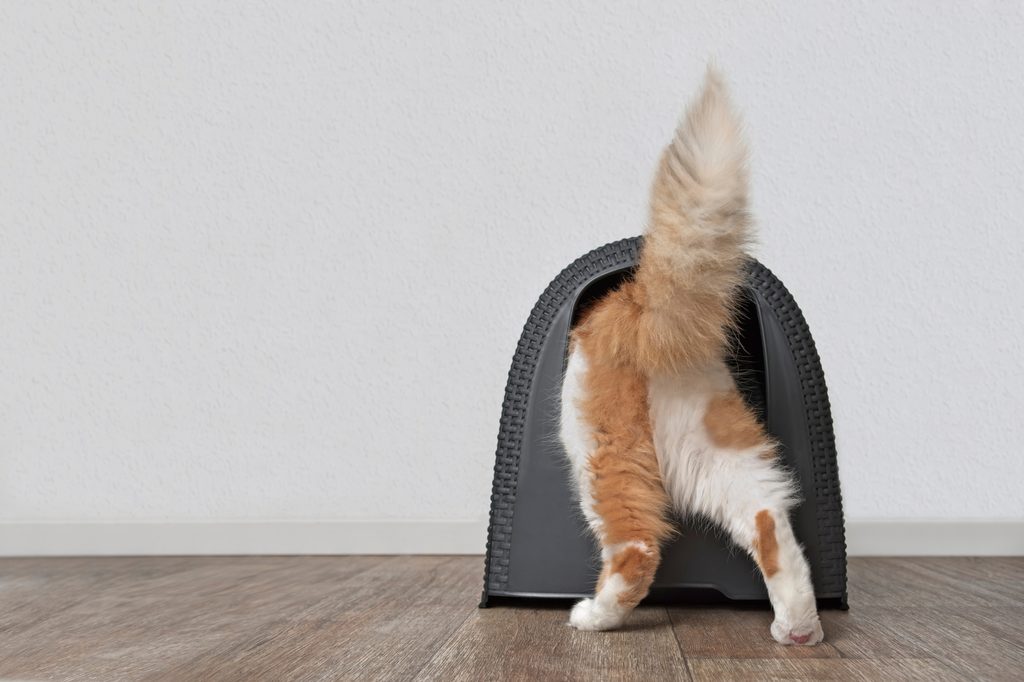
Multi-cat households may opt for larger litter boxes to accommodate higher usage, but you’ll still have to remember to clean these boxes regularly. Options like the Frisco High-Sided Cat Litter Box give cats the privacy they need while keeping litter clean and contained, which gives you a head start on tidying up. Better yet, cats that like their own space should try hooded litter boxes. These enclosed boxes will allow them to relax, even though your cats can run the risk of surprising each other since they can’t see inside.
Don’t stress too much about the kind of litter boxes your cats have. After all, the number of litter boxes is more important than the type! Your shopping decisions may come down to what your cats like best and what’s easiest to clean. Self-cleaning litter boxes can be incredibly helpful for busy cat owners, but it can take some trial and error to find the type of litter boxes your kitties like best. Be patient — you’re all adjusting to a new routine.
Keeping litter boxes and spaces clean
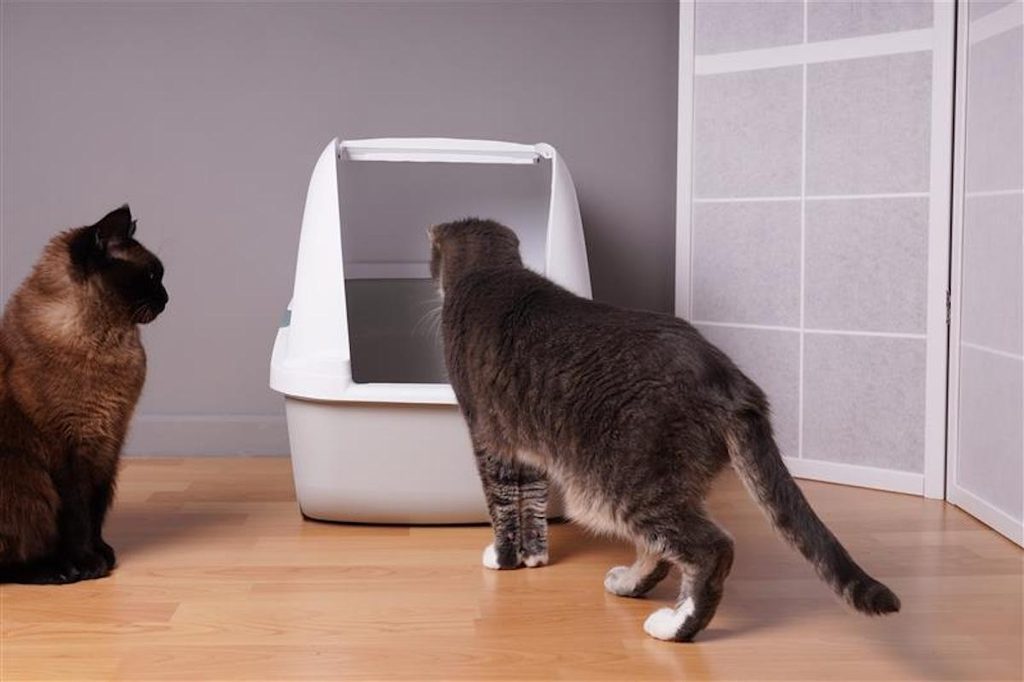
Cleaning after twice as many cats may take extra time, but cleaning litter boxes thoroughly is the key to keeping your home smelling fresh no matter how many cats you have. All litter boxes should be scooped at least once per day, while you can opt for a full cleaning, including replacing the entire tub of litter, about once per week. Be sure to scrub thoroughly with soap and water!
The type of litter you choose can also affect your cleaning experience. Clumping litter can make daily scooping one of the fastest chores on your list, but non-clumping litter may be more effective at keeping unwanted smells under control. Of course, self-cleaning litter boxes will make your job as easy as possible, but not everyone can splurge on a pricey home accessory. As long as you can stay on top of odors with your cleaning routine, an automatic litter box isn’t necessary.
Every multi-cat household will find a litter situation that works for them, whether or not it includes kitties sharing litter boxes. As long as your cats are happy and your home is clean, not much else matters!