
If you live with an Australian shepherd, you’ve probably fallen in love with those bright eyes and that expectant expression, along with his endless desire to please. It seems our Aussies are always up for activity, too, no matter what it might be. That’s probably because this breed’s ancestors were Spanish herding dogs whose job was to guard the conquistadors’ flocks of Churra sheep, responsibilities that demanded high energy and kept them especially busy.
But those innate characteristics can pose some problems today. If you find your Aussie herding your family to the dinner table, barking incessantly, or digging up your backyard, he might just be bored. You still love him, of course, but unless you live on a sheep farm where his herding instincts are put to good use (and wear him out), you’ll need to teach him some manners. Fortunately, training your Australian shepherd is easy if you follow these steps.
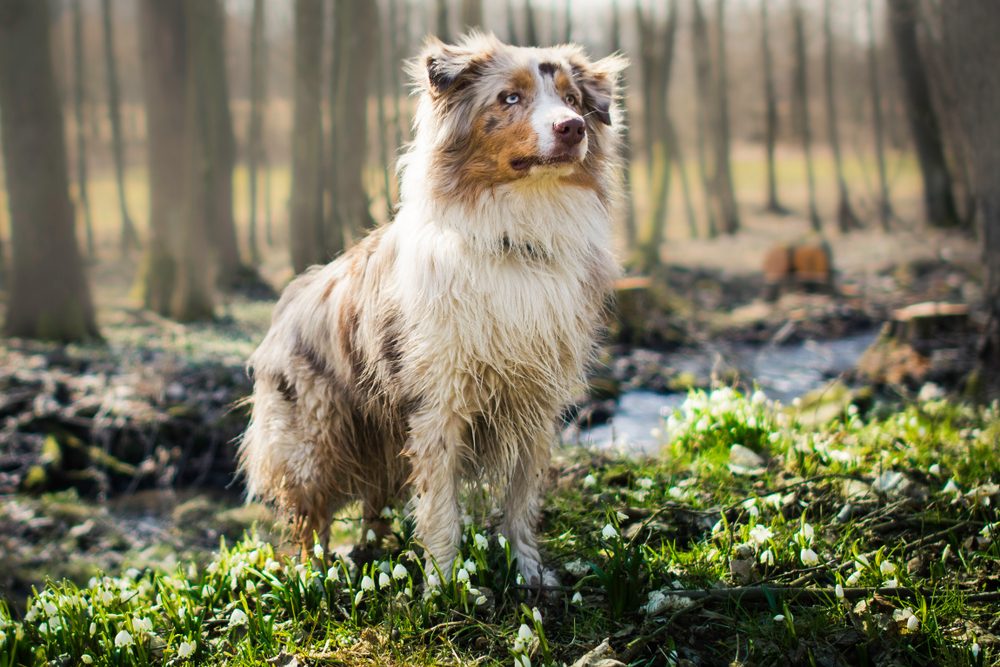
Be social
From the time he’s a little puppy, expose your Aussie to as many different experiences as possible. Although they are a protective breed, Australian shepherds can also be shy and wary around strangers and in unfamiliar situations. Whenever possible, let your dog accompany you when you leave the house. Doing so helps minimize his fear and the possibility he’ll be aggressive or fearful when he encounters something new as he grows older.
The same holds true if you’ve adopted an adult Aussie, except you’ll want to take things slowly. Start with taking walks so he can learn leash manners and encounter new sights, smells, and other dogs with their humans. Introduce him to a few of your friends at a time, preferably at home where he feels safe. Walk around the perimeter of the local dog park before you go inside so he can process what he’s seeing and smelling. If he’s reactive, consider using a muzzle until he’s calm enough to interact without aggression.
Teach the basics first
Aussies are exceptionally smart, as you’ve probably noticed, but short training sessions of no more than 10–15 minutes at a time are best for both of you. Start with teaching him these basic commands:
- Come, for those occasions when you accidentally drop his leash or leave the gate to the backyard wide open.
- Sit, so he learns how to say “please” politely.
- Down, so he knows when it’s time to relax.
- Stay, so he will remain where he is until you tell him it’s OK to move.
- No, to help him understand when a behavior or activity is undesirable.
- Heel, so that he learns to pay attention to you when you walk together.
Be consistent with the language and hand gestures you use. Follow each training session with a lot of love and playtime, especially since your Aussie isn’t fond of sitting still for long periods.
Use rewards and praise
Because your Aussie adores you, using positive reinforcement to reward good behavior works much better than punishing him for doing something wrong or not responding to your command. When you use treats and praise to reward his progress, your smart little dog will quickly learn that training sessions with you are something to look forward to. Likewise, a gentle reprimand in a calm, firm voice along with temporarily withholding affection is punishment enough when he does something he shouldn’t.
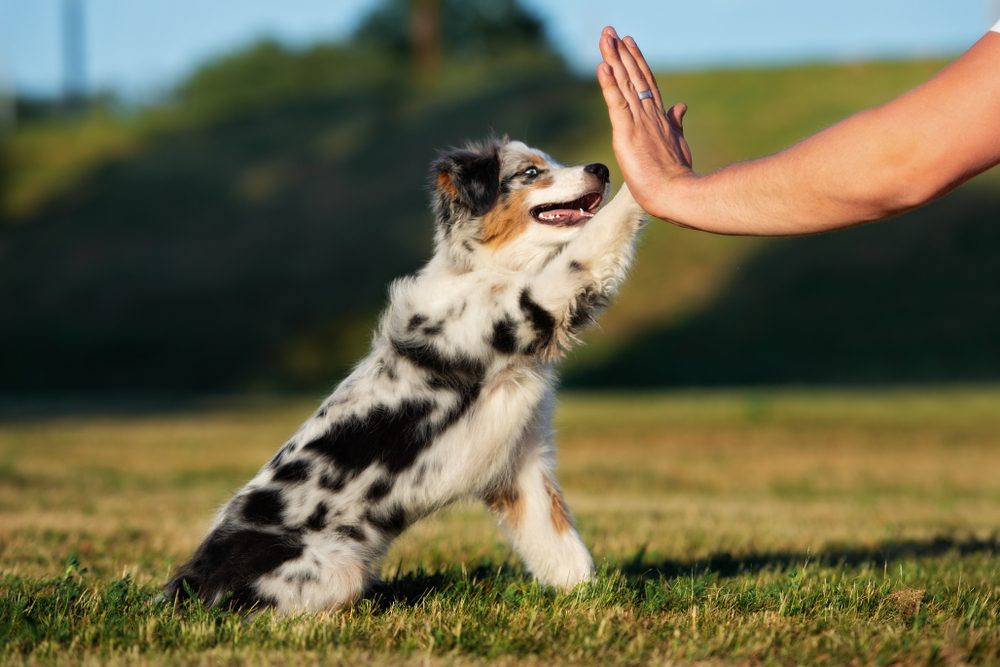
Practice makes perfect
Practice these basic commands several times a day, even after he’s mastered them. Challenge your Aussie by increasing the number of distractions during training sessions to make sure he is compliant in every situation. Once he’s mastered basic commands, begin teaching him more advanced tricks. Australian shepherds require a lot of mental stimulation, so use your creativity to devise ways you can engage his mind as well as his body throughout the day.
Exercise patience
Your Aussie is a smart dog who is highly attuned to his environment, especially the tone of voice and body language of his favorite human. Resolve to begin every training session in a good frame of mind. If you become frustrated, stop and resume the training once you’re in a better mood. Lavish him with love and praise when he responds to your commands and gently correct him when he doesn’t. Before you know it, you’ll have a devoted member of the family who is also well mannered. The more you’re able to channel your Aussie’s intelligence and unlimited energy in a positive direction, the happier he will be.