If you’re lucky enough to live with a dachshund then you know what it’s like to be shadowed by your four-legged friend. Affectionately called doxies, these spunky, loving dogs are fiercely loyal and protective of their families. They have been favorite companions for a long list of celebrities including Marilyn Monroe, Audrey Hepburn, and Clint Eastwood. John Wayne’s dachshund Blackie was hailed as a hero when he saved his family’s life by alerting them to a fire in their house in the middle of the night. Read on to learn everything you need to know about this courageous breed.
Dachshund characteristics
There are three different sizes
Dachshunds come in three different sizes and all have long backs and short legs earning them the nickname wiener dogs.
- The largest of the breed is between 30 and 35 pounds and was bred to hunt badgers and boars.
- The standard dachshund is between 16 and 22 pounds and was originally used to hunt badgers and foxes.
- Miniature doxies weigh under 11 pounds and originally hunted smaller prey like rabbits.
They have different coat types
Dachshund’s coats can be shorthaired (smooth), longhaired, or wirehaired. According to Wisdom Panel breed experts, the smooth-coated dogs were the original of the breed. Breeders believe that the wirehaired variety was developed by crossing shorthaired dachshunds with hard-coated terriers like the Scottish terrier and wirehaired breeds such as the schnauzer. The origin of the longhaired dachshunds is unclear. Some experts believe that shorthaired dachshunds occasionally produced longhaired pups. Others think that the longhaired variety came from breeding shorthaired dachshunds with small spaniels and German stoberhunds.
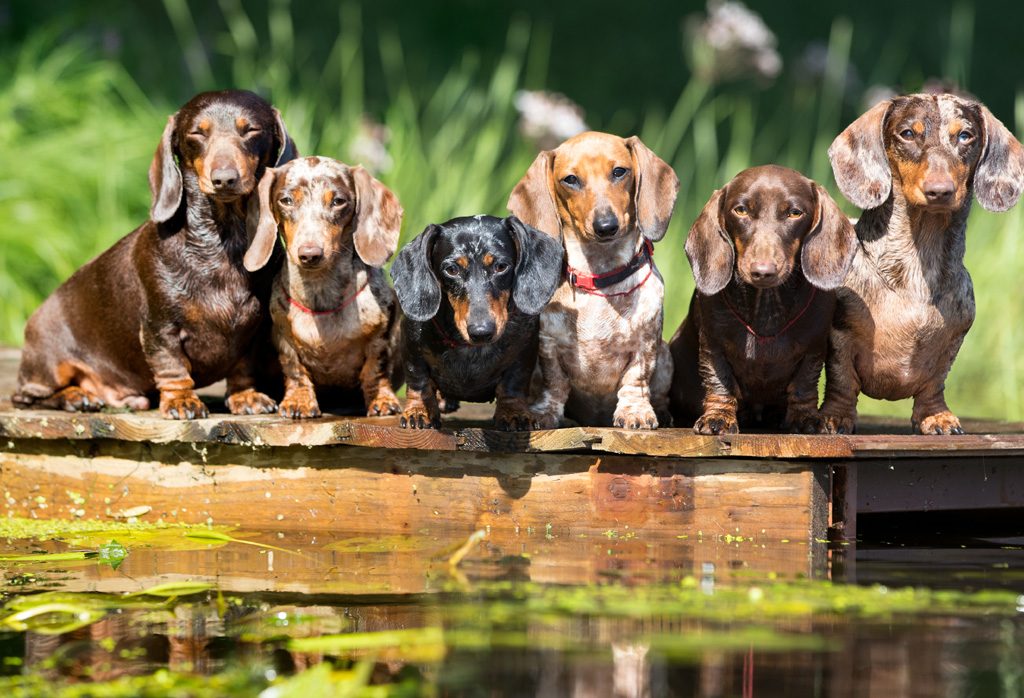
In addition to different coat types, dachshunds come in a variety of colors including red, black, cream, chocolate, dapple, striped, and sable.
Temperament and personality of the dachshund
Dachshunds are daring, curious, and playful dogs who enjoy digging, hunting, and tracking. While they can be shy around strangers, they are quick to defend family members if they sense danger. Wirehaired doxies tend to have bolder personalities while the miniatures are the most timid of the three.
Dachshunds are highly intelligent and have a stubborn streak which can make training challenging. Housebreaking can often take longer than with other dogs. According to the American Kennel Club (AKC), dachshunds are sensitive dogs who respond best to positive reward-based training. They require a modest amount of exercise and would be fine with two walks a day, each about half a mile. Of course, longer would be better. Experts at the Dachshund Club of America (DCA) say that dachshunds enjoy competing in obedience competitions and are a natural fit for field and earth dog trials.
Dachshund health
According to ASPCA Pet Health Insurance, when cared for properly dachshunds can live between 12 and 14 years. They are prone to spinal problems, especially intervertebral disk disease because of their long spinal column and short rib cage. Veterinary experts say it’s essential that dachshunds maintain a healthy weight to avoid putting a strain on their spine. To minimize back injuries the DCA advises limiting how often your dachshund jumps off of furniture or runs downstairs. The club recommends teaching dachshunds to use ramps to get on and off furniture. Also, learning how to hold a dachshund so that his back is horizontal can help reduce stress on this breed’s back.
In addition to spinal injuries, dachshunds are susceptible to patellar luxation (dislodging of the kneecap) and brittle bone disease. Hereditary conditions in this breed include epilepsy, Cushing’s disease, and thyroid and autoimmune disorders.
Grooming requirements for dachshunds
Dachshunds are medium shedders and grooming requirements will depend on the coat type.
- The longhaired coat should be brushed and combed at least once or twice a week, with occasional trimmings.
- The wirehaired coat can be plucked or hand-stripped several times a year with occasional trimming of the eyebrows and beard. The coat should also be brushed or combed once or twice a week.
- The smooth dachshunds require the least amount of grooming. Experts recommend stripping dead hair about twice a year.
What type of pet owner should consider a dachshund?
Because of their small size and friendly disposition, well-trained dachshunds make great apartment dogs. These hounds also enjoy country living where they can run and dig in a fenced-in yard. Dachshunds might not be the best choice for first-time dog owners who may feel overwhelmed by their stubborn streak.
Here is a list of people who would benefit from living with a dachshund:
- Someone who works from home or is only gone a few hours during the day.
- Someone interested in doing therapy work. Well-trained dachshunds make wonderful therapy dogs spreading cheer in hospitals and nursing homes.
- Retired people looking for a small, low-maintenance dog who can adjust to smaller living spaces.
- A single person looking for a loyal and loving four-legged companion.
- A family with well-behaved children seeking a playful companion.

There’s no denying that a dachshund’s soulful eyes can melt your heart, but it’s important to do research before making a breed decision. If you do decide that a dachshund is a good fit for you, be sure to check out dachshund rescues as well as reputable breeders. There are lots of wonderful doxies just waiting for a second chance in a loving home.