Is your pup an escape artist when it comes to their crate? While it can be maddening to return home to an empty crate, a guilty dog, and a shredded sofa, an escape attempt can also be dangerous for your dog. Military-grade dog crates may seem like the only recourse for your little Houdini, but (almost!) any crate can be made escape-proof.

Can I lock my dog in a crate?
First, let's cover how your crate should eventually be used. Many dogs will grow to love their little den, and go there completely unprompted. But that takes time and dedication (we'll cover how to crate train them below). During toilet training, you'll likely need to keep your puppy in the crate to prevent accidents and teach him how to potty outdoors.
After the training period is over, some pet parents opt to keep their pup in the crate when out of the house and overnight (many dogs will stay there on their own and don't need to be locked in). This works especially well if your animal is prone to destruction or anxiety. Others decide to retire the crate and set up another spot for Fido. The important thing to remember: Never use the crate as punishment or correction. It's a safe space for your dog.
Reinforce weak spots
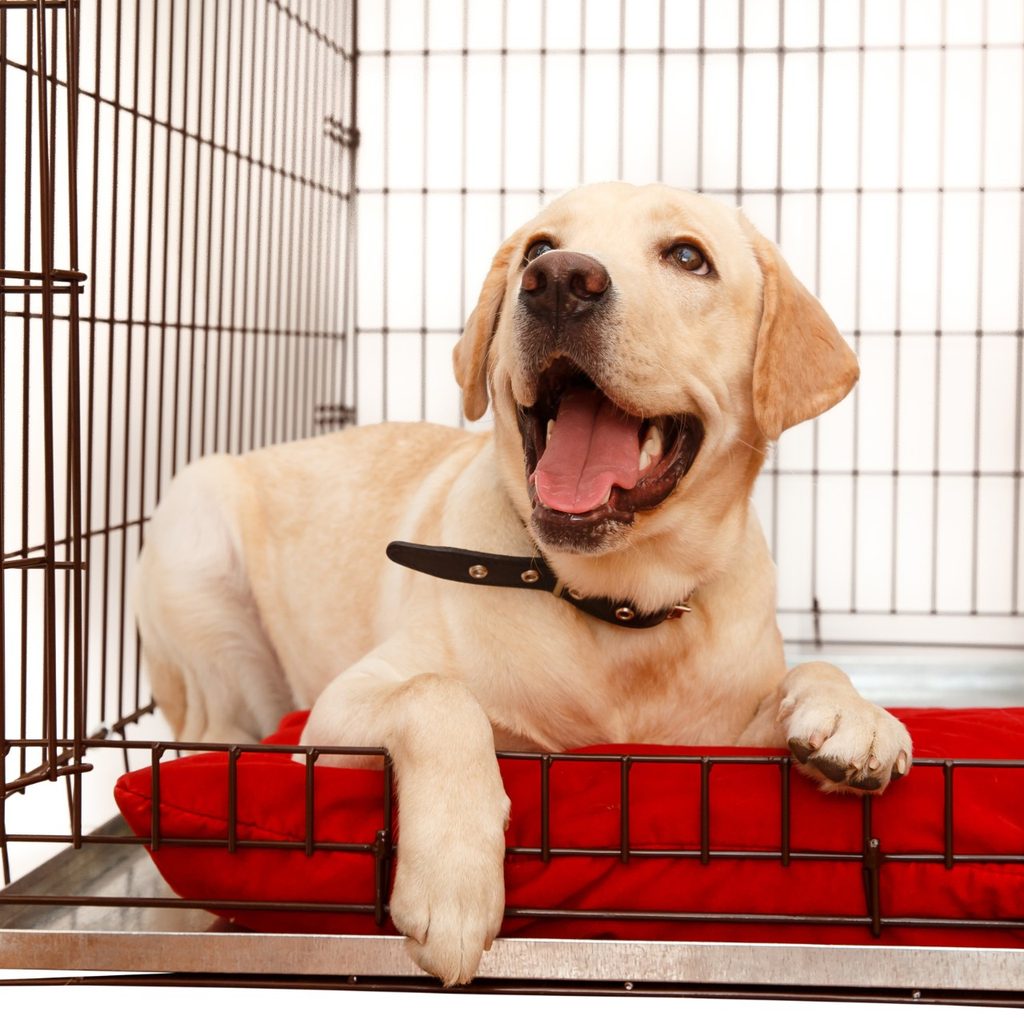
Most dog crates are collapsible for easy transport and storage. However, what makes them convenient can also make them weak. The walls and floor are often your dog’s first point of attack, and the latches that you thought were sturdy can turn out to be child’s play for a determined Fido. But there are a few things you can do to fortify these problem areas.
Step 1: Strengthen the walls.
Grab some zip ties and attach them to each corner, taking care to trim the tie short enough that your pup isn’t able to chew them.
Step 2: Toughen up the floor.
Drill small holes on the corners of the plastic tray and attach zip ties, again taking care to trim the tie.
Step 3: Add padlocks.
Purchase a small padlock and add it to the latch if your little escape artist has figured out how to open his door. Be sure to keep the padlock keys in an easily accessible and memorable place.

Crate train your dog
Proper dog crate training is one of the most important steps in ensuring crate safety. If your dog has never encountered a crate before, don’t just lock them in with a treat and disappear. Imagine if you were left in a cramped, unfamiliar place that you knew nothing about.
Sounds frustrating, doesn’t it? Your dog feels the same way! There are countless articles, books, and videos that break crate training down into easily manageable tasks, so pick one that you’re comfortable with and get to work!
Step 1: Introduce the crate.
Start by offering treats in and around it, progressing to feeding meals in the crate. That will make him excited to go into his little cage because he associates it with food.
Step 2: Practice locking the crate.
Then retreat to another room before you return and open it. Start by leaving for under a minute and build up in small increments. Eventually, you'll be able to go for long periods without any fuss.
Step 3: Make the crate a retreat.
Dogs are den animals. They crave small, dark, comfortable places to relax, de-stress, and sleep. Your dog’s crate should be their den. Line the floor with a soft blanket or a shirt with your scent.
Step 4: Dim the lights.
Consider purchasing a crate cover to create a more den-like environment. Towels or blankets are good substitutes and provide the same function. If your dog comes to see his crate as his space, he'll be more likely to seek it out for his own comfort, making him less likely to hatch an escape plot.

Keep your dog entertained
Some dogs escape their crates simply because they’re bored. You wouldn’t want to be confined to a small space with nothing to do for hours — and your pup wouldn’t want that, either. If you’re sure that your dog will not destroy them, try to include some of their favorite toys. Squeaky toys can make for a fun distraction, and rubber toys can help alleviate the desire to chew on less desirable things, like the dog crate itself.
Many pet owners find that a frozen treat provides hours of distraction. Simply freezing yogurt, peanut butter, canned pumpkin, or other dog-friendly treats in a rubber chew toy can give your dog with enough entertainment to make their time in their crate more desirable. A distracted pup is a happy pup!
Making your dog’s crate escape-proof doesn’t have to be an expensive endeavor. Simple reinforcements will ensure that almost any crate can take a beating without giving way. Crate training your dog, making the crate a desirable retreat, and entertaining your dog while in their crate can go a long way in making any crate escape-proof, as they simply won’t want to leave. Following these tips just may make your little Houdini hang up their cape! If you want to know more, you can check our different ways on how to puppy proof an apartment.