
Bringing your dog to the dog park might look as easy as packing the car and heading out, but is it really? Although many people do exactly that, it’s safer to make a plan and take a few precautions before diving in. Every dog behaves differently around other dogs, and it’s hard to know what to expect or how to prepare.
These dog park tips, however, will ensure everyone has the best time. Although you may feel like you’re on high alert at first, you’ll begin to understand what normal playtime looks like and when to step in. Here’s what you should know.
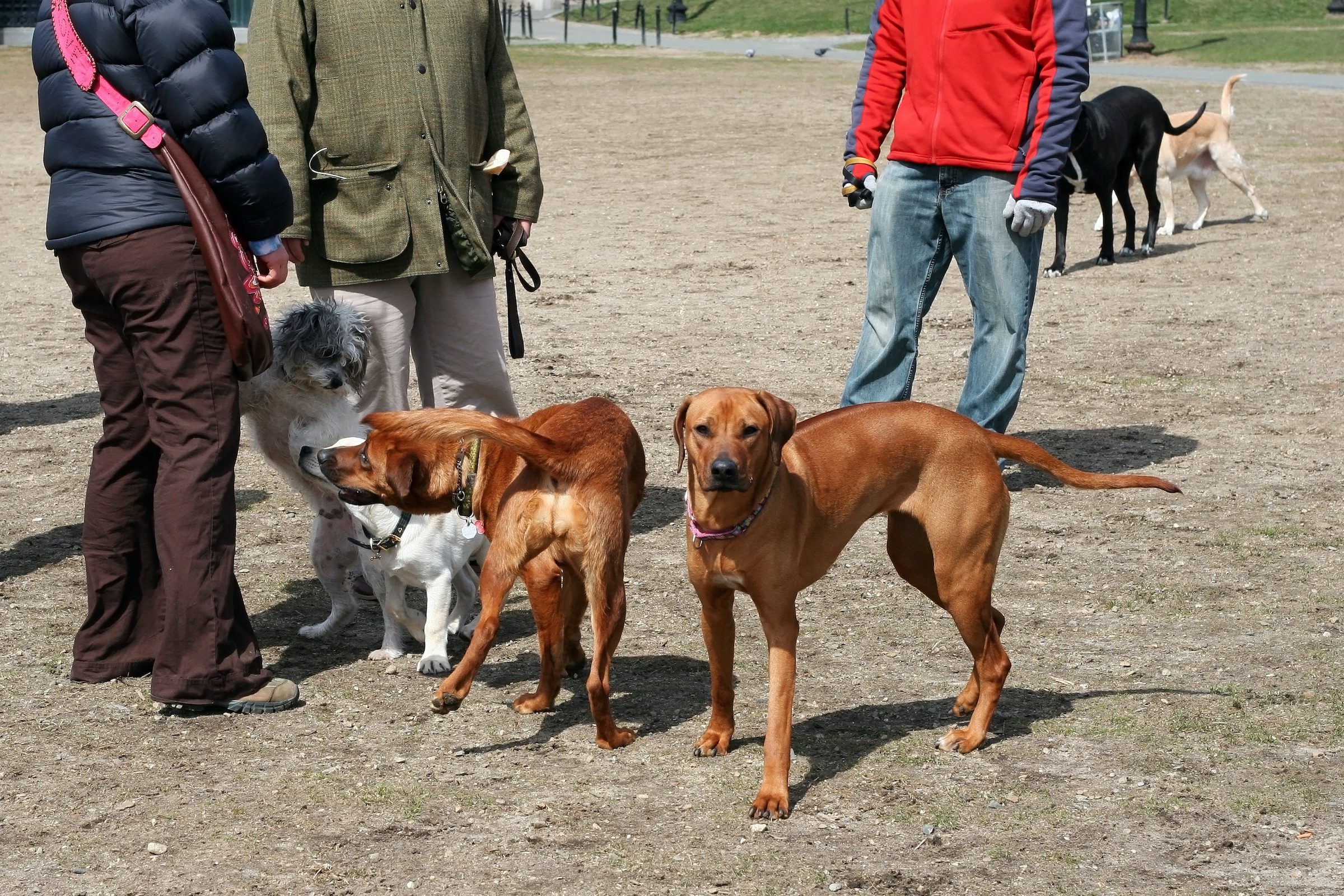
Is this dog park safe?
Before bringing your best bud to the dog park, it’s a good idea to drive by or walk around the park by yourself first. Do you feel comfortable with what you see?
Ideal dog parks are well maintained to keep both pups and people safe. All fences and gates should be sturdy and rust-free, while plants should be trimmed to an appropriate length to avoid excess fleas, ticks, thorns, and other dangers. Of course, you can’t get rid of every insect or branch (you’re outside, after all), but some effort to keep a park clean is a great indicator of a good time to come.
It’s important that small and large breeds have separate areas to socialize. Some working, herding, and hunting breeds can see miniature dogs as prey rather than playmates, while other pups just don’t know their own strength.
Is your dog friendly with other dogs?
If your dog is aggressive, afraid, or even just shy, a trip to the dog park probably won’t go well. Even the most well-meaning pups can bite or lash out when feeling cornered or overwhelmed. It’s not because they’re naughty or mean — it’s just instinct!
To avoid any canine altercations, introduce your dog to just one new friend to see how he does. This is best done outside of a dog park so there are not too many distractions (aka other dogs), but even if your dog passes this test, you should always keep an eye on him while he’s playing with other pups.
Is your dog friendly with people?
While many pet parents consider their dog’s behavior around their fellow canines, it’s important to consider how they interact with people, too. A dog park is likely to have just as many humans as dogs in it, and someone might reach down to give your baby a pet. The last thing you’d want is for your dog to flip out and bite them. It’s another rare situation, but it can happen to any dog who gets startled.
Can your dog respond to obedience commands?
Whether you’re wrangling an excited pup or trying to stop unwanted behavior, obedience commands are essential to the safety of everyone nearby, including you and your dog. Several commands your dog needs to master before entering the dog park include:
- No
- Leave it/drop it
- Come
- Wait
However you train your dog is up to you, but make sure to bring whatever toy or treat (or praise) motivates him. If your dog realizes he’s not about to get rewarded, he’ll be a lot less willing to listen.
Do you need an off-leash permit?
Although many dog parks don’t require paperwork of any kind, it’s never a bad idea to double-check with your city whether permits are required for off-leash spaces. To get a permit for your pet, you’ll usually have to show proof of vaccination and pay a small fee. This keeps all pups and people safe while gathering funds to keep dog parks maintained.
Is your dog up to date on all shots and medications?
Whether or not you need to apply for an off-leash permit (and, frankly, whether or not you end up going to the dog park), it’s important to vaccinate your pet. This includes keeping them up to date on their booster shots, hassle though it might be.
Being a responsible pet owner will help keep everyone at the dog park safe — even people. Fleas and ticks can be passed from animals to humans — and vice versa —which is just one more reason to stay on top of your dog’s medications. Flea and tick treatments are often quick and easy, so what are you waiting for?
Is your dog fixed or in heat?
For dogs who are intact (i.e., not fixed), it’s even more important to keep a careful eye on them. It takes only a moment for instinct to take over when two dogs meet, so it’s best to stay vigilant no matter what.
If your female dog is in heat, it’s a good idea to wait until it passes before taking her to the dog park. Not only will you avoid any unwanted puppies, but you’ll also avoid any fights between males vying for a chance to breed.
With these safety and convenience tips in mind, your next — or first — trip to the dog park will go off without a hitch. All it takes is a watchful eye and some mindfulness to keep everyone safe and happy, so really, there are no excuses. Besides, think of your pup getting the chance to play with his friends — he’ll be in heaven!