
Bringing home a golden retriever puppy can be just as stressful as it is exciting and adorable, but we’re here to make one factor easier. With this guide to golden retriever food for puppies, you’ll have access to everything you’ll want to know about selecting the best kibble for your pup. We’ll also teach you how much and how often to feed your dog, though of course trial-and-error will be the best way to find out if these strategies are the ones for you. No two pups are the same, but what works for others may also work with your puppy.
So, before you get shopping, let’s take a minute to find out exactly what makes a golden retriever puppy food nutritious. We’ll show you some of our favorite brands of puppy food so you’ll have somewhere to start your search, too. Happy shopping!
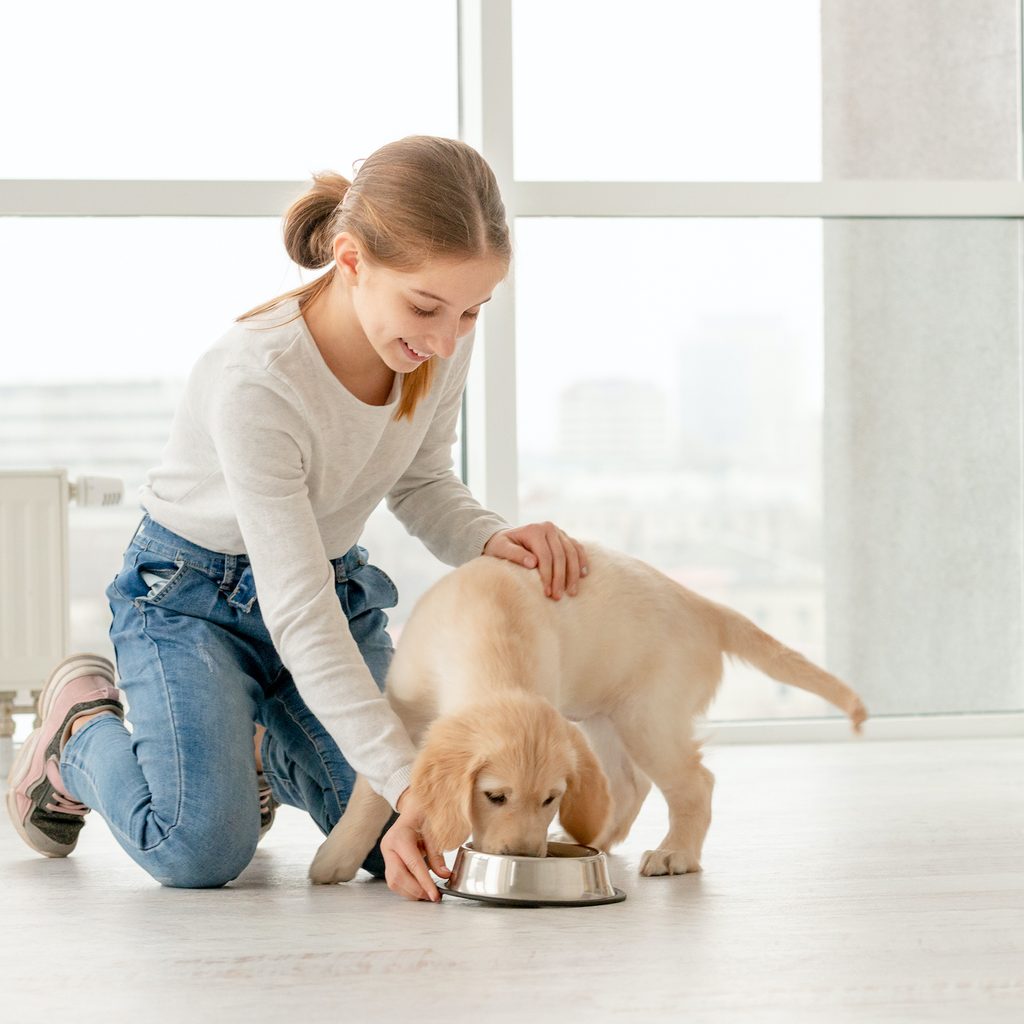
What food is best for a golden retriever puppy?
When feeding any puppy, make sure you’re giving them puppy food! Kibble formulated for young dogs will have higher levels of protein, fat, and omega fatty acids to support their growing bodies and developing minds, which cannot be overlooked (via Purina).
Ashley Gallagher, DVM, also reminds pet parents to look for the Association of American Feed Control Officials (AAFCO) seal of nutritional adequacy when browsing puppy food labels. This proves that the product you’re looking at has undergone significant trials and testing to ensure balanced, complete nutrition for your puppy. After all, they deserve nothing less. Gallagher also suggests buying puppy food meant for large breeds if you’re raising a golden, as their larger bodies need extra sustenance to grow.
Hill’s Science Diet Puppy Large Breed Chicken Meal & Oat Recipe Dry Dog Food
For a scientifically-formulated puppy food that has exactly what your fur baby needs, look no further. Hill’s Science Diet for large breeds contains a specific combination of vitamins and nutrients that supports joint and muscle health while controlling bone growth in dogs up to one year old. Antioxidants will boost your golden’s immune system so they can discover the world while staying healthy, though they’re only a supplement — not a replacement — for your puppy’s veterinary shots.
Royal Canin Breed Health Nutrition Golden Retriever Puppy Dry Dog Food
If you’re interested in a veterinarian-approved puppy food that’s tailor-made for golden retrievers, try out Royal Canin’s Breed Health Nutrition. This pup-friendly kibble provides specialized culinary support for your dog’s immune system, digestive system, skin, and coat, though the shapes of the pieces may be its best feature. Each breed-specific formula from Royal Canin has its very own shape that was designed specifically for the anatomy of each breed’s mouth, so you won’t have to worry about your pup finding this food hard to eat.
Purina Pro Plan Puppy Shredded Blend Chicken & Rice Formula with Probiotics Dry Dog Food
Whether you want to give your golden some extra digestive support or you’re already dealing with stomach upset, the guaranteed live probiotics in Purina Pro Plan’s puppy formula can be a lifesaver. Your dog will go crazy for the delicious chicken and rice flavors in this kibble, and you’ll love the health-conscious ingredients like antioxidants and omega-rich fish oil. What’s not to love?
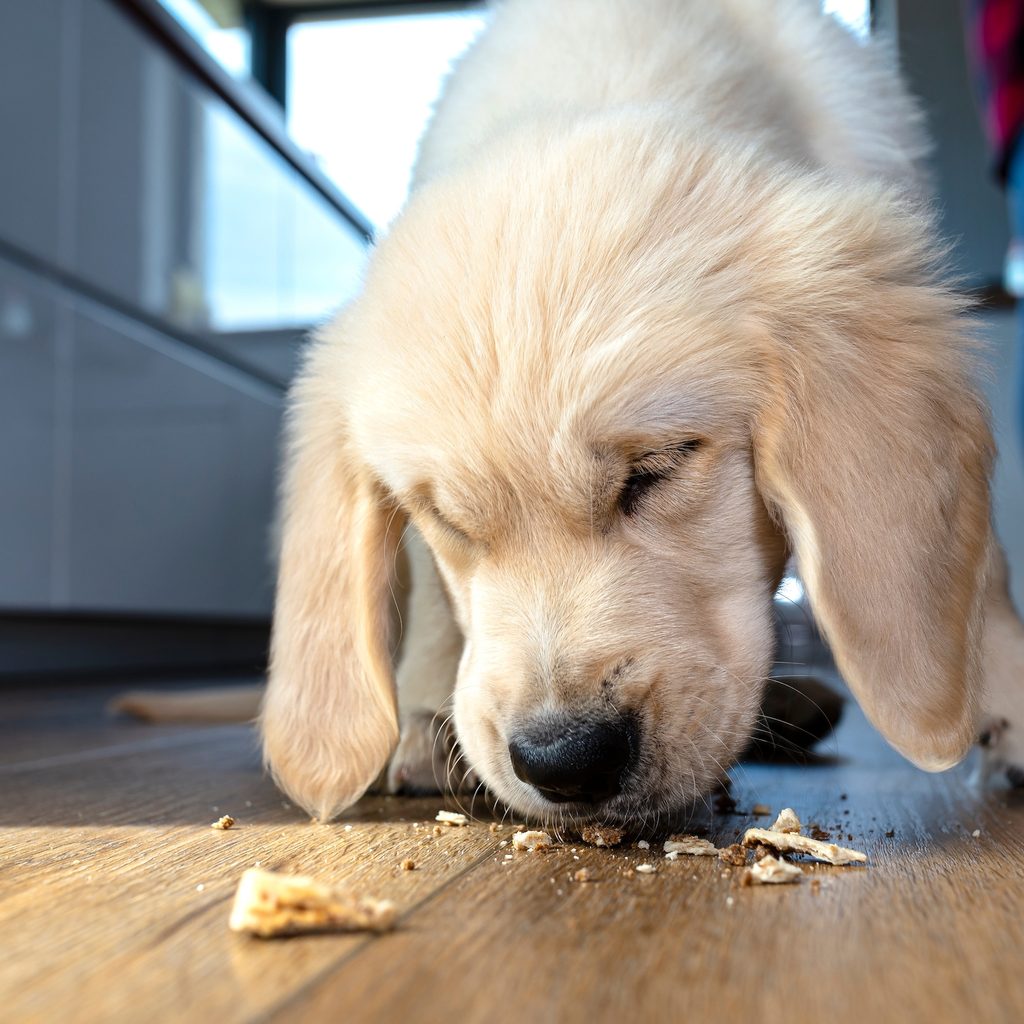
How much should you feed a golden retriever puppy?
Once you find the best golden retriever puppy food for your furry bundle of joy, it’s time to start implementing a regular, consistent feeding schedule.
Puppies need to be fed more frequently than their adult relatives, so you can expect three mealtimes per day. How much you feed will depend on age and gender, though sex won’t matter until about 5 or 6 months of age. At that time, male golden retriever puppies will start eating more than females to keep up with their larger size.
When pups are sent home with their families at around 10 weeks of age, according to Summer Brook Goldens, they get half a cup of dry puppy food three times per day — that’s a total of 1 1/2 cups. When they reach 12 weeks or 3 months of age, you can increase their daily total to 2 cups, still split over three meals throughout the day. Their daily total should reach 2 1/2 cups by 4 months old, though the next change will depend on your dog’s gender.
For males, you can increase their daily food total to 3 cups when they reach five months of age. For females, you’ll make this switch at six months. By the time your male dog reaches 6 or 7 months, they could need anywhere from 3 1/2 to 4 total cups of food per day.