Snorts, snoots, and squishes — there are so many adorable features to love about the French Bulldog. Aside from being cute, though, these playful little pups are chock full of love and adventurousness. We can think of so many reasons to take care of your Frenchie, from regular exercise to coat and nail care.
In this piece, we’ll break down all of the must-dos and must-haves of French Bulldog grooming. You’ll have all the knowledge you need to help you stay on top of your pup’s external health and beauty, which can help them shine on the outside as much as they already do on the inside.
Should I take my Frenchie to the groomers?
Even though French Bulldogs require a lot less grooming than long-coated breeds, regular bathing and brushing are necessary, according to the American Kennel Club (AKC). Fortunately, you can do all of this at home if you’d like to save a buck, but visiting a groomer can make the process a lot easier. Plus, they can provide nail care and anal expression, too, which may be trickier to do at home.
If you do decide to take your Frenchie to the groomer, you should expect to visit about every 6 to 8 weeks. Be sure to keep up on regular brushing and skincare between appointments, and let your groomer know of any concerns, such as lesions, scabs, or injuries.
Some Frenchies need a bath at home between appointments, especially if they’re getting into messes, but don’t overdo it. The AKC explains that too many baths can strip the skin of its natural oils, leading to a dull coat and itchy, flaky skin.
What can you use to groom a French Bulldog?
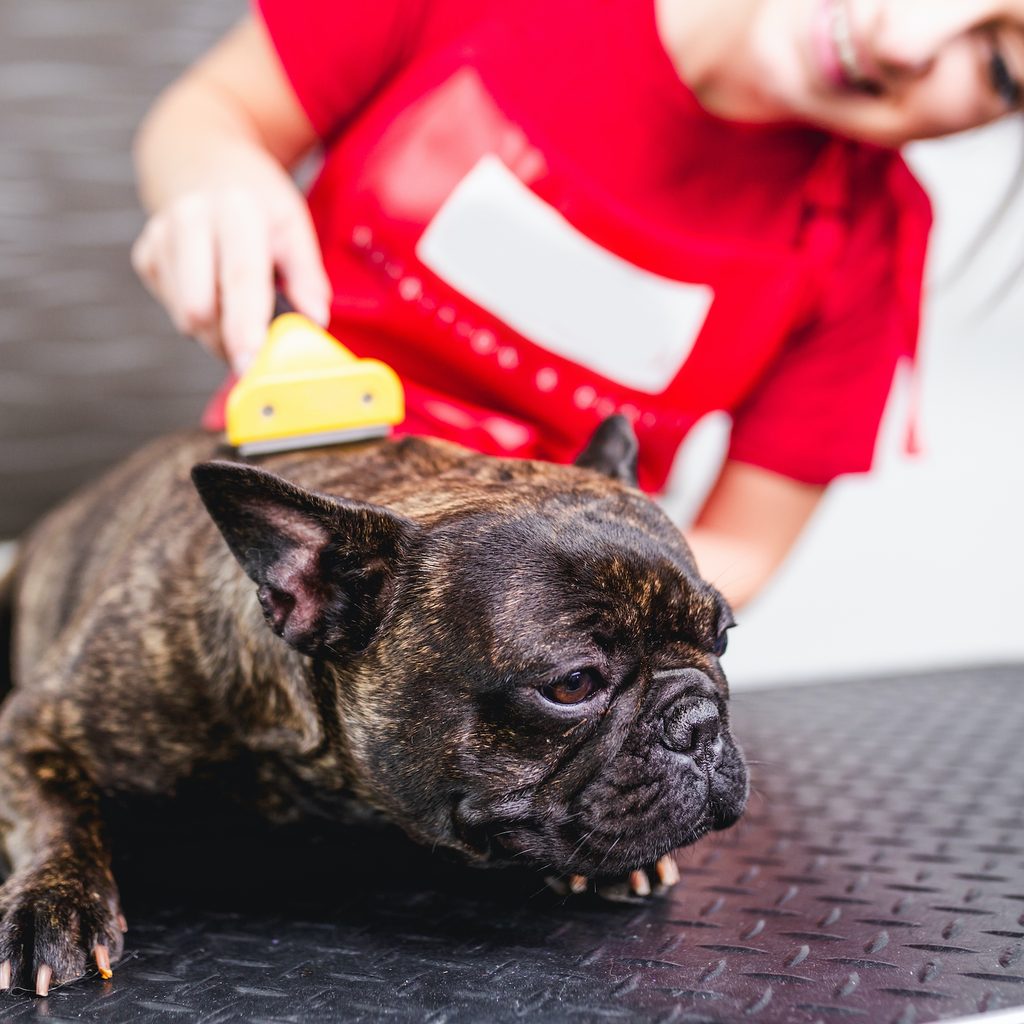
Whether or not you take your pup to a groomer, you’ll need to provide weekly brushing to keep your fur baby’s coat looking fresh and clean. According to the AKC, brushing not only removes dirt and debris, but it stimulates hair follicles (this helps with new growth) and helps distribute the skin’s natural oils. Don’t worry about shedding, either — this breed sheds minimally.
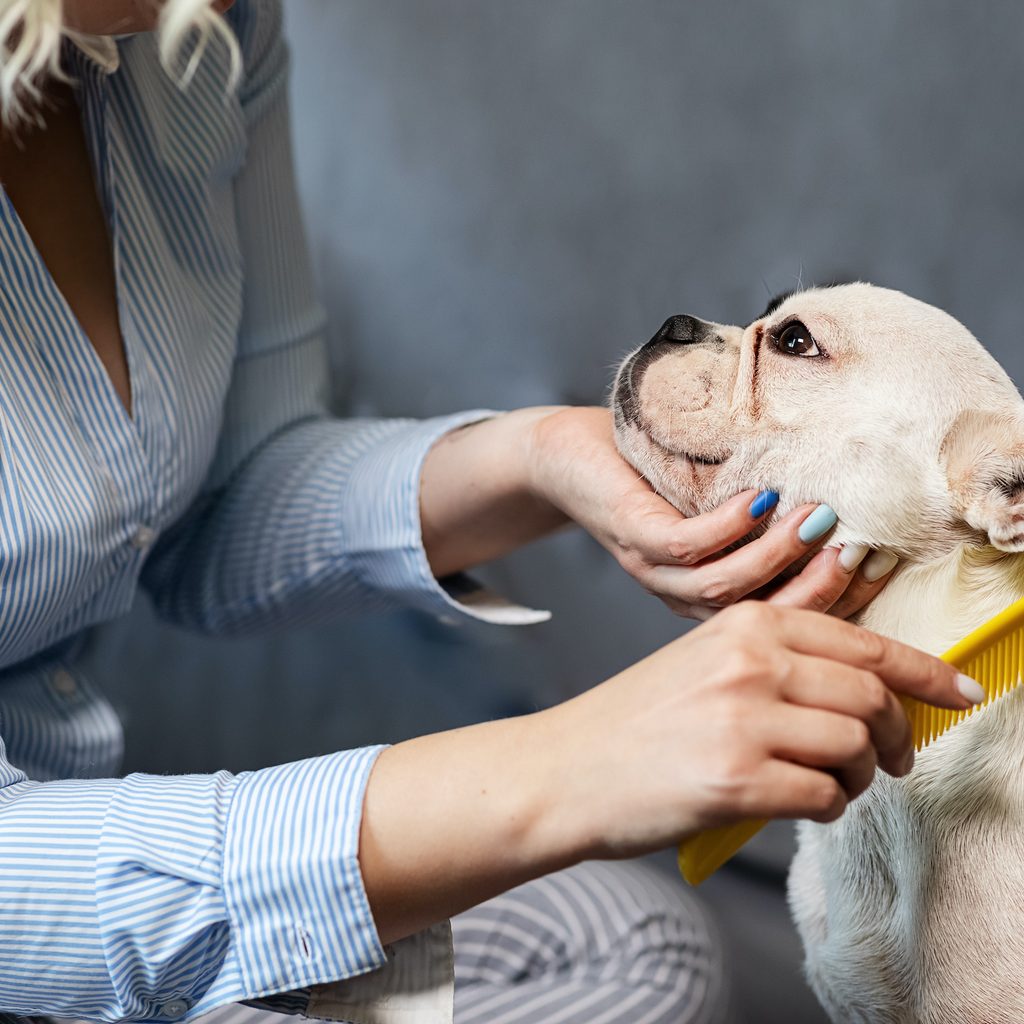
To groom a French Bulldog, try a rubber grooming mitt or a medium bristle brush. These tools will be gentle on your Frenchie’s smooth coat while still getting the job done. Hartz Groomer’s Best Combo Dog Brush is a great tool that has both a bristle brush and a stainless steel pin brush all-in-one tool. The pin side of the brush can help loosen tangles and debris, while the bristles keep the coat looking shiny, healthy, and clean.
Alternatively, many pet parents like rubber grooming mitts to remove their dog’s hair in a petting motion. Gloves cover more of your dog’s body per stroke and can make grooming go a lot faster.
One more skincare item to consider is some type of wrinkle wipes for your Frenchie. Even if their coat as a whole doesn’t need tons of care, sweat and debris can get trapped in their wrinkles, causing a number of skin abnormalities.
Can you cut a French bulldog’s hair?
Even though you technically can cut a French Bulldog’s hair, there is no reason to; Frenchies shed their coat naturally throughout the year, just like many other breeds. Even though the shedding is minimal — especially compared to dogs like Newfoundlands and Alaskan Malamutes — it does its job of keeping your pup clean and temperature controlled.
Regular brushing and grooming will help your Frenchie shed their coat when necessary, and it will get rid of any extra fur that hasn’t loosened. Trimming or shaving your dog’s coat won’t help them cool off or be any more comfortable, so it should only be done when necessary for medical reasons.
French Bulldog nail care
When planning for French Bulldog grooming, don’t overlook their nails. Overgrown nails can cause issues with walking as well as great discomfort, so why not nip this issue in the bud? Of course, you can always visit a groomer to take care of any nail care, but many dogs are more comfortable having their paws handled at home.
You can use either a Dremel nail file or dog nail clippers to trim your Frenchie’s nails. The tool you choose is up to you — using an electric file can be easier to control, but a clipper will be tons faster. Either way, you’ll want to look up how to trim your dog’s nails before taking a tool to their paws for the first time.
Don’t worry if it seems like a lot. You don’t need to do all these grooming tasks daily! In fact, once you get into the swing of things, it may feel as routine as something you’ve been doing for years. And who doesn’t love a nice, clean pup?