If you’re finding it difficult to keep your German shorthaired pointer (GSP) from bouncing off the walls, don’t worry. He doesn’t have a case of doggie attention deficit disorder; he’s just doing what comes naturally for his breed.
These intelligent, athletic, affectionate dogs make great family members, but they were bred for hunting. Their powerful hindquarters were designed to get the dogs to prey quickly, and their webbed feet are made for retrieving birds from water with ease and grace. They are accustomed to working hard and crave activity.
As a result, German shorthaired pointers that don’t have an outlet for their boundless energy can become bored and destructive. Obedience training can help. If you’re finding it necessary to train your German shorthaired pointer, here are a few tips.
What exactly do GSPs point at, anyway?
It’s easy to understand the German part — that’s where the breed originated in the 17th century (or before). And short-haired? Well, that refers to their sleek, easy-care coat. But what is all the pointing about?
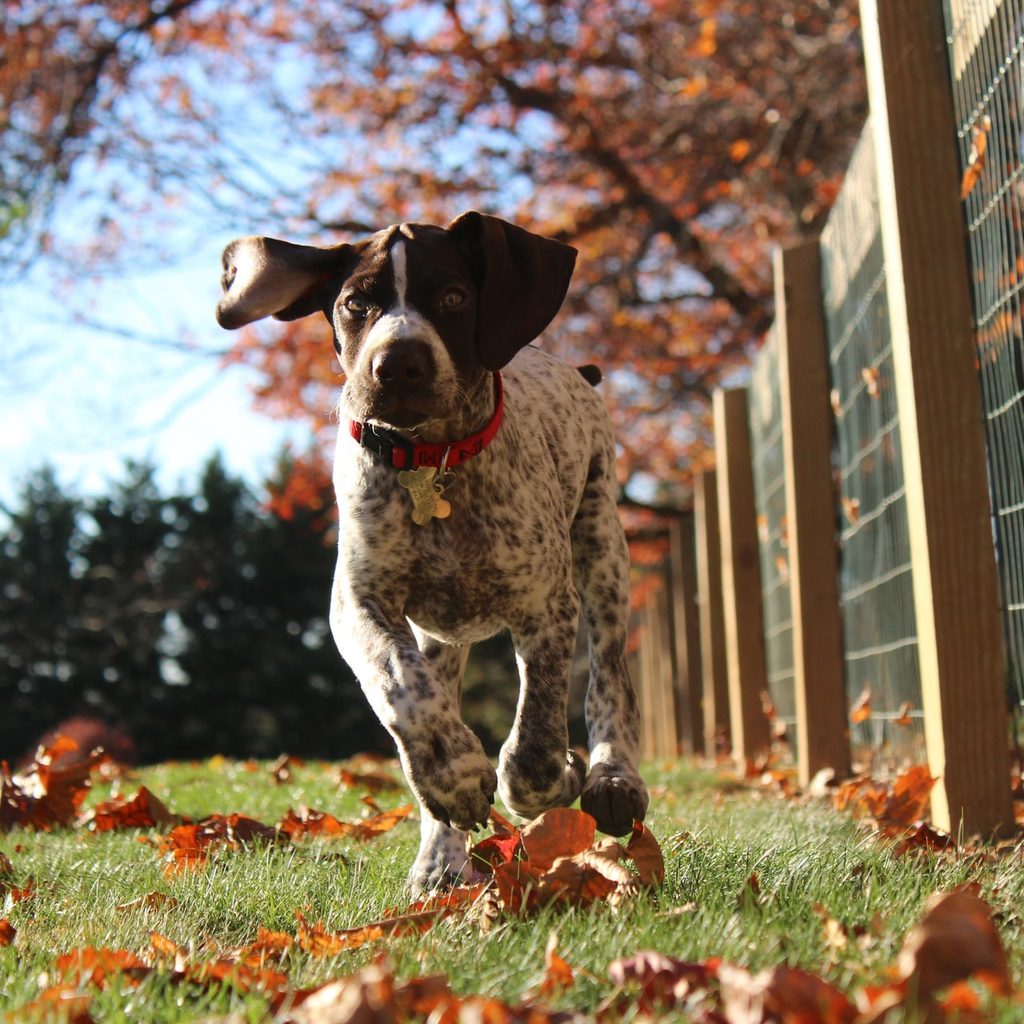
Part of your beautiful GSP’s breeding was designed to help his human hunter locate prey in the field. Your dog is pointing when he stands frozen with one paw in the air and his chiseled head pointing in the direction of his attention, which could be anything from the waterfowl he was trained to hunt to the occasional wild bunny that appears on your daily walk around the neighborhood to the family cat hiding warily beneath the furniture.
Regardless, pointing is instinctual and part of why it’s difficult to have other small animals as pets when you own a GSP. If your dog wasn’t raised with smaller animals, like cats, rabbits, or parrots in the house, watch him closely. His instincts to hunt are strong and could result in injury or death if he happens to catch them.
Training your German shorthaired pointer
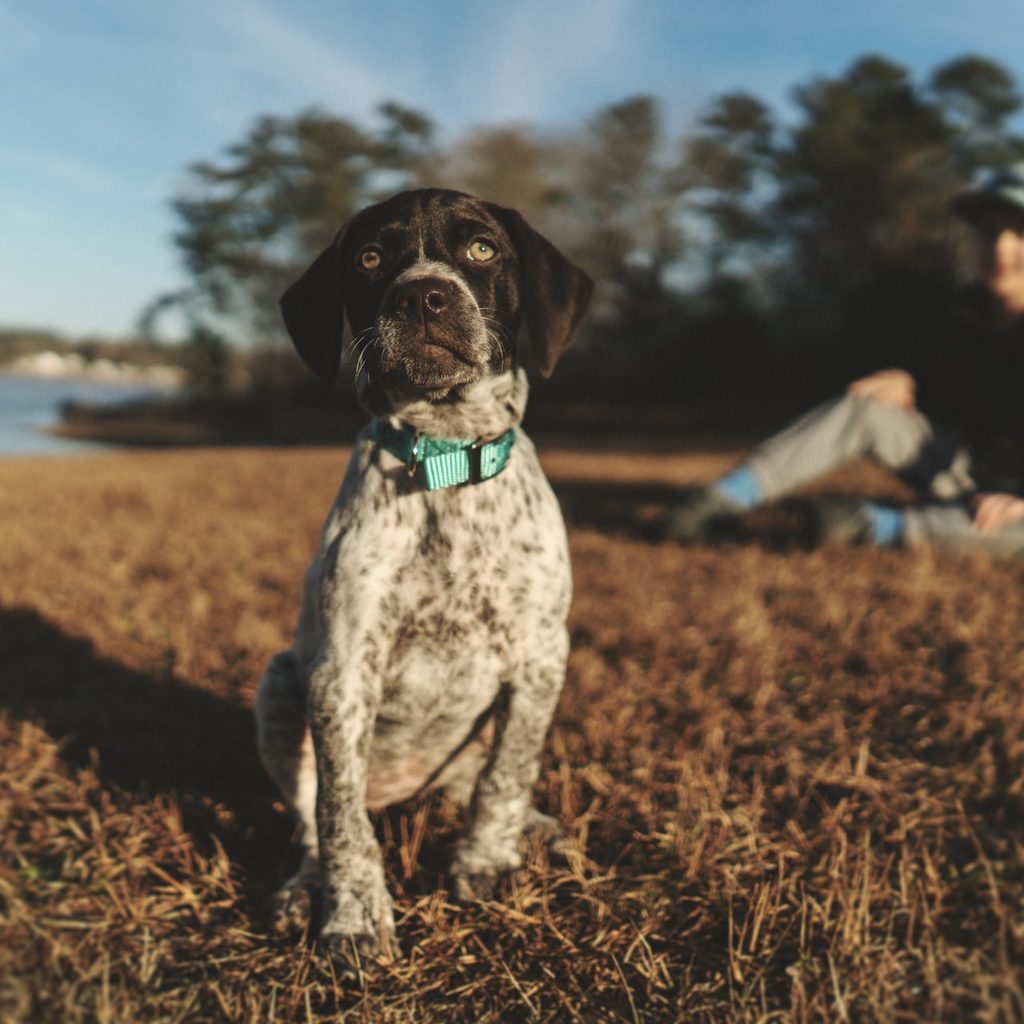
Although GSPs are traditionally outstanding family dogs and affectionate with children, they can become unruly and destructive without the proper training. Obedience training is highly recommended. Not only can it strengthen the bond you have with your GSP, but it can also keep him safe. Here are a few training tips:
- Start as soon as possible. The earlier you can begin training your GSP, the better. Puppies are capable of learning as early as eight or nine weeks of age.
- Begin with socialization. Introduce your GSP to other people outside of your family. Expose him to different types of environments — crowded streets, busy sidewalks, large crowds — as soon as possible.
- Exercise. A tired GSP is a happy (and obedient) GSP. If your family isn’t the hunting type, engage your dog in fun activities like hide-and-seek or fetch. Take him on long walks. If you run or jog, take him with you.
- Teach him basic commands, like come, sit, down, stay, heel, and no. When it comes to intelligence, your GSP has it in spades. Work with it to teach these six commands and reward him with praise and playtime as he progresses. Beware! Your GSP is easily distracted. You may need a lot of patience when teaching him to come, especially if a small animal or strong scent has caught his attention.
- Keep training sessions short. If you have a puppy, begin with five minutes at a time. Work up to no more than 15 minutes once or twice a day, no matter his age.
- Use positive reinforcement. Praise, treats, and playtime with his favorite human(s) go a lot farther with this breed than yelling and striking. If you become impatient during a training session, stop. Begin again when you are calm to achieve the fastest, most effective results.
- Be consistent. Your GSP is a smart dog, but training takes time. Commit to working with him several times a day until he learns house rules, then practice as often as possible to perfect the behavior.
Overcoming bad habits
Good obedience training and a lot of exercise can help your GSP refrain from some of his breed’s more common bad habits — like excessive barking, chasing instincts, and separation anxiety. And while positive, consistent obedience training goes a long way, so does a daily dose of the mental and physical stimulation your dog needs to keep him happy and engaged in positive behaviors.
You’re in luck. Your GSP is a devoted and loyal companion who is as willing to learn as you are to teach him. Be patient. Be kind. And be thankful. You own one of the most popular breeds in America with a storied history and propensity to please. Becoming a “good dog” only adds to the value he brings to your life.