An active dog that’s full of personality is truly man’s best friend. If your furry companion keeps up with your active lifestyle, they need a harness for tangle-free running and playing. These convenient accessories give you better control of large dogs and keep smaller breeds from choking or injuring their neck. With a proper fitting dog harness, you and your pal can enjoy leisurely walks that help you bond and keep you close together.
Dog harness vs. collar
When deciding between dog harnesses vs dog collars, the former option is the way to go if you want to keep your pooch at ease during those daily strolls. If you notice that most dogs around your neighborhood wear a harness, it’s because they’re convenient and comfortable for pups of all sizes. While collars keep your dog safe in case they get lost, using them to hook onto the leash is a choking hazard for dogs who like to pull or escape.
When your dog pulls, the collar creates pressure on the trachea and causes breathing problems for your pooch. If you’ve heard your dog coughing during walks, it’s time to make the switch to a harness. They’re the safe alternative to distribute pressure across the chest and prevent choking next time your dog pulls.

For owners who enjoy running with their pup, harnesses help avoid tangled leashes around your dog’s legs. They also offer more places to grab from or lift larger or senior dogs.
Other advantages of using a dog harness include:
- Less strain to your arms and back when walking a large dog.
- Easier to train puppies how to walk on a leash.
- Greater control with less pressure.
- Finding the proper size
With a few simple measurements, it’s easy to find the right size harness for your dog:
Weight: Knowing your pup’s weight is the most important measurement for proper harness sizing and durability. This information ensures that you buy a harness strong enough to hold your pet without breaking. If your pup is shy to step on the scale, weigh yourself first and then weigh yourself again while holding your dog. The difference is your dog’s weight.
Chest: Wrap a tape measure around the thickest part of your dog’s chest to figure out the size of their chest.
Neck: Place the tape measure around the thickest part of your buddy’s neck and take down that number.
Harness types
Using your dog’s measurements and the harness sizing charts, you can find the perfect fit among the different types of harnesses:
- Over-head harness: This style slides over your dog’s head and through one of their legs, with a buckle on the side of the chest to create a loop for your dog’s other leg. Some of these models allow you to adjust the neck and chest, while vest types only let you adjust the chest area.
- Step-in harness: With the harness flat on the ground, this type of model creates triangles that go around your dog’s legs. The buckle clips right in the middle of your dog’s back and allows you to adjust the neck and chest areas.
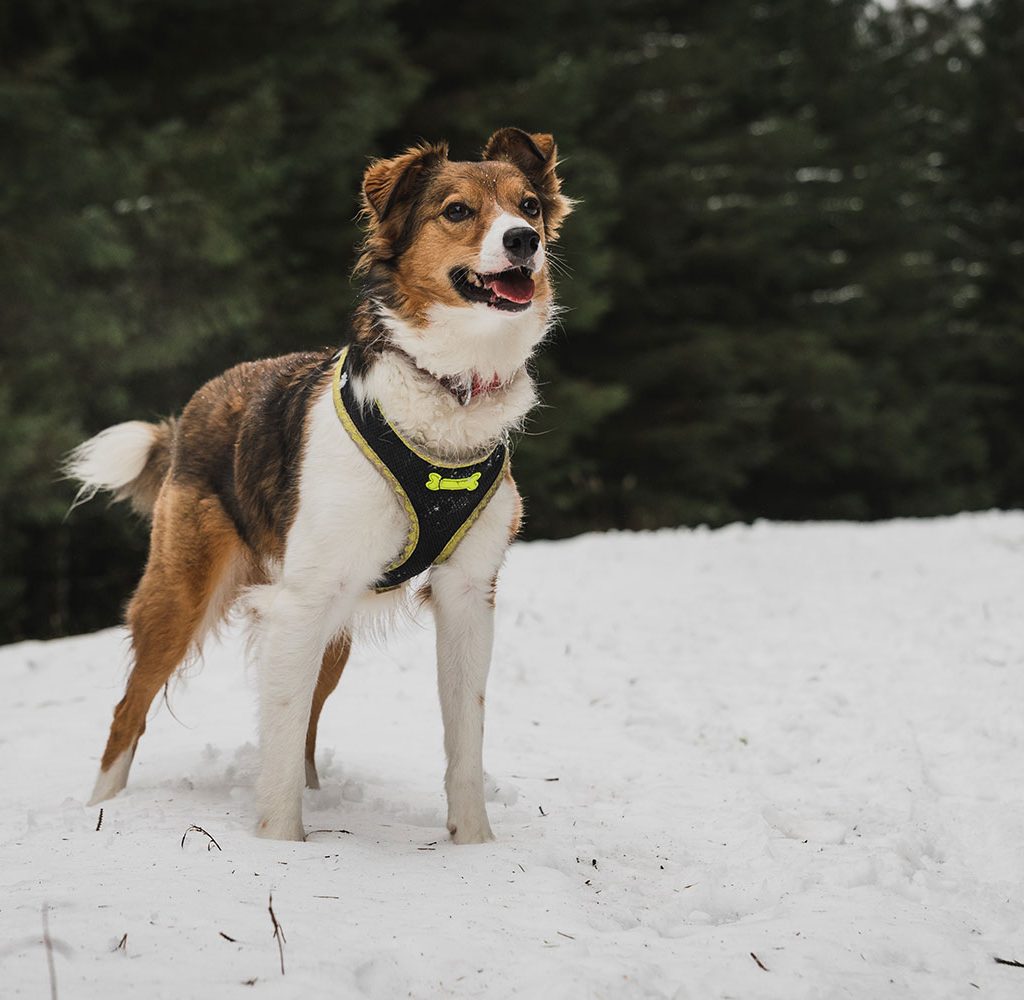
For a perfect fit, make sure your pup’s harness is snug without being too tight. It should sit high on their chest and leave room for you to fit two fingers between the harness and your dog’s body. This ensures that your dog is comfy but still can’t back out of the harness.
Signs of an ill-fitting harness
These are the signs to look for if you don’t think your dog’s harness fits quite right:
- They can easily wiggle out.
- It rubs against their underarms or creates chafing around the neck.
- It seems to restrict your dog’s movements.
- The straps get loose during your walks or runs.
- The back ring where the leash clips rotates to the side.
- Your dog doesn’t want to go on walks or resists putting the harness on.
- If you notice any of these signs, consider going a size up, down, or trying a different harness style.
Once you secure a dog harness properly and it’s a good fit, your dog will be happy and feel more confident during your walks. A proper harness also offers increased safety for you, especially if your pup likes to pull or is always trying to escape. They’re designed with your pooch in mind to help you offer control without choking. Once you’ve added one to your life, you’ll never want to go back to the pulling and tugging of a collar.