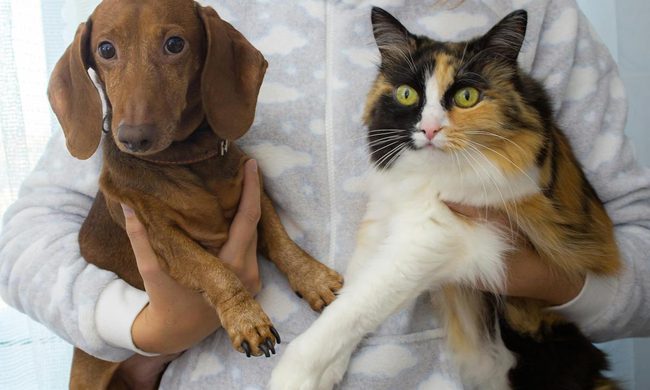
No matter what exactly runs through a dog’s mind when the decision has been made to chase a cat, it all comes down to instinct.
Instincts are deep-seated impulses, feelings, and behaviors that dogs are born already knowing. As the North Shore Animal League explains in their Mutt-i-gree Curriculum for kids, instincts provide life-saving direction to animals in the wild; this importance makes them hard to ignore for pets, too.
Sometimes, though, instinct can lead to inappropriate behavior — like when your dog chases your cat. Sure, it’s a well-known cartoon cliche, but it can happen and be helped, a lot quicker than you think.
Here’s how to get your dog to stop chasing your cat.
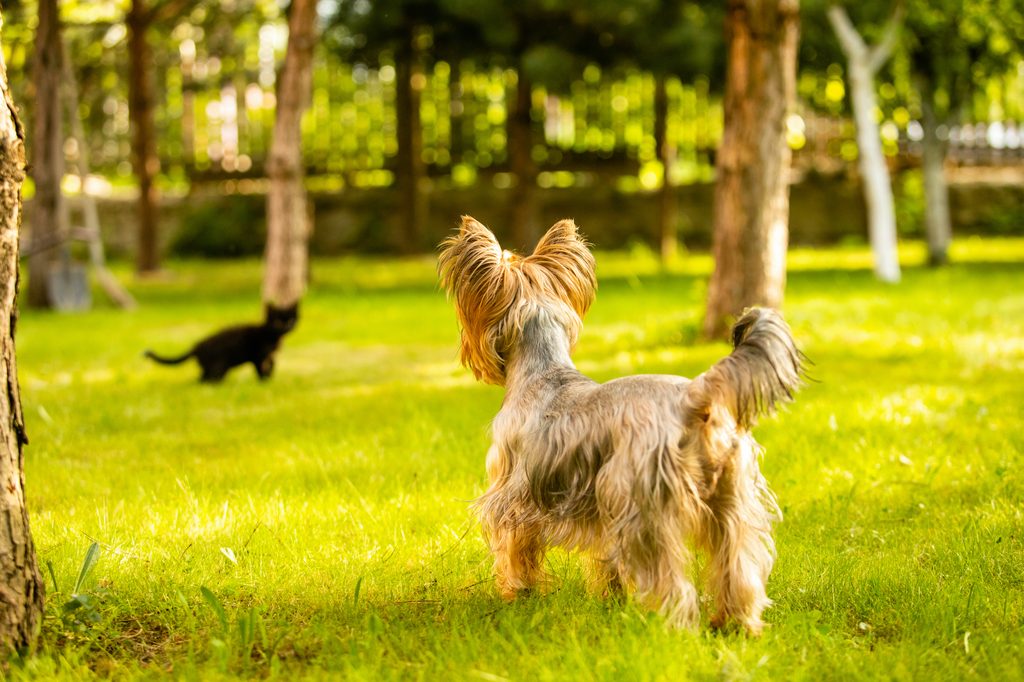
Why do dogs chase cats?
Sometimes, a dog’s ancient hunting instinct can pop up in their brains at the sight of something small and speedy — like your feline friend. However, some dogs are more likely than others to experience this. As Veterinarian Jesus Aramendi told Reader’s Digest, “if you have a herding or hunting breed such as Shepherds, Cattle Dogs, Retrievers, or Pointers, they may be especially inclined to chase after cats.”
Instinct also tells an animal when it’s time to eat, sleep, and play. If your dog enjoys running for fun, they may see a similarly sized pet as a playmate, even if this manifests in chasing. Your dog may not always be on the hunt. They may just be ready to play!
Is it OK for my dog to chase my cat?
Even if your pup is simply ready for playtime, this kind of chase can be dangerous. If one of the two animals gets overly excited, even an innocent move can trigger an extreme reaction in the other. It’s best to train your dog out of this habit as soon as you notice it to make the process as peaceful as possible for everyone.
Be patient with yourself and your pup — instinctual habits can be hard to break, and that’s no one’s fault. “Your dog may have very little control over the rush felt when chasing a cat or another animal,” Dr. Aramendi explains, so try your best to keep your cool while your buddy is still learning.
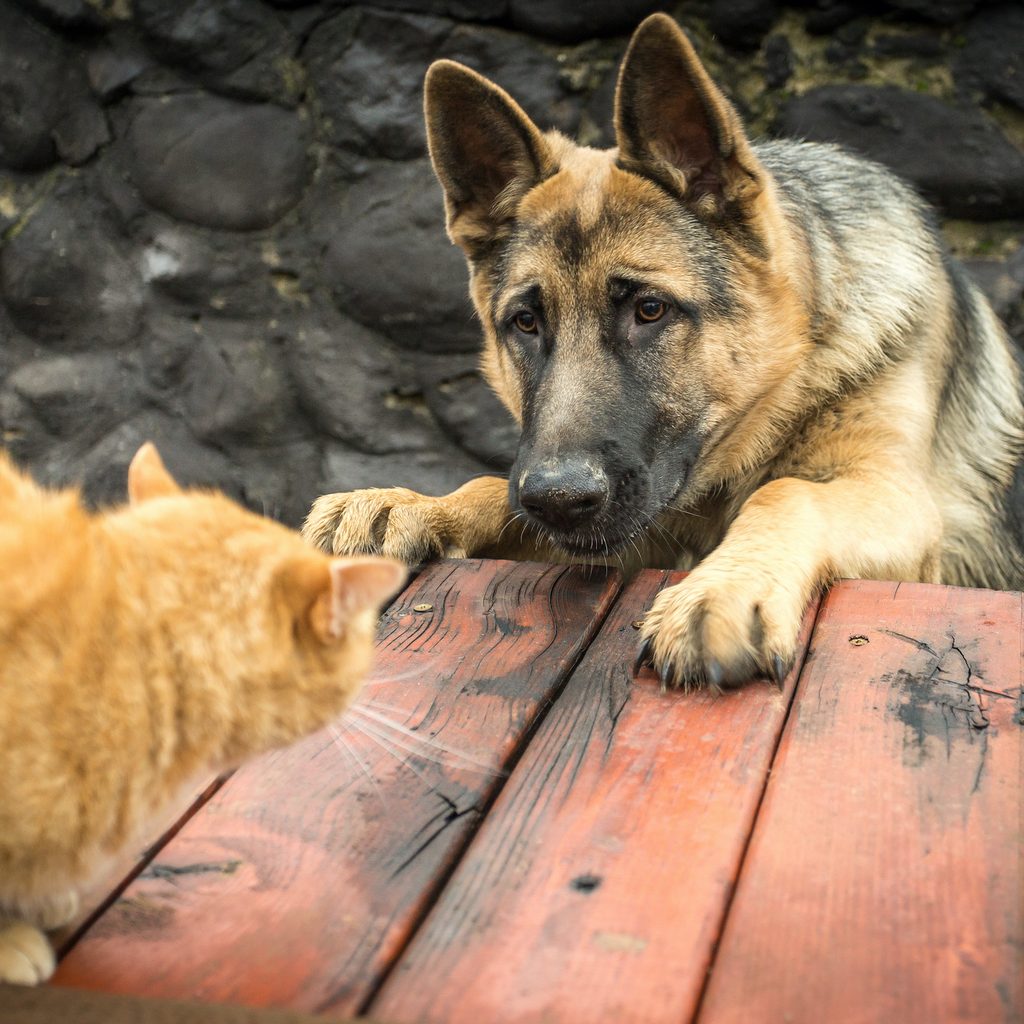
How do you tell if a dog is aggressive toward cats?
No matter why your pup chases your cat, it doesn’t necessarily mean the two animals share a dislike for one another. On your dog’s end at least, chasing your cat and acting aggressively are two separate things. You may notice both issues, but there’s a good chance you’ll see it’s nothing personal.
If your dog has strong hunting, herding, or working instincts, they’ll likely chase other animals, too. You may not see this as often since your dog and cat interact much more frequently, but rest assured — chase does not equal aggression.
How do I get my cat and dog to be friends?
Even if your dog pup sees your cat as a plaything — or even prey — instead of a friend, the two of them absolutely can learn to live in peace.
Give your cat a safe space
If your pets are always crossing paths, there will be many opportunities for your dog to feel tempted. Both of your fur babies should have spaces of their own where they can feel relaxed and safe, even if that means trying something new at home. You can try using a baby gate to keep your pup out of a certain room, or you can invest in cat towers that will be feline-exclusive.
Give your dog plenty of stimulation
A satisfied dog may be more responsive to training — and willing to ignore some instincts — so make sure your buddy is getting all of the attention and exercise needed. If you’re unsure, you can always research your dog’s breed’s activity levels and exercise needs…or ask your vet! From playtime to running or even just a trip to the dog park, there are endless ways to keep your furry friend fulfilled.
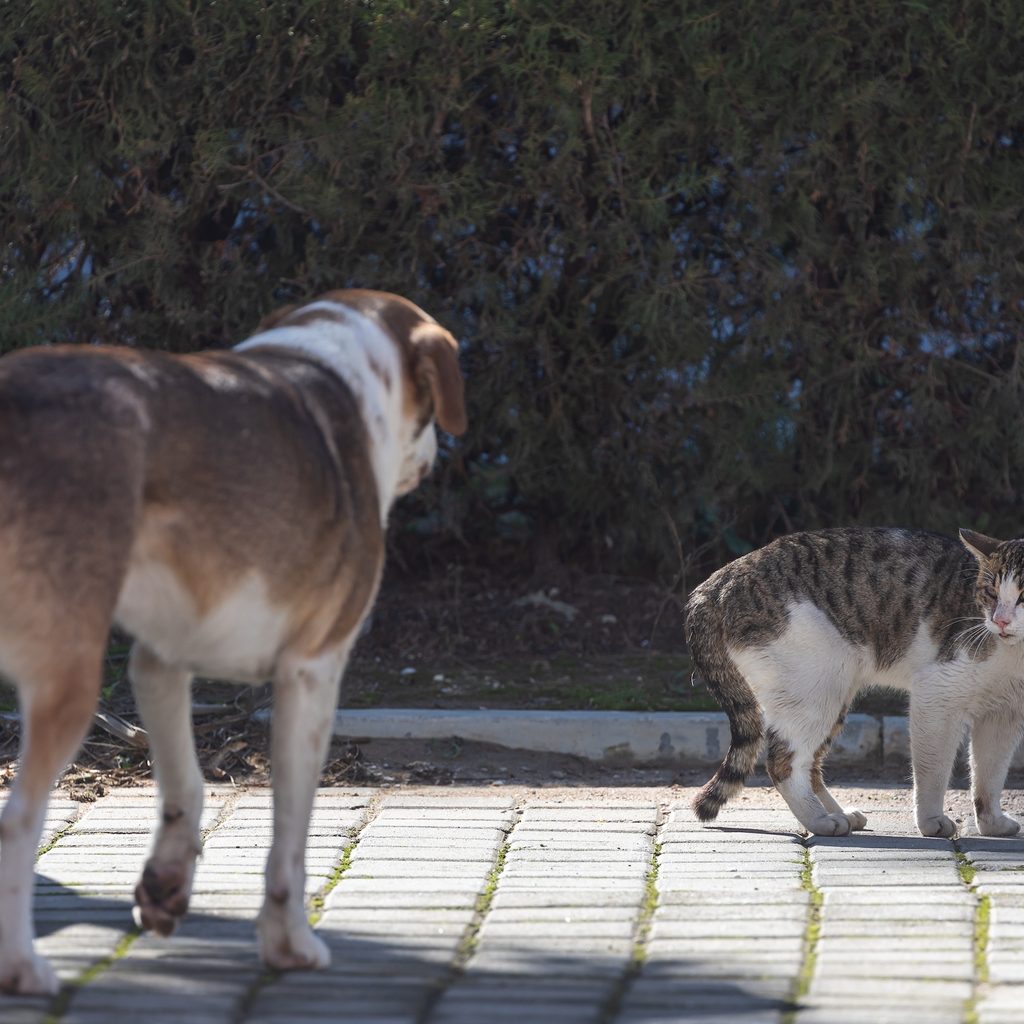
How do I train my dog to like cats?
While you may not be able to train your dog to actually like cats, you can train them to coexist with a cat in peace.
Positive reinforcement
The most effective way to get your dog to ignore the cat is simply to practice and reward the behavior you want to see. For example, with one or both pets properly secured on a leash or in a carrier, slowly bring your dog toward the cat. If your dog gets too riled up, calmly remove them from the room. But if they look away from the cat for even a moment, reward them! You’ll want to practice this frequently and regularly before allowing your pup more freedom, but this is a wonderful place to start.
Gentle corrections
Regardless of the situation, one should never use physical punishment on a dog. Even yelling or spraying from a water bottle can result in distrust between pup and owner, so opt for calm corrections instead.
When your dog is acting inappropriately, immediately — and calmly — remove them from the situation. Give your dog a minute to reset, then calmly let them back out. This time-out method can be effective in showing a dog what behaviors are not welcome, though it can take some time for your dog to understand.
However you approach this cat-chasing cliche, approach with patience for both of your pets; no one is being “bad” or “naughty” on purpose. If you’re having extra trouble with your dog chasing your cat, a dog trainer or behavioral specialist is always able to help.