
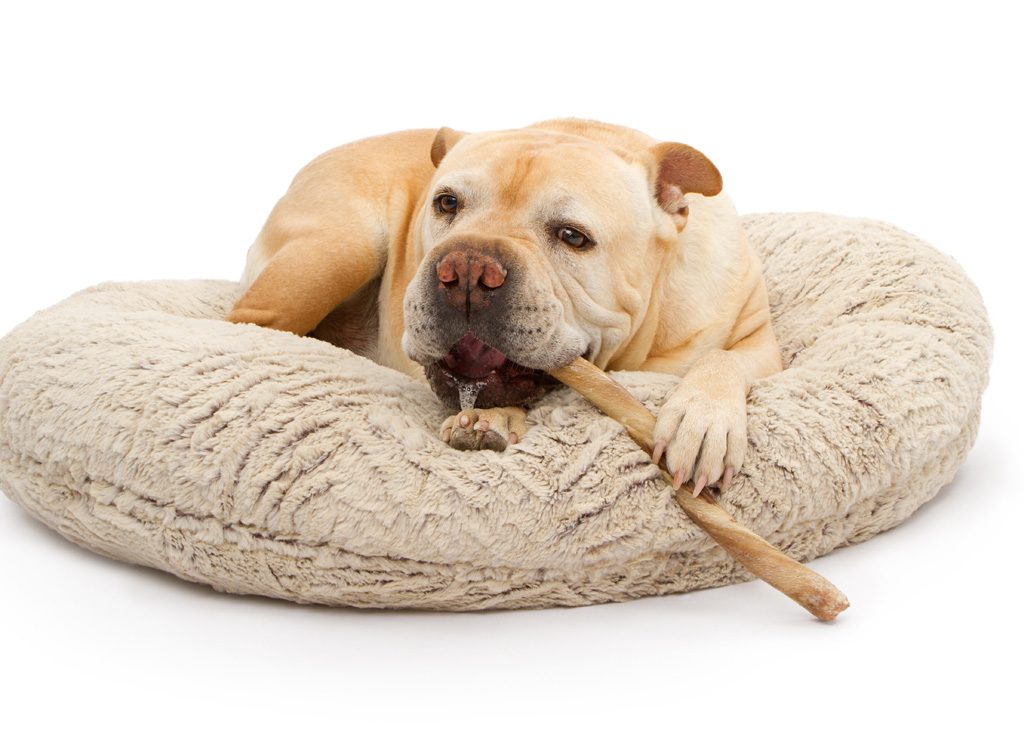
Rawhide has traditionally been the chew treat of choice for dogs. Such treats come in a variety of shapes and sizes including bones, sticks, rolls, and twists. They satisfy a dog’s desire for chewing and are advertised as helping to keep a dog’s teeth clean. But while your dog may enjoy gnawing on rawhide, that doesn’t mean it’s safe for him. It’s essential to understand the hazards of rawhide treats before offering them to your dog.

Why is rawhide bad for dogs?
In a Reader’s Digest article, rawhide treats were listed among the top 16 products that veterinarians never buy for their pets. According to veterinarian Gary Richter, the occasional small piece of rawhide can be fine for dogs, while large rawhide bones and sticks are nothing but empty calories. Here are some of the risks associated with giving your dog rawhide treats.
Rawhide can cause digestive issues
According to experts at Petco, rawhide bones are made from the skin of cows or horses or occasionally pigs. In the manufacture of leather, the outer layer of animal skin is used to create the leather, while the inner layer may be turned into rawhide bones for dogs.
According to veterinary specialists at Preventive Vet, the digestive enzymes in a dog’s stomach are not able to successfully break down rawhide, and when swallowed the rawhide will “often travel through the gastrointestinal system intact or in large undigested pieces.” This can lead to obstruction or digestive upset.
Rawhide poses a choking hazard for some dogs
Rawhide bones and chews are meant to be long-lasting, and broken down by a dog into small, soft pieces over time. However, aggressive chewers can break off large chunks, which poses a major choking hazard. When swallowed, large pieces of rawhide can get stuck in the esophagus or other parts of the digestive tract. Depending on the size of the piece and its location, a veterinarian may be able to remove it. However, sometimes abdominal surgery is needed to remove the rawhide.
There’s a risk of contamination when consuming rawhide
Since rawhide is made from animal skin, there’s a risk of salmonella or E. coli contamination to your pet and to you. Chemical contamination is also a concern with rawhide treats. A 2017 Consumer Reports investigation cited several brands of rawhide dog treats recalled over potential chemical contamination that could sicken dogs. All these products were manufactured outside the U.S.
Purina Senior Nutritionist Jan Dempsey says that before going on the market as treats, good-quality rawhides have been washed clean of the chemicals used to remove the animal hide. However, according to Dempsey, “not all companies remove those chemicals as part of their production process.” Since many countries fall short on quality control standards, veterinary experts at Preventive Vet recommend only purchasing rawhide manufactured in the U.S.
Which rawhides are safe for dogs?
According to Preventive Vet, the following rawhide products are approved by the Veterinary Oral Health Council and are commonly recommended by veterinarians:
Purina Pro Plan Veterinary Diets Dental Chewz Canine Treats: Ingredients include beef hide, maltodextrin, hydrolyzed corn protein, and potassium sorbate.
Virbac C.E.T. Enzymatic Oral Hygiene Chews for Medium Dogs: Ingredients include beef hide, dextrose, poultry digest, hydrolyzed vegetable protein, and dried whey protein concentrate.
Vetradent Rawhide Dental Chews for Dogs: Ingredients include beef hide, dextrose, poultry digest, maltodextrin, hydrolyzed vegetable protein, potassium sorbate, and dried yeast.
How long should my dog chew on rawhide?
How long and how often you allow your dog to enjoy a rawhide treat depends on how aggressive a chewer you have. In general, experts at Wholesome Hide, which produces all-natural rawhide chews in the U.S., recommend letting your dog chew on a good-quality rawhide treat for an hour a day.
To avoid the risk of your dog choking or suffering intestinal blockage, be sure to supervise them when they’re chewing on rawhide. Once they have lost interest in chewing, the rawhide treat should be placed out of your dog’s reach.
Is rawhide OK for a puppy?
Puppies under six months of age shouldn’t be given rawhide treats. A young puppy’s mouth isn’t fully developed, and chewing on rawhide could cause permanent damage to her jaws and teeth. Also, a puppy’s relatively small mouth and narrow digestive tract increase the risk of choking or of suffering digestive blockage. That said, a puppy needs a chewing outlet, and many puppy-safe chew toys and teething treats are available.
No doubt chewing on bones offers great satisfaction to dogs. However, rawhide isn’t the only choice in pet chew products. There are lots of healthier alternatives. For example, many dogs love bully sticks, which are easily digested. Other popular options include DreamBone, made with real meat and vegetables, and Nylabone products, which come in a variety of flavors. You may pay more for some of these alternatives, but knowing that you’re avoiding the risks associated with rawhide is worth the price.