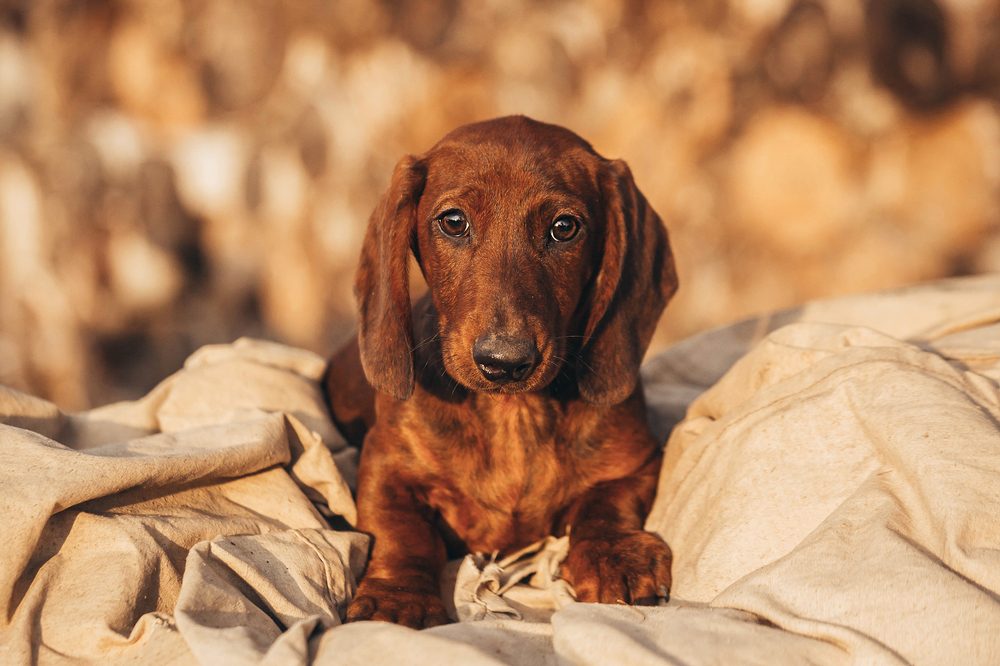
Dachshunds are sweet and affectionate, not to mention, adorable. Unfortunately for wiener dog lovers, they're very difficult to potty train (and quite stubborn). According to research, they make the list of the top seven most difficult breeds to housebreak. But that doesn’t mean you have to resign yourself to a smelly home and constantly cleaning up messes.
Although not all dachshunds can be fully potty trained, patience and persistence goes a long way when it comes to training any dog. You’ll save yourself — and your pup — a lot of stress with our puppy potty training tips. Here’s what you need to know about potty training one of the most difficult dog breeds in the world.

Why are dachshunds so hard to potty train?
Larger breeds like retrievers and spaniels are probably what spring to mind when you think of hunting dogs, so it may surprise you to know that dachshunds were originally bred to hunt. These little pups are the perfect size for wriggling into a badger’s den. In fact, the name dachshund is German for "badger dog," with dachs meaning "badger" and hund translating to "hound" or "dog."
Dachshunds are also extremely clever dogs with high prey drives. Cuteness.com claims that intelligence is the root cause of their stubbornness.

7 steps to potty training your dachshund
Because doxies are so difficult to potty train, you may want to consider keeping your pup in a crate at night and while you’re away from home to prevent accidents. Let’s look at our favorite seven tips to housebreak your dachshund.
Step 1: Take your dog outside for regular potty breaks.
If your puppy has frequent accidents in the home, try taking them outside every 20-30 minutes. Gradually extend the amount of time between breaks as your pup uses the bathroom outdoors more frequently.
Step 2: Consider using pee pads — but be cautious.
Pee pads are a fantastic option if you live in an apartment without access to a yard — or if you have a quite young or senior dog who can’t make it outside. However, if you have an outdoor space, your dog may adjust to using pee pads indoors and refuse to go outside, especially if it’s cold or rainy. The choice is ultimately yours, but we don’t recommend using pads as a long-term solution if you intend to take your dachshund out to do their business.
Step 3: Take your pup outside after eating.
Dogs usually need to use the bathroom within 20 minutes after eating. Take Fido outside after eating and give them about 5 to 10 minutes to potty. You may need to bring them back inside if they stubbornly refuse, but you’ll want to keep a close eye on them and take them back outside at the first sign they are ready to go indoors.
Step 4: Reward your dog with treats when they use the bathroom outside.
Like most dogs, doxies love treats. Try giving them a reward when they use the bathroom outside to reinforce your training. You can even reserve your pup's favorite treats for this occasion, which may help them catch on faster than using an everyday treat.
Step 5: Don’t reinforce bad behavior.
Catch your dog urinating or defecating in the house? Tell them "no" in a firm voice and immediately relocate them to a pee pad or outdoors. Don’t yell at your four-legged friend for relieving themselves indoors. You may frighten your pup, and they won’t understand why you’re angry.
Step 6: Remove any stains with a specialized pet cleaner.
Accidents happen, especially during potty training. Use a pet stain-and-odor cleanser designed to eliminate the scent of feces and urine, as the smell of their own excrement will draw pups to use the same spot repeatedly. (You should avoid ammonia-based cleaners since they smell like urine.)
Step 7: Be consistent with your training.
Every member of your household should take part in potty training your dog. If you take the dog out every 30 minutes, someone else should step in while you’re away from home. Consistency is the most important part of successful dog training, so make sure the whole family is on board.

Stay positive on your potty training journey
When potty training any breed, it’s important to remember that your pup doesn’t mean to be naughty. Most of the time, they simply don’t understand that they're supposed to do their business in specific areas.
No matter how frustrating it is to clean the carpet in the middle of the night, please refrain from shouting at your dog. Not only do dogs learn better through positive reinforcement than through punishment, but also displays of anger may result in your dog being frightened of you. Instead of waiting for accidents to happen, we recommend a more proactive approach. Watch out for signs that your pup may need to go outside, including:
- Sniffing around the house
- Barking at the door when no one is outside
- Fidgeting or acting excited
- Barking for no apparent reason, especially at you or to get your attention
- Circling the floor and squatting down
- Returning to a spot where they had an accident before
If you notice any of these signs, take your puppy outside immediately and wait for them to use the bathroom. Praise your furry friend after they've done their business to help them make a connection between going to the bathroom outside and a positive experience.