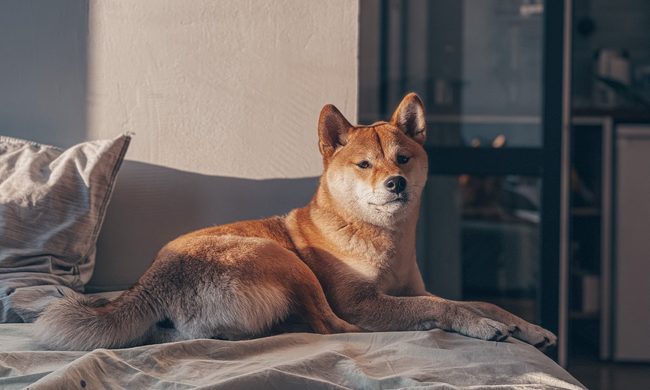
As Pride parades and celebrations ramp up throughout the month of June, you might be thinking about bringing along your four-legged friend. Attending a Pride parade with dogs can be fun, but it can also require a lot more planning and work than you originally thought. You really do need to think it through!
To make your life easier, we’ve asked three of our most trusted canine experts what they would consider before bringing a dog along to a Pride parade. From health and safety concerns to socialization and shopping (no pup is ready for Pride without the proper accessories, after all), they’ve thought of it all.
Here’s what you’ll want to ponder before attending a Pride parade with dogs, expert-approved.
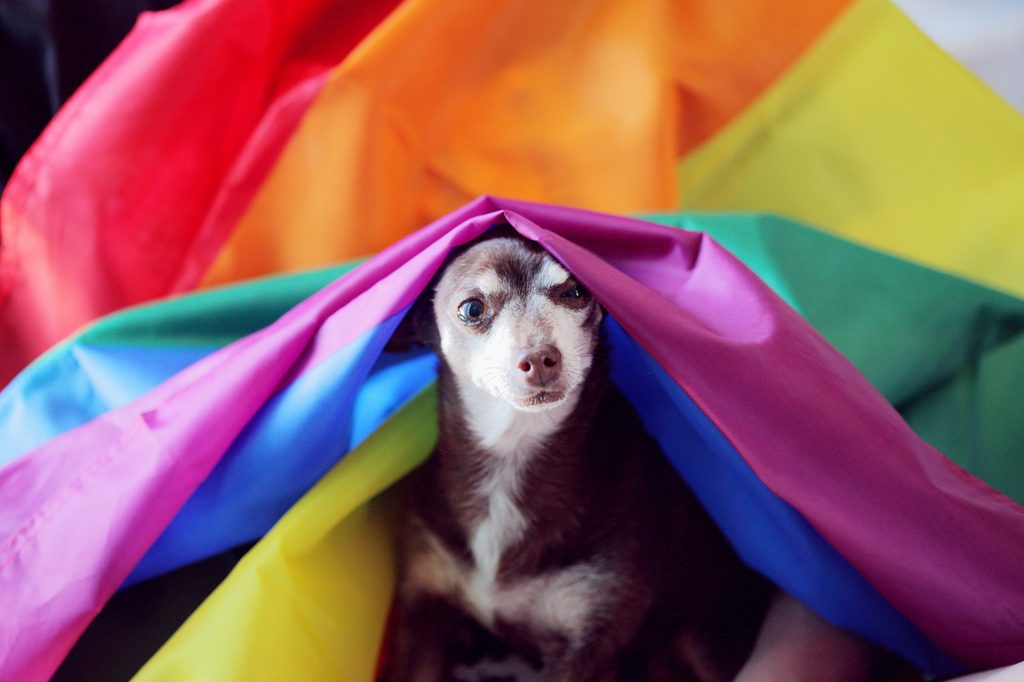
Will your dog enjoy attending Pride?
Partying with your pup at Pride might seem like a dream come true, but Renee Rhoades, Dog Behavior Specialist at R+Dogs, urges you to ask yourself one important question: “If my dog had a choice, would they choose to come to this event?” This may make you reconsider, but it may also help you realize what an outgoing, social dog you have. If the latter is the case, and you truly believe they would enjoy the crowds and activity, read on for a safe and happy Pride with your pup.
Planning ahead for obstacles and safe spots
No two Pride events are the same, and no two attendees have the same Pride experience. When you bring along your furry friend you might be committing to watching from the sidelines, notes Rhoades, as the center of the action may be too crowded to keep your buddy comfy.
Rebarkable founder Ali Smith recommends making a trial run to the parade location. By bringing your dog to the event spot, you can scout out places for potty breaks and rests, and you can practice your loose-leash walking. It can also help to visit the location on your own during a more crowded time to give you an idea if it’s an environment your dog could handle.
If your dog hasn’t spent a lot of time in crowds, you’ll want to gradually expose them to this, too. “Throughout this,” notes Smith, “monitor [your dog’s] stress. If it seems like this is too much[, t]hen maybe consider if the parade is a selfish goal of yours and not something your dog will enjoy.”
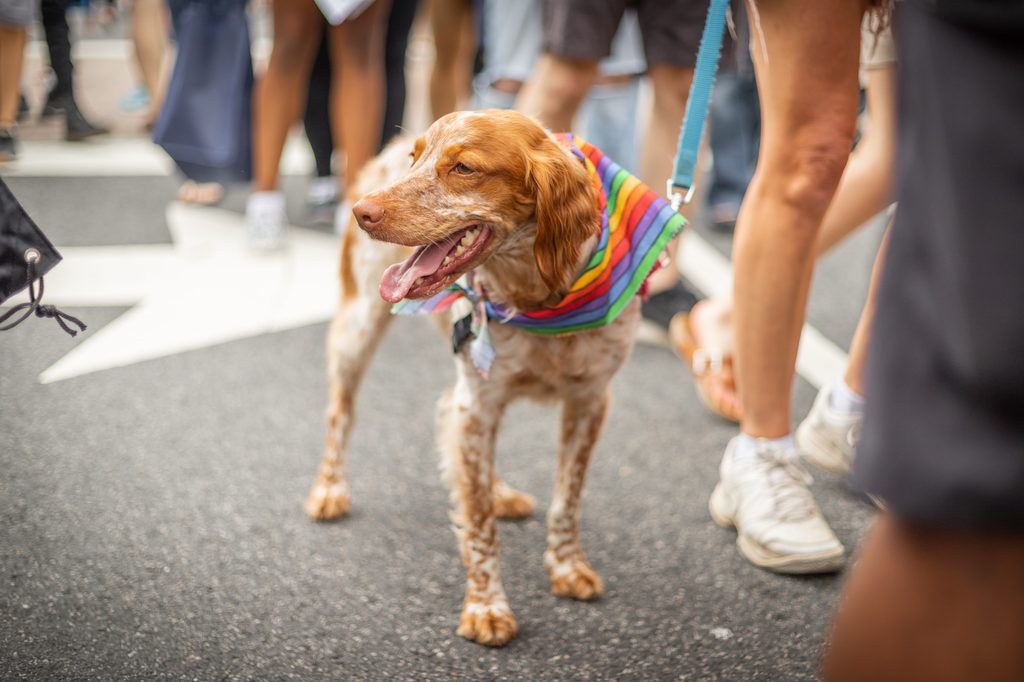
Help your dog beat the heat at a Pride parade
Though sunny skies and warm temperatures might be the perfect time for a Pride parade, it’s not necessarily the perfect time to take your dog outdoors. Veterinarian and PetMeds partner, Dr. Lindsay Butzer, DVM, told PawTracks that her office sees the most cases of heat stroke during the summer months.
“Heat stroke incidents mostly occur when a dog and their owner go on a long walk outside in above 80-degree weather,” she explains, “[or] a dog is left outside for longer than 30 minutes.” Be smart, check the weather, and always put your dog first when deciding whether to bring them along.
Luckily Dr. Butzer offers many ideas for keeping your pup cool:
- Keep your dog hydrated
- Avoid hot blacktop
- Store water in stainless steel containers
- Avoid walking in the middle of the day
- Bring along a cooling vest, or freeze a washcloth in a Ziploc bag
- Give your dog access to shade, even an umbrella
Practice desensitization in crowded places
“Bringing dogs to an environment where there is a lot of foot traffic, noise and hidden hazards like food discarded on the ground can be tricky,” notes Rhoades, but there are things you can do to make it easier on you both.
Packing a bag of your dog’s essentials–snacks, a food bowl, water, a toy, first aid kit, and treats–is, well, essential! Smith also recommends considering alternative transportation for some dogs. “First, consider size; small dogs are much more likely to get trodden on, or tripped over” she begins, “so you may consider a doggy stroller or a backpack to enjoy this together.”
Make sure to invest in a sturdy harness and leash before you go. If your dog is one who needs more space, Smith has one more suggestion: “You can also get harness patches that say things like “do not pet” which may give your dog enough space for you to dictate whether your dog gets affection from others or not.”
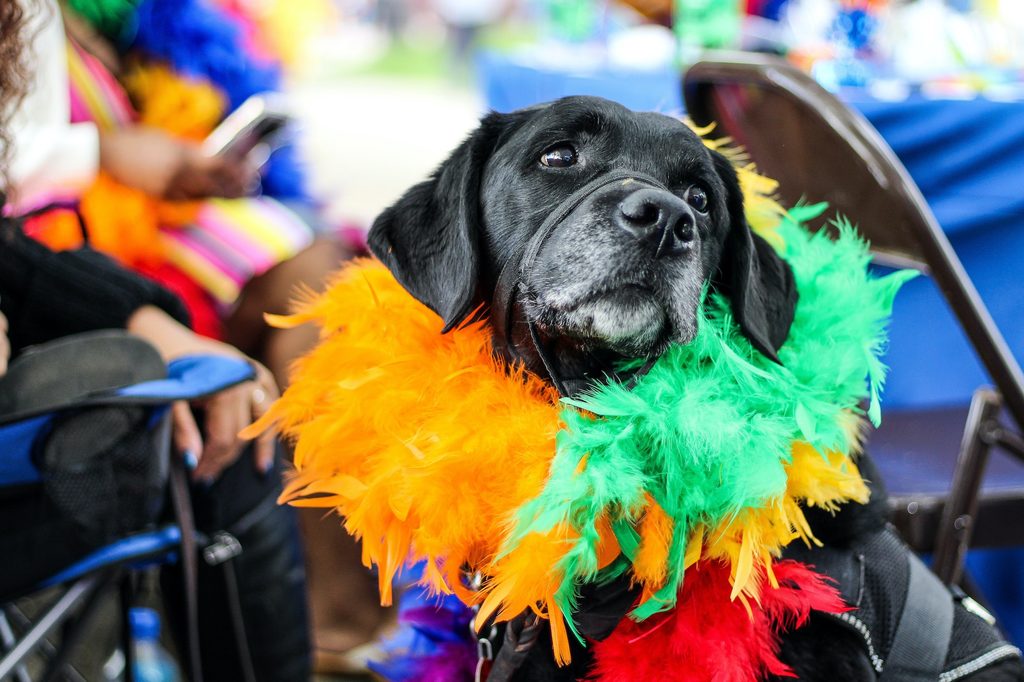
Check in with your dog frequently
While you’re at the Pride Parade, keep a close eye on your buddy. Watch their reactions to their surroundings and don’t assume the entire day will go smoothly just because the first hour did. This is why it’s so important to tune into your dog’s body language; you won’t want to overdo it if your dog is overwhelmed.
Remember those out-of-the-way spots you scouted out earlier? They’ll come in handy if your dog seems at all stressed. If it’s still too overstimulating, though, it might be time to head home.
“Don’t expect your dog to be out all day,” explains Rhoades. “Prepare yourself to shorten your day or be ready to leave early if your dog seems uncomfortable.”
Pride might be about honoring LGBTQ+ communities, but, as a pet parent, your fur baby always comes first. That’s just how it is!