
As a pet parent, you often witness your pup getting up to some strange shenanigans. Actually, you’ve seen it all–from when your pup is being silly or naughty to when they’re downright adorable. However, some canine behaviors are so odd to humans that they’re harder to explain.
One of the most common canine behaviors that strikes us as a bit odd is snacking on the backyard lawn. Why do dogs eat grass? Fortunately, your pup isn’t telling you to mow the lawn or asking you to feed him a vegan diet, but it’s normal to have questions about this behavior. Is your pooch satisfying a nutritional requirement? Is he trying to settle his stomach? We’ll get to the bottom of this seemingly strange (yet relatively universal) phenomenon.
Do dogs eat grass to settle their stomachs?

Unlike a lot of myths about dogs, veterinarians say there may be some truth to the assumption that eating grass settles their stomachs. According to Family VetCare, eating grass might be your pooch’s version of taking an antacid for an upset stomach. However, because dogs frequently vomit after ingesting grass, it’s possible that they use it as a natural emetic.
When humans vomit, our bodies produce chemicals that make us feel better, so it stands to reason that a similar biological process occurs in our dogs. In other words, if your dog has an upset stomach, their easiest solution may be eating grass to trigger the vomiting process.
This behavior may actually be instinctive. Your dog’s ancestors, gray wolves, also ate grass – most likely as a way to clear their digestive tract when they eat something that doesn’t agree with them – lending credence to the theory that eating grass is biologically hardwired in your pooch.
Why is my dog eating grass?
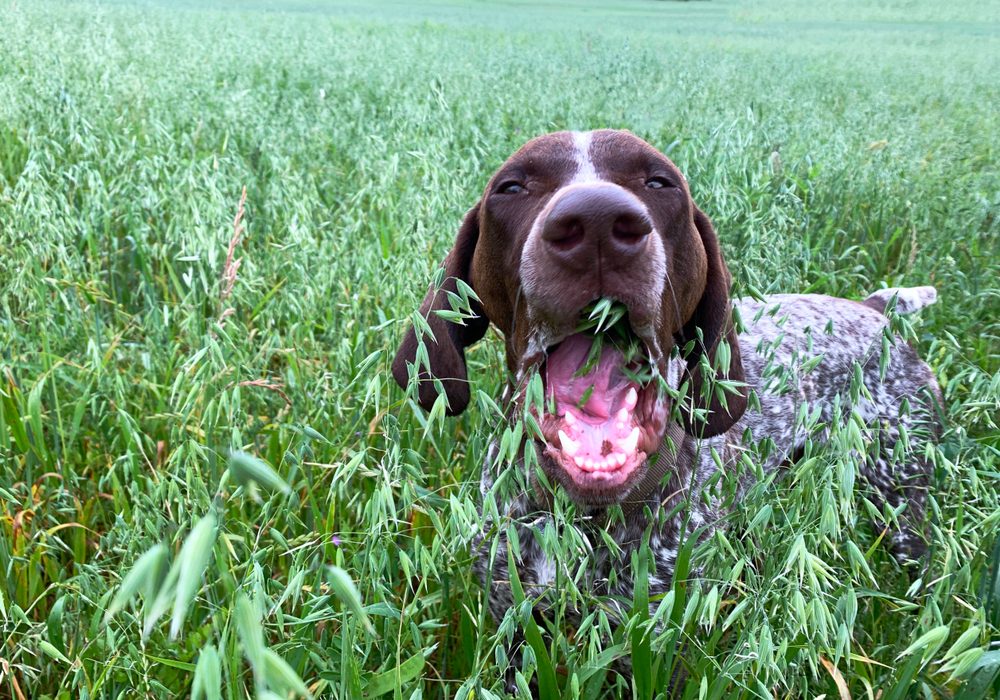
The pet pros at Pet Check Urgent Care suspect that dogs eat grass for a variety of reasons. Because dogs are less likely to eat grass in the presence of their pet parents, some vets think dogs snack on our lawns when they’re anxious, stressed, or simply when they’re bored. Other vets think dogs eat grass because most pet parents try to stop it, so it’s more of an attention-seeking behavior.
Dogs not fed a nutritionally rich dog food formula may eat grass to replace micro-nutrients lacking in their diet. Still, others believe dogs tend to eat grass when they suffer from an upset stomach.
Another possibility is that your pup has a condition called pica, which causes him to eat non-food items. Lastly, it’s conceivable that your dog snacks on grass simply because he likes the way it tastes. (Considering the fact that some dogs also like the taste of cat poop, we have to say that grass is an improvement.) There’s no one correct answer, so you may need to use your powers of observation to figure out what’s going on with your dog.
Is it bad if dogs eat grass?
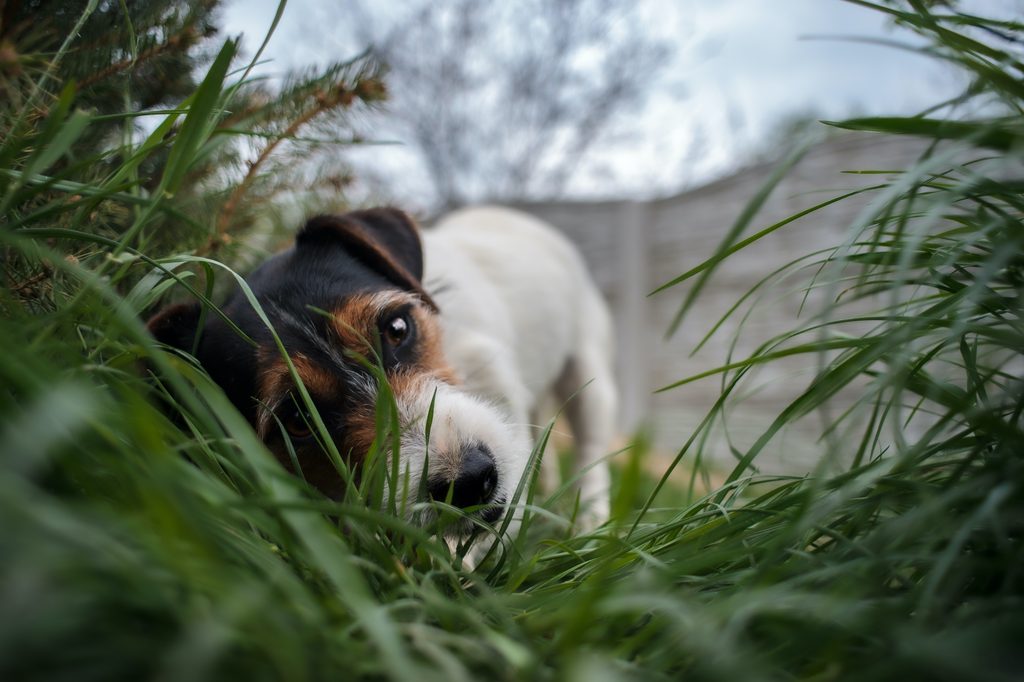
Contrary to popular belief, just because your dog eats grass doesn’t necessarily mean he’s sick to his stomach. So, it’s not necessarily bad if your dog eats grass. Your pooch eats grass because he’s bored, wants attention, has an instinctive drive, or simply enjoys the taste. That being said, if your dog frequently eats grass to induce vomiting, it could be a symptom of an underlying health condition. Just to be on the safe side, you should schedule a checkup with the vet if you think your pup may be suffering from tummy troubles.
While eating grass is a relatively normal behavior for dogs, that doesn’t mean it’s risk-free. If you have a green thumb, chances are good you treat your lawn with pesticides to protect your blooms. Unfortunately, dogs can become violently ill after ingesting these toxic chemicals. Another issue that could arise from allowing your dog to eat grass is lungworm, a dangerous infection contracted by ingesting a parasitic lungworm. The usual hosts are snails and slugs, though your pup may be able to contract the parasite by consuming the trail of mucus these slimy carriers leave behind.
How to stop your dog from eating grass
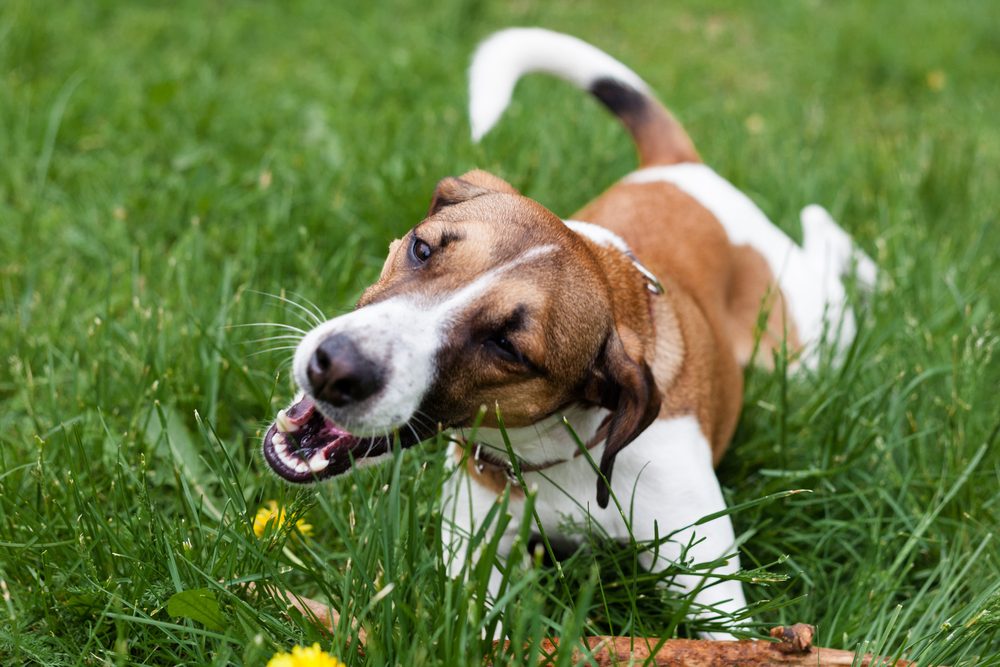
From worrisome chemicals to nasty parasites, allowing your dog to snack on grass is a risky behavior you want to prevent. Here are a few tips that can help:
- Supervise your dog. If you suspect that your dog eats grass because he’s bored or anxious, try to accompany him outside.
- On the other hand, if your dog eats grass to get your attention (especially if you try to stop him from eating grass), make sure your buddy gets lots of playtime and cuddles before spending time outside. He’ll be less likely to eat grass because he already has what he wants: your company and attention.
- Distract him with a treat. Some dogs eat grass because they like the taste, so distracting your pooch with a dog treat he enjoys more should do the trick.
- Rely on basic obedience training. If your dog knows how to heel, you can use the command to draw his attention away from the yard and focus it on you. (Make sure to reward him for being a good boy.)
- Check in with your vet to make sure your dog is meeting all nutritional requirements.
If you suspect your dog has pica or has frequent stomach issues, you’ll want to talk to your vet to solve the problem. Fortunately, most dogs respond well to treat-based distractions or training, so stopping your dog’s unwanted snacking shouldn’t require too much time or effort.
When to see the veterinarian about a grass-eating habit
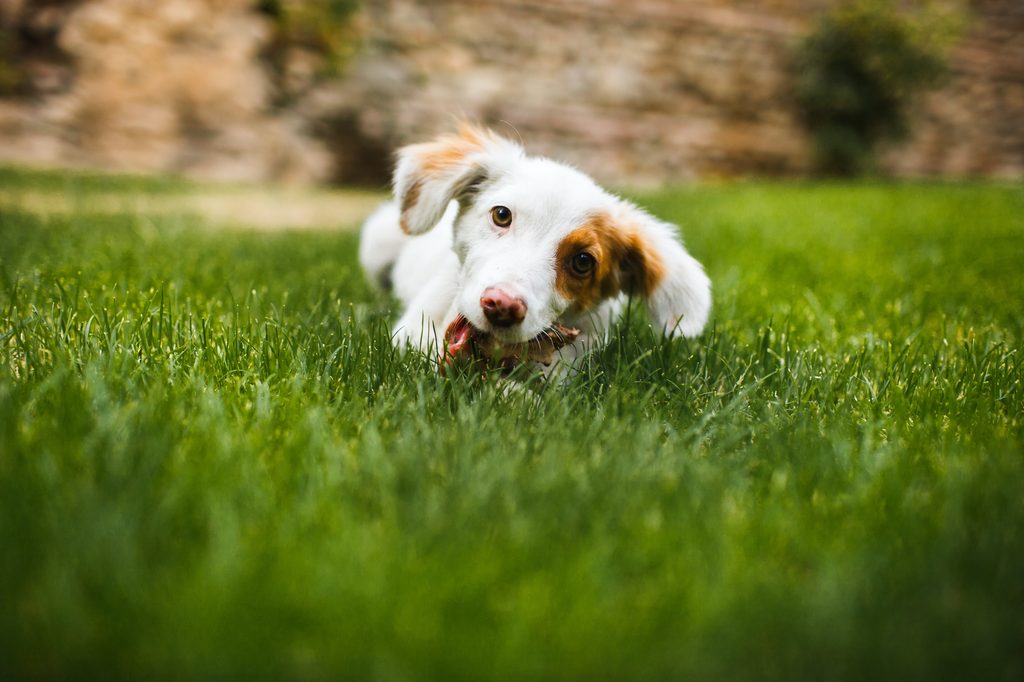
Most of the time, eating grass isn’t a reason to be concerned about your dog — especially if they aren’t vomiting or showing other signs of GI upset. If you’re curious, you can always mention it to your vet, but you don’t need to make a new appointment unless your dog is acting unusual or dealing with stomach troubles for more than a few days.
That being said, please don’t wait to contact your vet if your dog becomes extremely distressed or lethargic or if there is any amount of blood in their vomit. Even though most cases of these symptoms are not life-threatening, they are still serious problems that need more immediate treatment.
However, you can rest assured that eating grass isn’t a sign of a dangerous issue. It might be unusual and even puzzling, but you have to remember that dogs taste plenty of things we don’t consider to be food. They have scent glands inside their mouths, and tasting can be a way of getting a better read on pheromones and chemicals.
Now that you know all the basics about dogs and grass, you can make the best decisions for you and your pup. After all, a little knowledge is all you need in order to keep your four-legged friend safe while outside, no matter the time of year. Let the playtime and picnics begin!