Dogs do so many quirky things, from chewing on everything in sight to kicking up the grass after relieving themselves. No matter how many times pet parents witness these acts, though, it’s hard to tell exactly why they do what they do. Even their bedtime rituals can leave owners guessing. For example, why do dogs turn in circles before they lie down?
Even though animal behaviorists have only recently started looking into these questions, the answers already make sense. After all, there’s a lot to learn from the wolves and wild dogs our four-legged friends evolved from. It’s certainly possible that we don’t know all the factors that affect a dog’s circling behavior, but here’s what we know so far.
Why do dogs turn in circles before lying down?
If you’ve noticed your pup turning in a circle or two to get comfy before a nap, there’s no cause to be alarmed. As odd as this behavior is, it’s also completely normal. There are actually several reasons why they do it.
For comfort
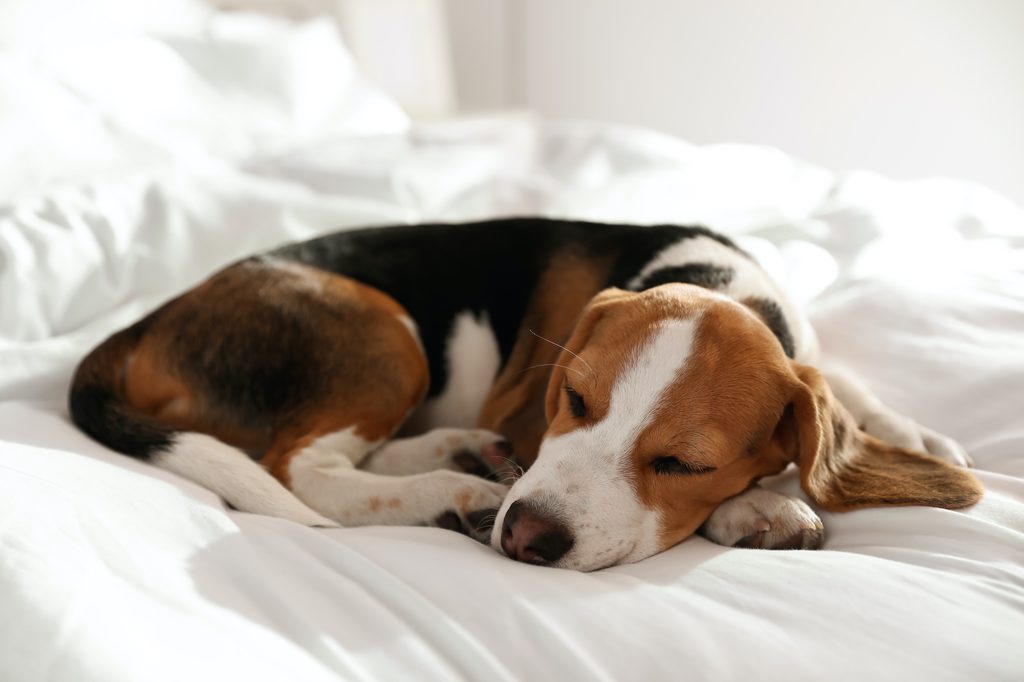
A quick circle or two before lying down might look like your dog’s attempt at getting comfortable—you might be onto something. Turning, pawing, and kicking can be your pup’s version of “denning” behaviors, wherein they make the space as comfy as possible before settling down.
A 2016 behavioral study further supports this theory. According to the University of British Columbia’s Professor Emeritus Stanley Coren, PhD., DSc., FRSC, findings concluded that dogs were significantly more likely to circle at least once before lying down on an uneven space, like a shag carpet. He concluded that circling may help pups flatten out textured surfaces to create a perfect “nest” for resting.
Temperature control
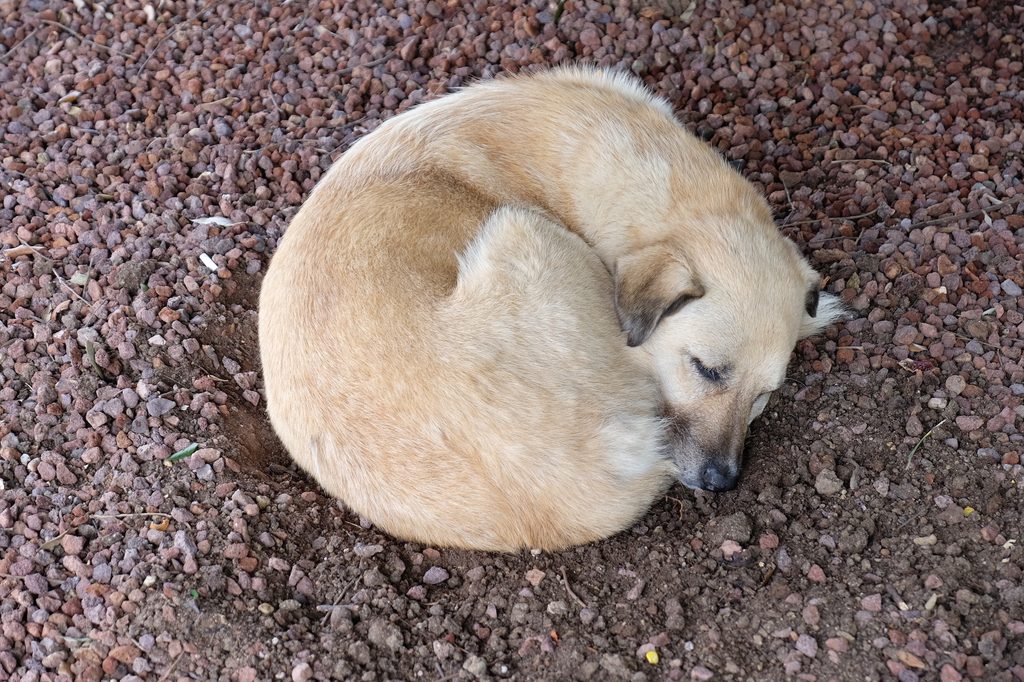
In the wild, denning behaviors can help dogs find an ideal temperature for sleeping. A dog might walk in circles and scratch away the top layer of grass and soil, exposing the cooler ground beneath to cool off. In cold weather, a dog may circle to help themselves “ball up” and preserve body heat. Packs might even ball up together!
Pack relationship
Though it hasn’t been confirmed, according to VCA Hospitals, it’s possible that a dog or wolf’s circling behaviors are related to their place in the social hierarchy of the pack. It’s unclear which actions denote seniority and which show submissiveness, perhaps since this phenomenon can only be observed in a pack setting.
It’s also likely that circling before lying down gives a dog one last chance to look around before settling down for the night. They can make sure every member of the pack is present and accounted for—whether their pack is made up of a dozen wolves or a couple of humans.
Looking out for predators and pets
As pups circle and survey their surroundings, they’ll want to ensure no predators are nearby before settling in for a nap. They may do this visually with a quick, 360-degree scan as they circle once or twice, or they may position themselves with their nose to the wind. By doing this, a dog will be able to get a whiff of a predator from far away. That means more time to alert the pack and get everyone to safety.
Dr. Stanley Coren of the University of British Columbia also notes that circling may have served an additional purpose in the wild. As a dog steps around, the vibrations against the ground were likely useful in chasing away pests, bugs, and vermin that may have inhabited their sleeping spot.
Why does my dog circle excessively?
Though circling may have served a vital purpose in the wild, it’s not as essential for a pet. There are no predators to look out for or vermin to chase away, but the instinct to circle may still be present. And that’s fine! Circling can be a way of getting comfortable, but if you notice your dog circling more than four or five times every time they lie down, you may want to look into some alternative reasons.
If your pup seems uncomfortable, they may be suffering from joint discomfort or canine arthritis. Neurological conditions like a spinal cord injury can cause restlessness and the inability to settle down, so be sure to keep an eye on your dog’s body language and rest patterns if anything seems off.
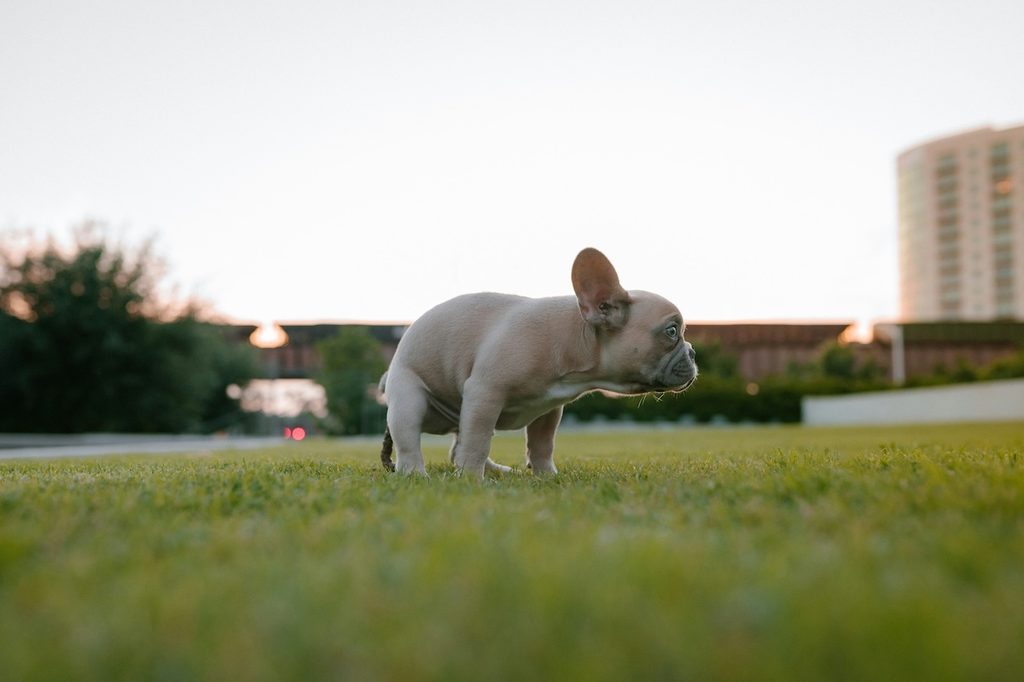
Why do dogs go in circles before they poop?
Your dog might not just walk around in circles before lying down. They may also give you a head’s up they are about to drop a No. 2 by circling the wagons. Dogs often display circling behaviors before pooping to ensure the place they’re about to go is clean and safe. Remember, dogs weren’t always domesticated. Their ancestors lived in the wild and had to be on the lookout for predators. Your pup may have inherited this behavior.
Now, keep an eye on your normally housebroken dog if they start circling in their bed and wind up pooping instead of taking a nap. Should this behavior happen again, or if it is accompanied by other flags like lethargy and appetite changes, you’ll want to call a vet.
Circling is perfectly normal
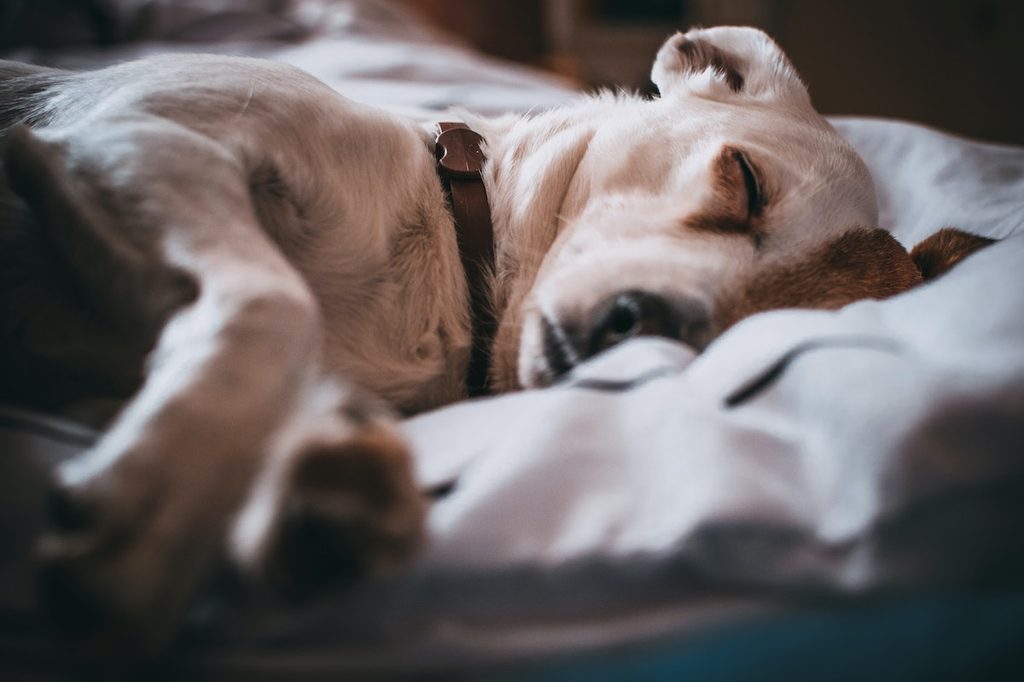
Let’s circle back ourselves. It’s completely normal for a dog to turn in a circle once or twice before lying down for a nap. It’s a deep-rooted instinct that stems from ancient survival tactics, though it’s more often used as a way for today’s pets to get comfy. Every now and again, circling can be a sign of a larger problem, but the vast majority of the time it’s just another doggy quirk to appreciate.