
If you live with cats, then you’ve surely watched as they sit hunched over, coughing or retching, before finally hacking up a hairball. But hairballs are not the only reason your cat may be showing these symptoms. If the coughing happens several times a week and there’s no sign of a hairball, your cat may be suffering from feline asthma. Since this condition can be serious if left untreated, it’s important to pay attention and take your cat to a veterinarian when in doubt.
What exactly is cat asthma?
According to the Cornell University College of Veterinary Medicine (CUCVM), while there is some debate as to the definition of feline asthma, veterinarians and researchers agree that the disease is caused by “an allergic reaction to inhaled allergens, particles that stimulate a cat’s immune system.” It’s estimated that feline asthma affects between 1% and 5% of cats. Researchers at CUCVM say it doesn’t appear that one sex is more susceptible to the disease, and while some studies suggest that Siamese cats may be predisposed to asthma, this has not been definitely proven.
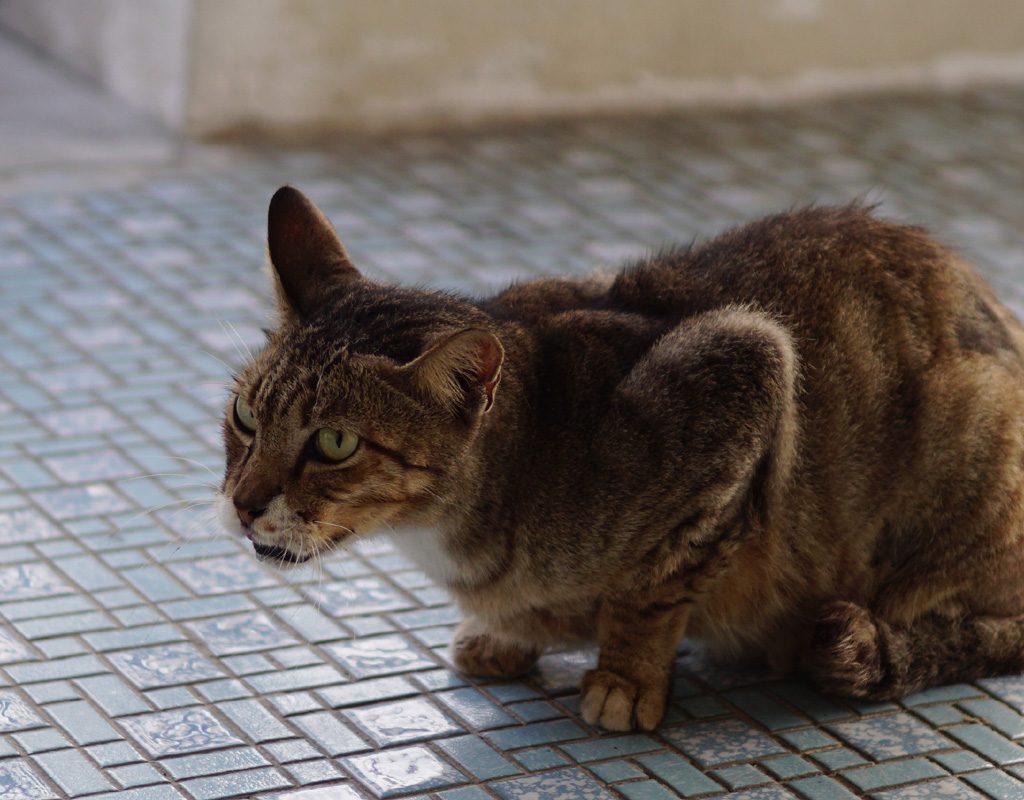
As with human asthma, cats may seem perfectly normal between episodes. Veterinarians say that currently, there’s no way to tell when an attack may happen, but when they do, many cats hunch their bodies close to the ground and extend their necks forward. Other symptoms include:
- Coughing or hacking
- Vomiting
- Difficulty breathing
- Wheezing
- Rapid breathing
Feline asthma attacks may range from mild, with a coughing fit resolving on its own, to more severe restrictions that progress to panting and even death in rare cases, according to the Animal Health Foundation (AHF).
How asthma is diagnosed in cats
There’s no single test that can diagnose feline asthma. Veterinary specialists say it can be difficult to diagnose because several other diseases present similar symptoms. These include heartworm disease, congestive heart failure, lung cancer, and pneumonia. Veterinarians have to rely on information gathering and testing to diagnose asthma. They take into account a cat’s overall health history as well as the results of chest X-rays or ultrasound, bronchoscopy to see inside a cat’s lungs, and microscopic evaluation of the cells in the cat’s airway secretions. In some cases, veterinarians may do blood and allergy testing.
According to CUCVM experts in cats with asthma, “radiographs often — but not always — reveal a characteristic bright branching pattern along the airways that is created by the accumulation of inflammatory cells. Air trapped in the constricted airways may also cause the lungs to become overinflated and appear larger than normal in a radiograph.” A bronchoscopy may help in the diagnosis because the airways of cats with asthma may show a high number of inflammatory cells. However, since this result may also be found in cats suffering from other diseases, the overall health picture needs to be considered.
When diagnosing feline asthma, it’s essential for veterinarians to rule out other diseases, say experts at CUCVM. Drugs used to treat diseases with similar symptoms may not be appropriate for a cat with asthma and may even cause more harm than good.
Treatments and prognosis
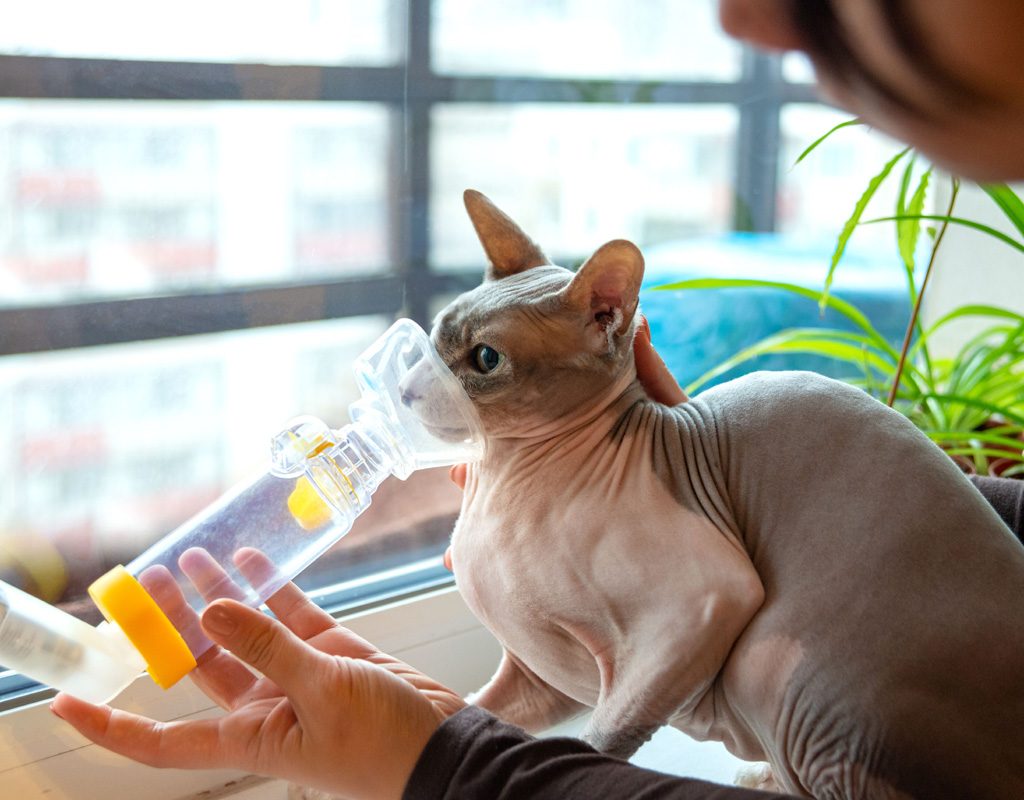
While there’s no cure for feline asthma, it can be effectively treated with medications. Corticosteroids are the most effective drugs for treating the condition because they reduce the inflammation in the windpipe and bronchi, according to AHF specialists. Bronchodilators are also used in some cases because they help open up the air passages to make breathing easier. Both medications can be given via injection, orally, or through an inhaler.
Researchers at CUCVM say that experimental therapies, such as “desensitization to specific allergens (like allergy shots in people), the use of omega-3 fatty acids, and drugs intended to disrupt the metabolic pathways that lead to inflammation” present some promise in the treatment of feline asthma, but further research is needed.
Can feline asthma be prevented?
While you may not be able to completely prevent your cat from getting asthma attacks, there may be some preventive measures you can take, like keeping your cat’s environment free of dust and smoke, including cigarette smoke. Also, use dust-free cat litter and avoid using sprays, including insecticides, in your home or around your cat.
While it’s true that cats can never be cured of asthma, the good news is that it can usually be controlled. If you pay close attention to your cat’s symptoms and know when you need to help out with medication, you and your feline friend can share many happy years.