If your vet tells you that you need to give your cat pills and you’re instantly dreading the process, you’re not alone. Giving cats pills can be challenging, especially if you have a particularly uncooperative cat. But when you understand how to give a cat a pill and the steps you can take to make the process easier, both you and your cat will be happier. Once you have the basic method down, you can give pills more quickly and start incorporating tricks that can encourage your cat to take the pill more willingly. If your cat ever needs to be on medication, then learning how to give pills is an essential skill.
How to give a cat a pill
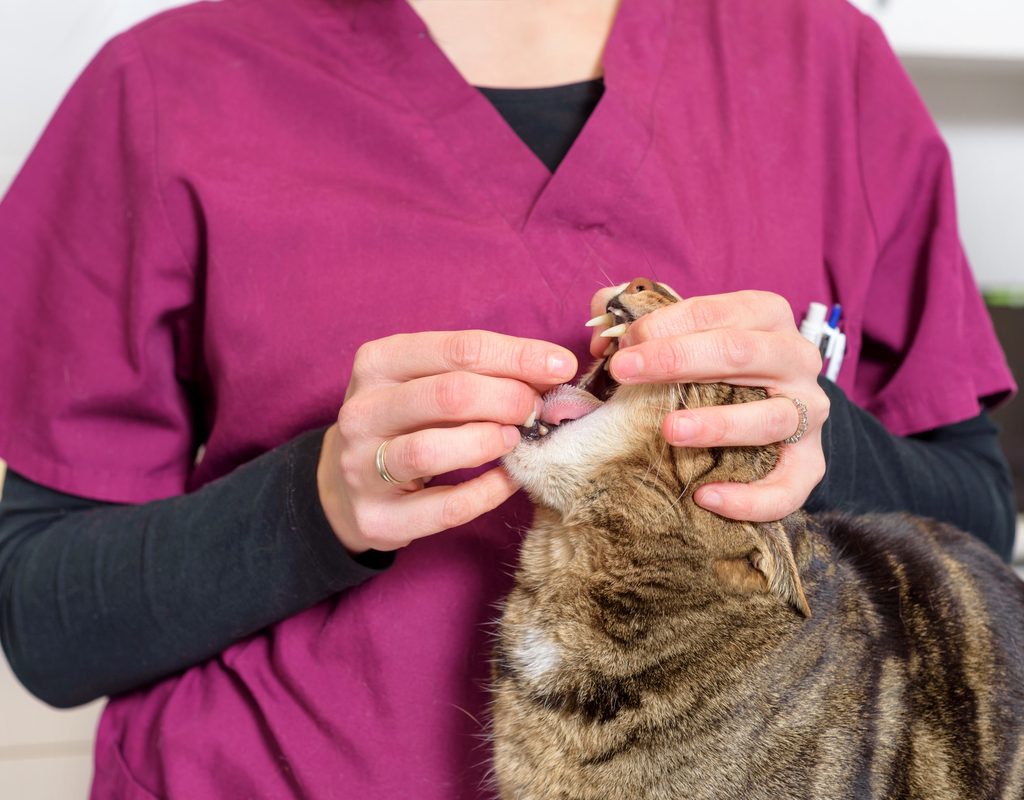
- To give your cat a pill, sit your cat so that he’s on your lap or the floor in front of you, facing away.
- Hold the pill in one hand and use your other hand to gently tilt your cat’s head upward and back, so that it’s pointing slightly over his shoulder and back toward you. This motion should cause your cat to automatically start to open his mouth as he tilts his head up.
- You’ll need to continue holding your cat’s head in this position with one hand. With your dominant hand, hold the pill between your pointer finger and thumb. You can then use the pinky of this hand to put gentle pressure on your cat’s lower lip, right in the front of his mouth, to get him to open his mouth wider.
- Put the pill as far back on your cat’s tongue as possible. Gently close his mouth and bring his head back to its normal position. You can rub your cat’s throat and rub his nose, which should prompt him to swallow.
- Watch your cat for a few minutes and make sure that he did actually swallow the pill — some cats are incredibly good at avoiding swallowing.
How to make giving your cat a pill easier
Giving your cat a pill isn’t the easiest process in the world, especially if you have a wriggly cat. Luckily, there are a number of ways you can make the process go smoother:
- Consider wrapping your cat in a towel if he’s highly active and resistant.
- You can also use a pill gun, which makes it much easier to get the pill farther back into your cat’s mouth, ensuring he swallows it.
- You can also grease up the pill with just a bit of butter or margarine, which can help ensure it slides down.
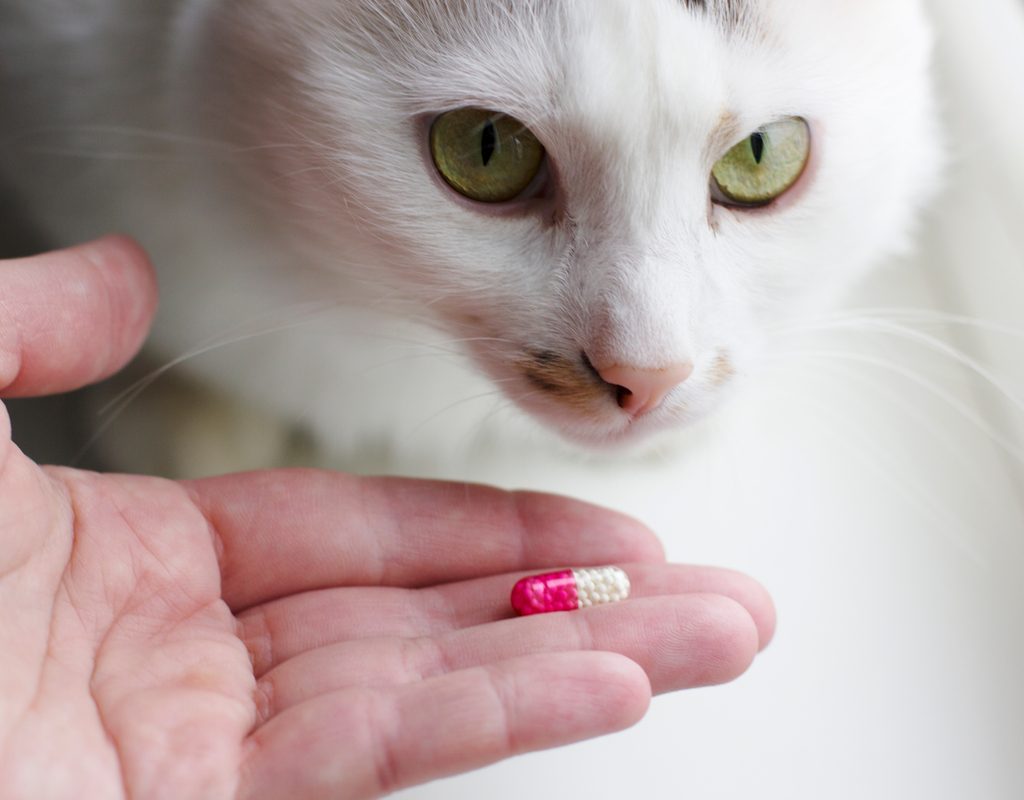
Conceal the pills: You may be able to avoid struggling with your cat over pills at all. Consider using a product like Pill Pockets or Tomlyn’s Pill Masker. Both of these products are designed to conceal pills in a tasty coating that’s just like a treat. When using these products, use only one hand to touch the pill, and then don’t use that hand to touch the exterior treat. Some pills have very strong scents and tastes, and your hand can transfer them. Once the pill is concealed, give your cat the treat and he should eat it willingly.
Try a liquid form: If your cat is truly terrible about taking pills and outsmarts all your efforts, ask your vet if the medication can be compounded in a liquid form. You may have better luck giving your cat a liquid medication using a dropper.
Establish a routine: If your cat is on a medication long term, then it can be helpful to establish a routine so your cat comes to accept taking his pill as a typical part of life. Follow up the pills with something rewarding, whether that’s cat treats, playtime, or breakfast. Knowing that a reward is on the way can encourage your cat to be more cooperative and willingly take his pills.
In many cases, it’s important for your cat to get every pill that he’s prescribed and to receive it on time. This means that you’ll need to have your pill-giving skills down in advance. Being prepared with supplies like a pill gun and Pill Pockets can help make the experience easier for you and your cat. Be sure to familiarize yourself with how to give a pill but don’t be afraid to use these extra tips to help the process go more smoothly. Making the process quick and painless will also make it more comfortable for your cat to take pills, ensuring that he receives the important vet care that he needs.


