Our dog’s eyes tell us a lot. From the expectant look of impending dinnertime to the unmistakable gaze of pure devotion, they speak volumes without uttering a single word. And because those sweet eyes are so transparent, they are also a great reflection of what might be going on inside.
As a pet owner who interacts with his dog every day, you have the opportunity to detect eye problems before they become major issues. The good news? Most eye conditions are treatable when diagnosed early. The key is to be observant, follow basic safety protocols, and know when it’s time to see your veterinarian. Here’s what we know.

A sight to behold
Unlike your dog’s amazing nose and olfactory system, the way his eyes work is fairly similar to the way yours do. One distinct difference is that canines have a third eyelid located in the corner of their eye that acts as a sort of windshield wiper for the cornea. The gland in this eyelid produces a tear film that not only helps keep the eye wet but also acts as a lymph node, producing antibodies that protect against infection.
And, like humans, a dog’s sense of sight can change with age or disease. For example, your pet may develop nuclear sclerosis or cataracts as he ages. Pets who develop diabetes, high blood pressure, some cancers, or dental disease may also experience changes in their vision.
What to look for at home
You are your dog’s best advocate for maintaining healthy eyesight. Take a moment each week to examine his eyes for signs of trouble. For example:
- Redness, puffiness, excess discharge, or watery eyes may mean the beginnings of an infection.
- Excessive tearing, squinting, or blinking may indicate a variety of problems, from those as simple as seasonal allergies and dry eye to more serious conditions such as glaucoma or eye trauma.
- Excessive cloudiness, a bluish haze, or discharge may indicate cataracts, nuclear sclerosis, or glaucoma.
If your dog’s eyes exhibit any of these symptoms, gently pull down the eyelid and check for debris. If you see something that needs to be removed, flush the eye with warm water or use a cotton swab to gently coax it out.
It’s time to call the vet if your dog constantly rubs his eyes, they appear swollen or sensitive to light, you suspect he may have an eye infection, or debris has penetrated his eye.
Prevention
Some breeds are more susceptible than others to developing eye problems. Flat-faced breeds such as pugs and bulldogs are at greater risk for corneal diseases, while long-haired breeds such as sheepdogs and poodles are more at risk for eye infections.
Fortunately, there are simple things you can do to prevent issues with your dog’s eyes, no matter what breed he happens to be. For example:
- Don’t allow your dog to stick his head out the window while the car is in motion. Although his nose loves to experience all the smells, his eyes run the risk of developing an irritation or infection due to blowing dust and debris.
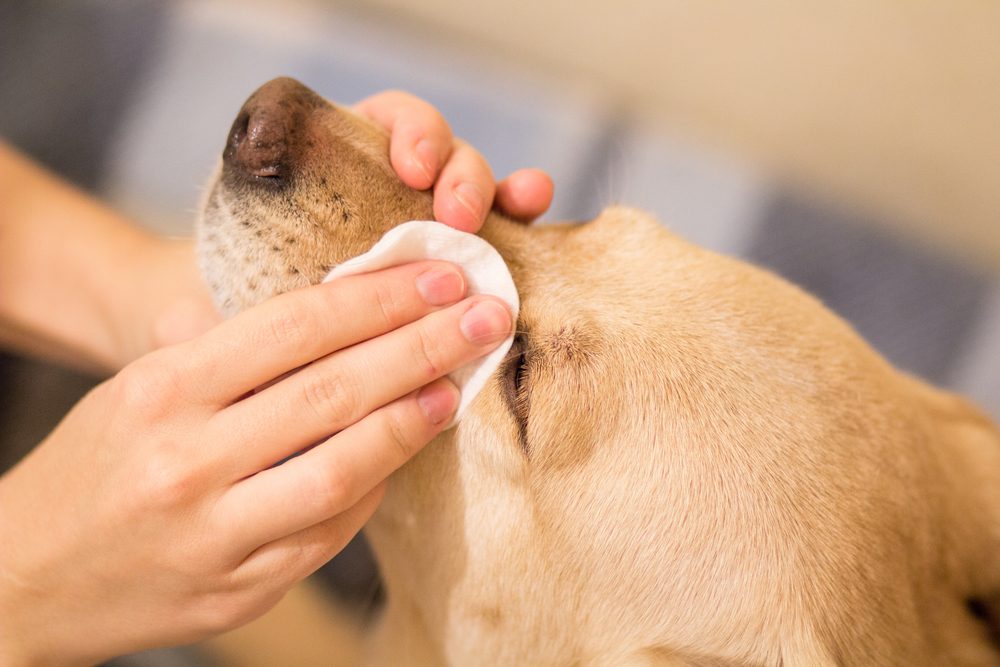
- Clean his eyes daily using a soft, wet cloth or cotton ball. If his eyes are crusty due to allergies, wipe firmly but gently to loosen the matter, repeating the process until it has been removed.
- Keep long face hair trimmed so that it doesn’t irritate the eye. Ask a groomer for help or, if you choose to do it yourself, trim the hair when your dog is calm with blunt-tip scissors held parallel to the eye.
- Schedule routine examinations with your veterinarian. Along with your weekly observations, she is your dog’s best defense against the development of chronic illness of any kind.
Whether it’s chasing his favorite ball during a game of fetch, watching a bunny hop past the living room window, or simply wagging his tail at the sight of his favorite human, your dog’s eyes are instrumental in helping him fully enjoy the world around him. And although you can’t always avoid illness or injury, taking a few minutes each week to examine your dog’s eyes can prevent unnecessary pain and suffering. Your observations combined with your veterinarian’s expert care form a critical partnership in maintaining your dog’s overall health and wellness.