Guinea pigs, members of the rodent family, come from the Andes region of South America. Originally wild animals, they were first domesticated by the residents of the Andes, Bolivia, Ecuador, and Peru as far back as 5000 B.C.E. These days, guinea pigs are most often found as adorable companions. More than 800,000 guinea pigs are kept as pets, and it’s easy to see why. Not only are they cute and friendly, but also you can train guinea pigs to do tricks. Interested in training a guinea pig? Read on.
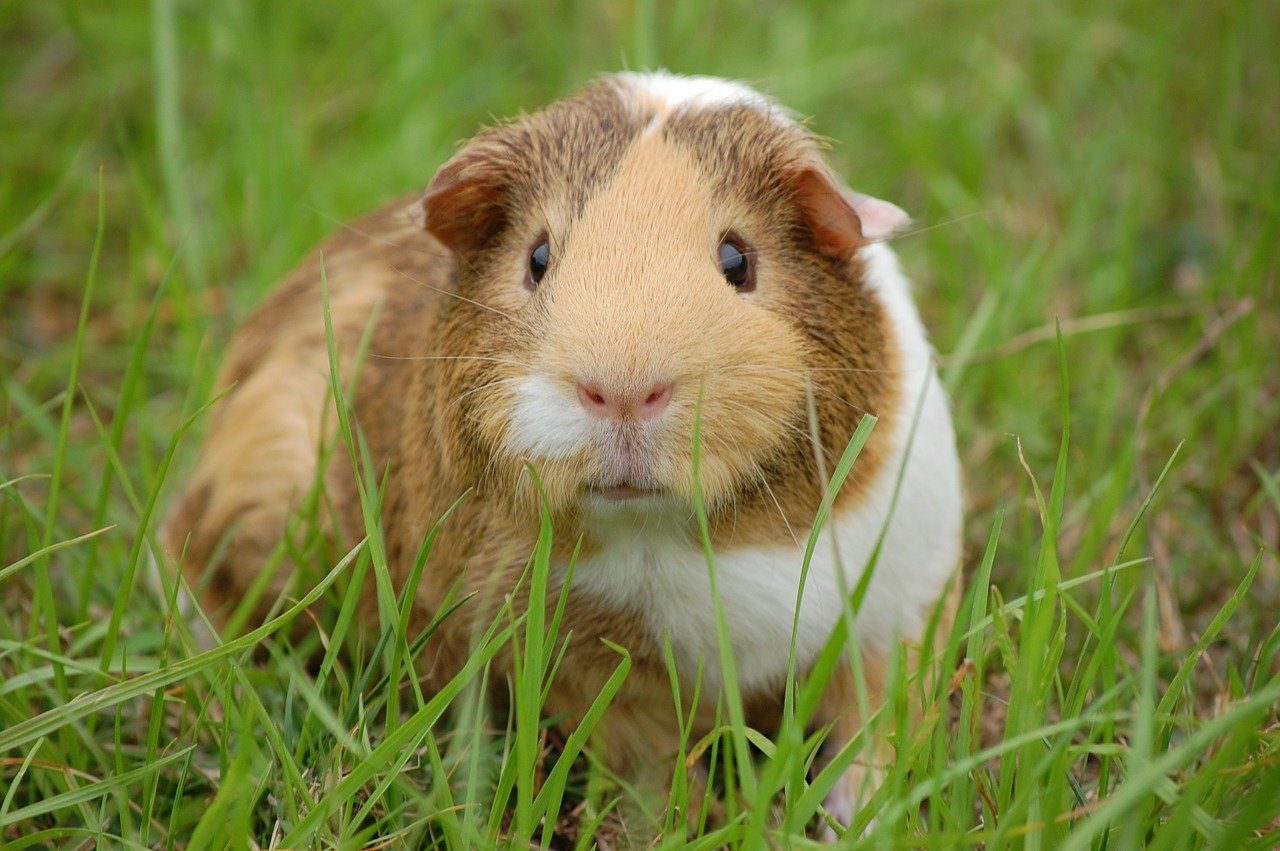
Fun tricks for guinea pigs to learn
Did you know you can teach your guinea pig to give you a high-five? How about jumping through a hoop? Let’s look closer at some of the cutest tricks you can teach your furry friend.
Follow the leader
It’s best to start with one of the simplest tricks: teaching your guinea pig to follow you. Because guinea pigs don’t have the best eyesight, we recommend using fragrant treats like herbs (basil and mint work well) or fruits like oranges and strawberries. Start by sitting on the floor and waving a treat around to encourage her to approach. Once she learns to come to you successfully, you can back away a few feet, dropping treats on the floor to encourage her to follow you. Say “come here” as you lead her. Soon, you’ll be able to tell your furry friend “come here” without a treat in your hand.
Sit up
While your guinea pig is on all fours, hold a treat above her head high enough that she has to sit up to reach it. When she’s sitting on her back legs, tell her “sit up” and then give her a treat. She may not understand the first few times, but the desire for a tasty treat should provide proper motivation. Pretty soon, your guinea pig will respond to the “sit up” command before you offer her a treat.
High-five
Place your hand on the floor palm upward, holding a treat over your palm in your free hand. Your guinea pig may place both front paws on your hand to reach the treat, but that’s okay. Gently move her back and try again. Once your guinea pig places a single paw on your hand, say “high-five” and give her a treat. Eventually, your guinea pig will place her paw on your hand without a treat. Make sure to follow up with lots of praise and affection so she’ll know she did well.
Jump through hoops
This trick seems a lot more challenging than it really is. Start with a hoop that’s at least three times larger than your guinea pig so she won’t feel trapped going through it. Encourage her to poke her nose through the hoop by holding a treat on the other side. Once your guinea pig is willing to take the treat, move it back a couple of inches to encourage her to step through the hoop. You can tell her “jump” and then reward her with a treat when she steps through. After she catches on, you’ll be able to direct her through the hoop without a treat in sight.
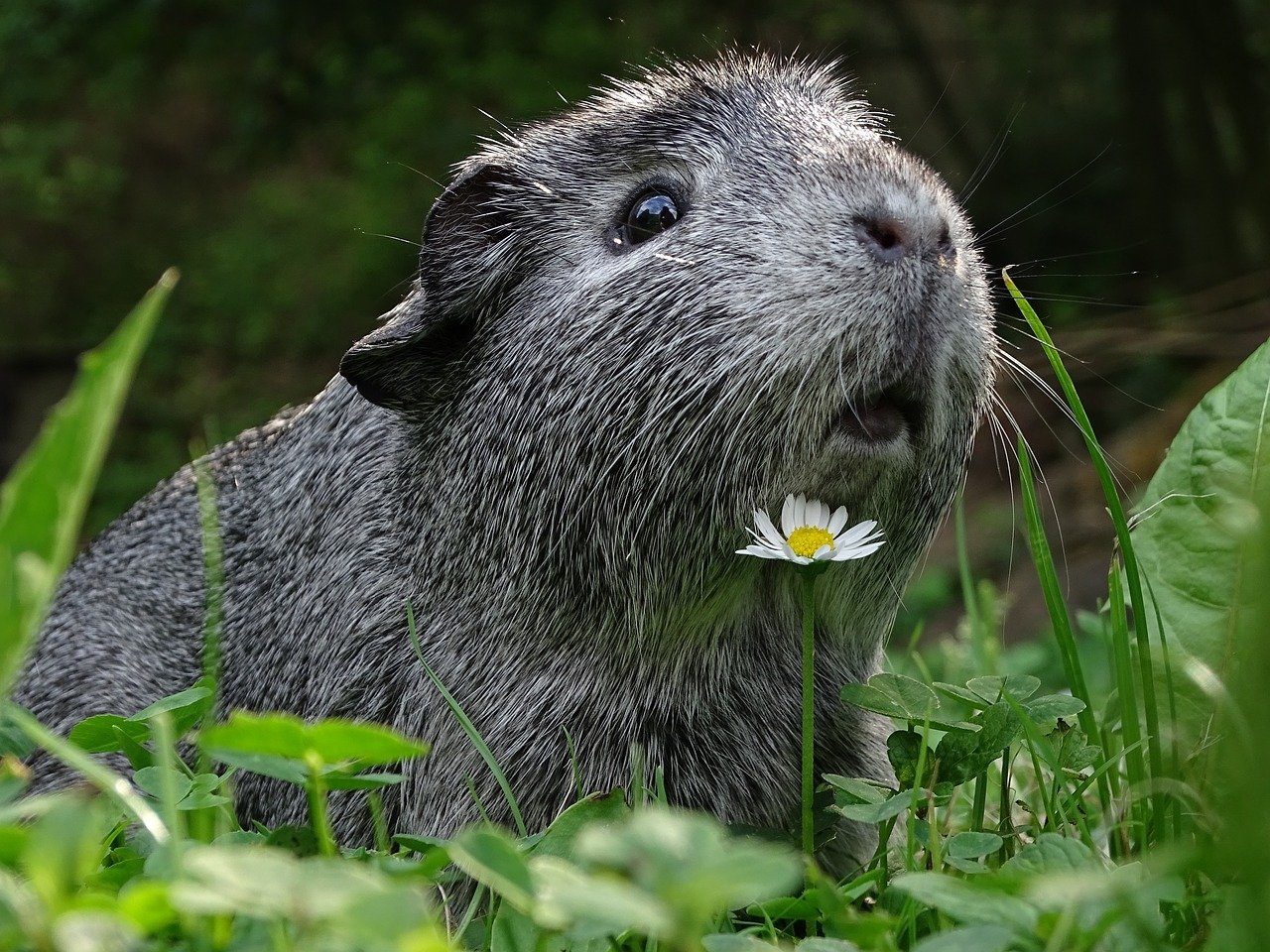
How to make the most of training
Just like cats and dogs, guinea pigs can form bonds with their owners. Building trust is the first step in training your guinea pig to do tricks. If your guinea pig feels comfortable in your presence, she’ll be much more receptive to learning. With patience, persistence, and plenty of rewarding tasty treats, you’ll be able to teach your furry little friend how to do a variety of tricks. These are the top four tips you should keep in mind when training your guinea pig.
- Guinea pigs are quite clever, but they have shorter attention spans than we do. When you’re first starting off training your guinea pig, stick to 15-minute intervals. As she becomes more familiar with what you expect, you can lengthen your training sessions to around 30 minutes every day.
- There’s a simple equation for training guinea pigs: Repetition plus consistency plus reward equals success. The more you repeat your commands — and give your furry friend a treat each time she does a trick — the more often she’ll successfully follow through. You should be consistent with your guinea pig. If you tell her “sit up” one day, you should always tell her “sit up” instead of simply saying “up.”
- Give her a treat only when she’s successful. No matter how adorable she is, reward her only when she’s completed the trick. This teaches her what she’s supposed to do. If you reward her all the time, she’ll have a much harder time learning.
- One last thing: You’ll want to monitor your guinea pig’s diet during training. Because you’ll be treating your furry friend when she does a trick, you don’t want to overfeed her the rest of the time.
Training your guinea pig may take some time and effort, but it’s well worth it in the end. Not only will your furry friend look adorable while doing tricks, but training sessions also provide much-needed bonding time. Remember to keep sessions positive and brief, always reward successful completion, and — most importantly — have fun with your guinea pig.