Scientists believe dogs have been man’s best friend for nearly 30,000 years, ever since packs of ancient wolves began hanging around our primordial ancestors’ encampments looking for scraps of food.
And it’s probably safe to say that as this relationship developed and those wolves became domesticated dogs, they probably got enough exercise as working dogs — hunting game, pulling carts, protecting livestock, and acting as security detail around the homestead.
Much of that has changed in the last century, of course. Today’s dog spends a lot of his time as a house pet, totally reliant on his human to provide enough exercise to keep him physically fit.
Which begs the question … to provide an adequate amount of exercise, how often should you walk your dog?
It’s complicated
But not really. You already know that every dog is different — size, weight, personality — so it stands to reason that determining how much exercise your dog needs would vary, too. And let’s be clear. Taking your dog out for a potty break is not the same thing as taking him on a walk. Walks are longer and more intentional than a quick trip to the backyard.
Here’s what to consider:
- Breed. Working-dog breeds such as terriers and boxers need a lot more exercise than more sedentary breeds like bulldogs and Great Danes. Remember, a tired dog is a good dog, so make sure you’re giving your breed of pup the right amount of physical exercise. Doing so helps reduce the amount of undesirable behaviors (think excessive barking, chewing, and digging) that result from too much pent-up energy.
- Age. It’s common for older dogs to develop issues such as arthritis and joint pain. If your older dog has trouble moving, shorter walks are most likely better than longer walks.
- Health. If your dog has health issues, such as arthritis or obesity, ask your veterinarian how much and what type of exercise he should receive on a daily basis.
How many times a day should I walk my dog?
Not only are breed, age, and health factors, but the amount of time you can devote to the activity is important, too. Work schedules as well as weather conditions play a big part in determining a walking routine.
For example, a healthy dog with a clean bill of health typically needs between 30 minutes and two hours of exercise each day. That could mean taking a long walk (or hike) once a day or several shorter walks throughout the day.
If you don’t have the time to walk your dog several times a day, consider hiring a dog walker to help out while you’re working. If the weather is too hot or too cold to be outside, consider enrolling your pup in doggy day care several days a week where he can safely romp indoors with other dogs his size.
Why is walking my dog important?
You already know how healthy it is for you to get some exercise, so we won’t go into that. Let’s focus on why it’s important for your pup:
- It’s good for his health. Giving our dogs the proper amount of exercise provides them many of the same benefits it does for us. Not only does it help with weight control, but it also helps maintain joint health as well as digestive and urinary health.
- It’s good for his mind. You may not know this, but those intense sniffing sessions your dog gets involved in every time you go for a walk are actually good for his mental health. Dogs communicate by smell. The scents they pick up when they sniff actually tell them what’s going on in their world, much like the information humans receive from reading the daily news.
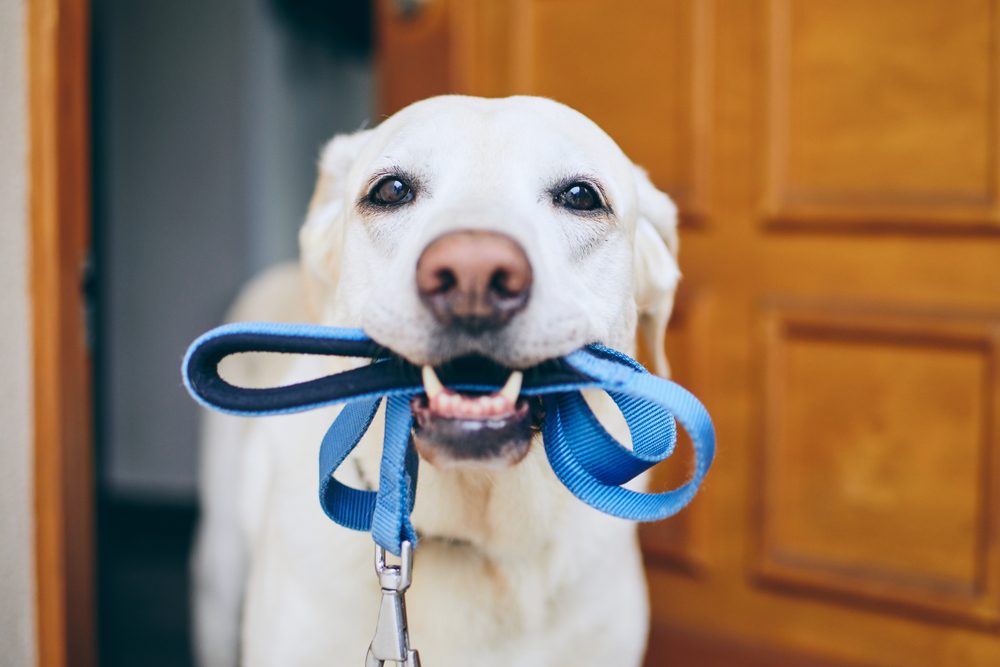
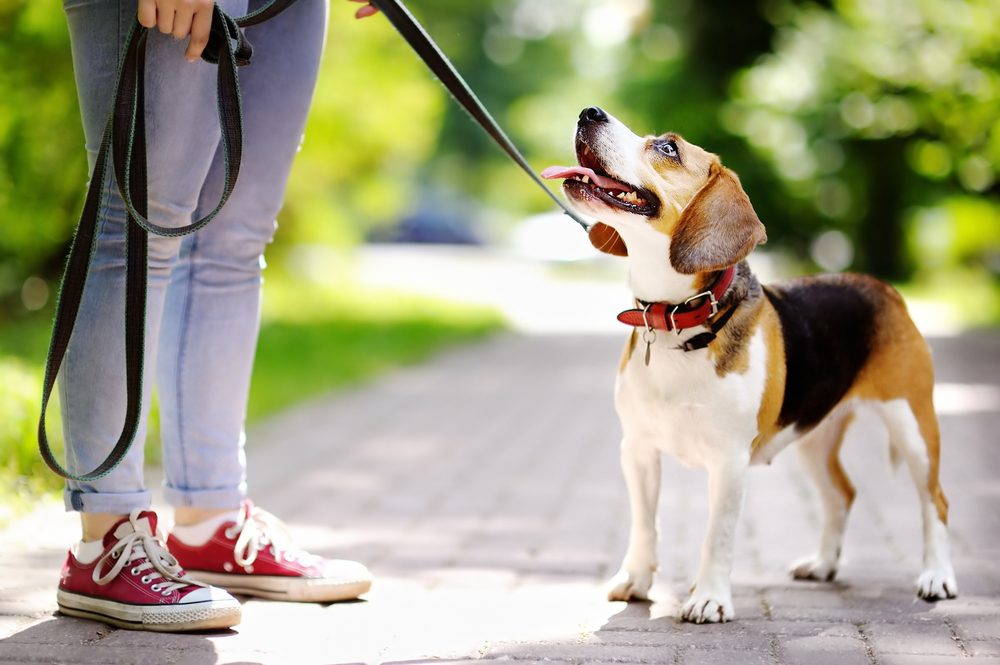
- It helps strengthen the bond between you. Take a moment the next time you pick up your dog’s leash and really pay attention to his reaction. Chances are, his entire demeanor changes. And instead of just going through the motions as you walk around the neighborhood, try interacting with him during the process. Practice a few commands like sit, heel, and look. Praise him when he complies. You might even want to find a different walking route every once in a while, just to give you both a change of scenery.
Although the relationship between man and dog has changed since their domestication millennia ago, the bond we share with our canine companions remains constant. Yesterday’s dog worked hard for his food and shelter; today’s dog counts on his humans for much more than that.
Check in with your veterinarian and get a clear understanding of your dog’s health before you begin any new exercise program, then get moving. Whether your dog needs one walk a day or four, whether he runs beside you on the trail or ambles slowly up the sidewalk, the benefits of the right amount of walking are an essential part of maintaining your dog’s health and wellness as well as the strength of the bond you share.