Puppies are wiggly, curious, uncoordinated bundles of joy. Their antics make us laugh and cry, sometimes all in the same day. Eventually, they’ll inevitably get into something they shouldn’t and need a bath. When that happens, be prepared to bathe them safely with these tips.
Gather your supplies
Because you’ll want to focus on keeping your dog under control during the actual bathing process, use this checklist to gather everything you need before you begin. Place everything close by so you can reach it easily.
- Shampoo. There are plenty of options on the market so look for one especially made for puppies and their delicate skin like this one from Burt's Bees. If you’re confused, consult your veterinarian for a suggestion. If your puppy has long hair, consider purchasing a detangler, too. This will help prevent matting.
- Cotton balls. Place one in each ear to keep the water from getting in. Excess water in the ear can lead to chronic ear infections, which are painful and itchy.
- Towel(s). You’ll need one for your pup to stand on once he’s out of the bath and at least one more to dry him off, depending on his size. Old bath towels are perfect for this job; however, you may find some of the newer microfiber options, like this Soggy Doggy Microfiber Super Shammy , more absorbent and easier to handle.
- Non-slip rubber mat. Put this on the floor of the bathtub or wash basin to prevent your puppy from slipping. This will make him feel more comfortable with the process.
- Hand-held shower head. If you don’t have one of these to wet and rinse your pup, don’t fret. A plastic container like a large cup or pitcher will work, too.
- Apron. FYI: You’re going to get wet during this process. From grabbing your fleeing puppy to receiving a shower during their last shake off, whatever you wear is bound to get wet. Dress appropriately.
Prepare your pup
Once you’ve gathered your supplies, take a few minutes to prepare your puppy for his bath:
- Bring your puppy into the bathing area and shut the door. This is a precautionary measure and helps minimize the amount of area you’ll have to cover should he bolt for the exit.
- Brush him gently. This helps remove loose hair and debris before they get wet. Consider using a brush with rubberized tips like this one from Bodhi which can be used in both wet and dry situations.
- Remove his collar and inspect it carefully. If it’s dirty, take a moment to clean it so it can dry while you bathe your puppy.
If you’re using cotton balls, put them in your puppy’s ears just before you place him in the wash basin.
Fill the tub
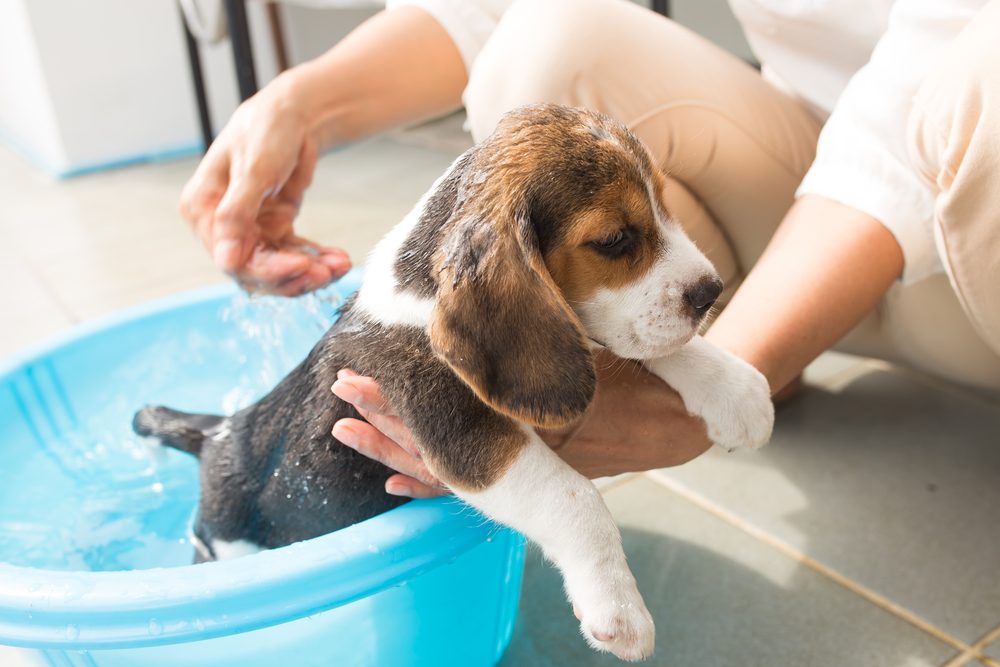
Place your puppy in the bathing container as it fills, being careful not to fill it past the top of your puppy’s legs. Talk to him softly as the water fills, using your hand to scoop water onto his back and sides.
Whether you’re bathing your puppy inside or out, make sure the water is lukewarm. If you have a thermometer, aim for a reading of 97-100° F. If no thermometer is available, use your elbow. If it feels too hot, cool it off until it reaches the right temperature.
Soak
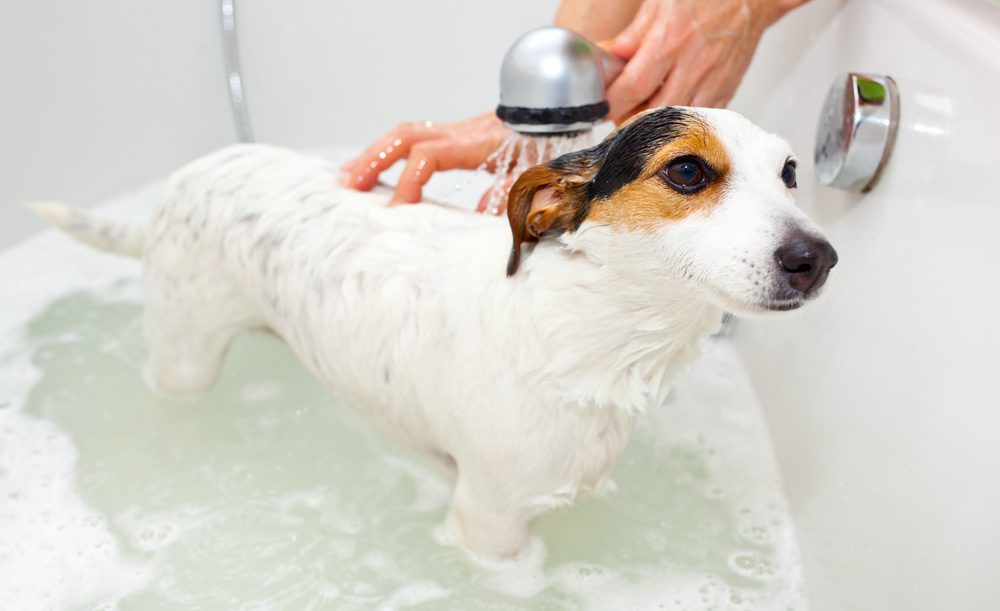
Before you apply any shampoo, wet your pet’s fur completely using the hand-held shower head or plastic container. Take note, breeds with waterproof coats, like some retrievers, will need extra soaking.
Apply shampoo
Resist the urge to apply the shampoo directly to your puppy’s coat. Instead, put some on a washcloth or mix it with water in the plastic container and pour it onto his back. Use a soapy washcloth to gently clean the face so you can avoid his eyes and ears.
Rinse thoroughly
Soap residue can cause irritation, along with dry, flaky skin, so make sure you rinse the shampoo thoroughly. Once the shampoo has been completely removed from your puppy’s coat, start draining the water. As you gently squeeze excess water from his coat, praise him for his great behavior.
Dry off
Once the water has drained, remove the cotton balls from your puppy’s ears and place him on a dry towel. Starting with his face, use another dry towel to soak up as much water as possible. Use squeezing motions to prevent matting, especially in long-haired dogs. Then, stand back and let him have a good shake. This natural response is your dog’s way of removing any excess water left in his coat.
If your dog has long hair, consider using a hair dryer to finish the job. Wet fur mats easily, which can cut off air circulation to his skin, causing irritation and soreness.
How often should you bathe your dog?
Unless your dog gets dirty from participating in activities like hunting or fishing, you probably won’t need to bathe your dog more than a few times a year. Excessive bathing can strip the natural oils from their coat, causing dry, flaky skin.
Of course, every dog is different. Those with smooth coats, like Rottweilers, may only need one bath a year. Those with silky and wiry coats may need as many as four baths a year. When in doubt, check with your veterinarian or groomer. They can recommend a bathing schedule based on your dog’s individual needs.
As with all activities, use bath time to bond with your puppy. Be calm and assertive, using praise and rewards for good behavior. With a little patience and a sense of humor, you can turn bath time into a pleasant experience for you both.