Bringing home a new puppy is just as chaotic as it is enjoyable—are you ready? A lot of pet parents are caught off guard by the amount of work that goes into training a puppy, even though a bit of preparation can provide you with the plan and the patience you need.
That’s not to say you won’t be surprised by the amount of havoc a young pup can cause! You’re likely to run into a bit of destructiveness unless you can supervise your new friend 24/7, but knowing how to discipline a puppy can help to set them on the road toward good manners. Get ready to take some notes! Here’s what you need to know.
How to teach a puppy to sit
When first training your pup, it’s smart to work on obedience training. Commands like “sit” and “stay” are essential for your fur baby’s safety—so don’t wait to get started.
You’ll want to have a handful of your puppy’s favorite treats on hand, and remember to keep training sessions brief. Young pups have a short attention span, after all! Some pet parents find clickers to be helpful in marking the exact moment your pup sits. This might help your dog understand what behavior is wanted, making training go a bit faster.
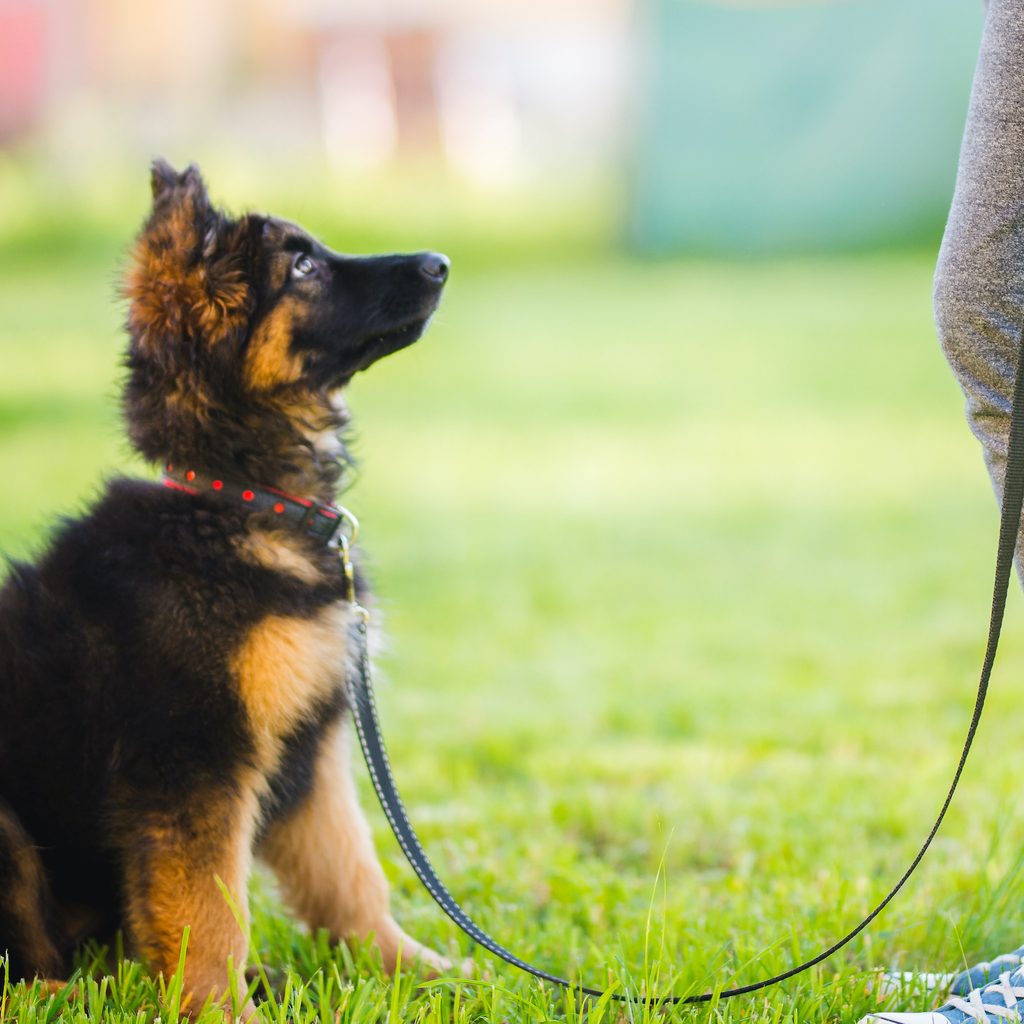
To teach your puppy to sit, use the lure and reward training method shared by the American Kennel Club (AKC). While your dog is standing on all fours, hold a treat close to her nose, but instead of giving it to her, slowly move the treat over her head and back. Your dog will naturally follow the treat with her nose—and eventually sit to regain her balance. When she does, use your clicker and/or a verbal cue like “sit” and reward her immediately.
You did it! Now take a couple of steps away and call your puppy to get her to stand again, and then repeat the process. Repetition in small doses is helpful in solidifying new habits, so keep at it!
How to teach a puppy to stay
Once your puppy has mastered the art of sitting, you can take it a step further by teaching her to stay. Having a release command like “OK” or “all done” is just as important as a stay command, as your dog needs to understand when the command begins and ends.
When your pup is in a sit, give her a stay command and immediately reward her with a treat—if she doesn’t move, that is. You can slowly increase the duration of her sit over time. Make sure to follow with the release command (and reward her for moving) so that your pup can gauge the beginning and end of her “stay.”
When you’re ready to work on more advanced “stay” commands, check out this awesome resource from the AKC.
Is it OK to punish your puppy?
Long story short: no. Puppies are incredibly sensitive to sounds, stress, and emotions, so even minimal punishments can have long-term impacts. Also, trust between humans and canines is vital in training, so you won’t want to risk your relationship by acting out of anger or frustration. Besides, your pup is like your family and should be treated with patience and love.
Harsh punishments—whether physical or verbal—will likely not be helpful and possibly even cause behavioral problems. Dogs often aren’t able to recall their actions from just a minute earlier, so they may not understand why you are angry.
How to discipline a puppy
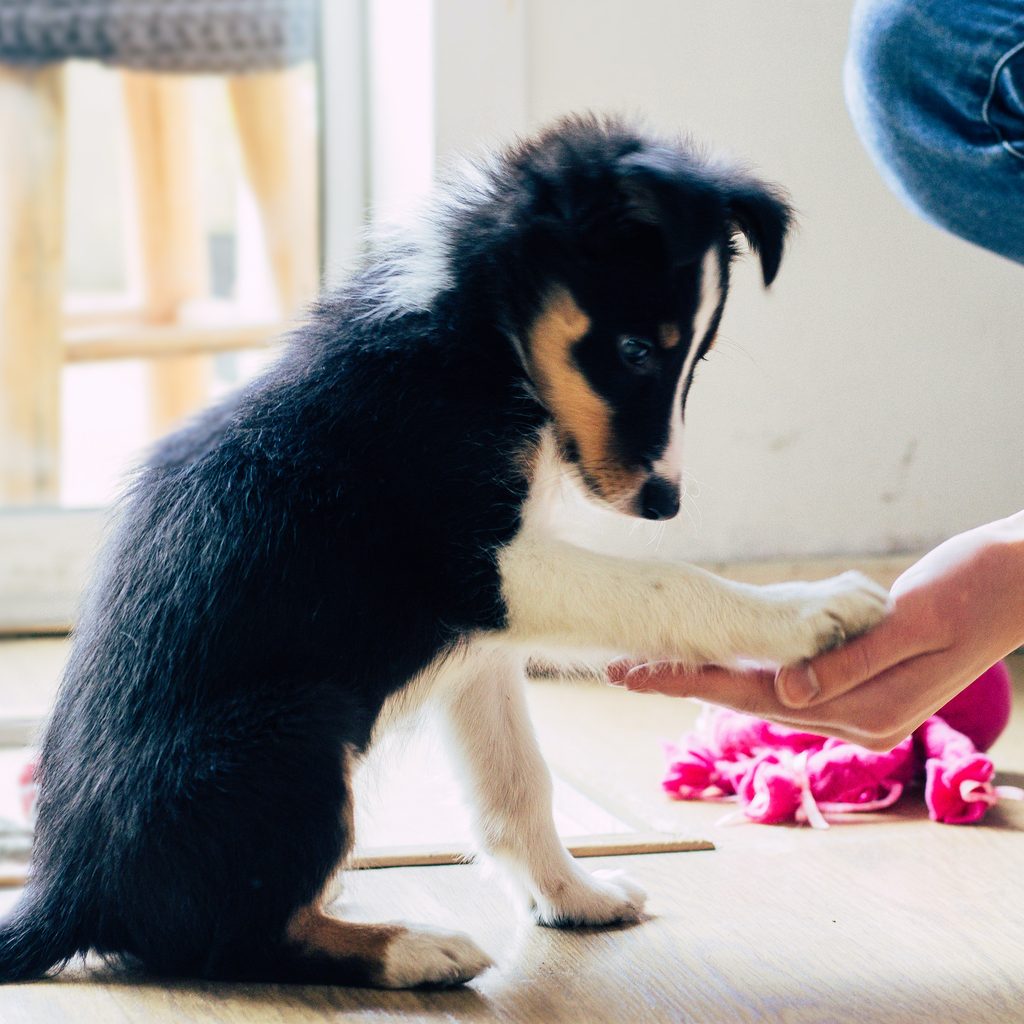
Instead of using punishment, try your best to catch your pup in the act, and interrupt it immediately. You can redirect a dog’s extra energy by offering her some playtime or even a short training session, or you can remove your pup from the situation for a quick reset. Don’t forget to praise and reward your furry friend for behaviors you want to see, including redirected behaviors.
As your puppy grows up (and as you keep up with her training) she’ll become more and more confident following your instructions. She’ll get the hang of what each command means and gain more focus as she gets older. So be patient!
In conclusion
Don’t forget to be patient with yourself as well as your pup since you’re learning too. Training isn’t a linear process either, so it’s totally okay if you have a couple of setbacks. The road to a well-mannered pup can be a long and windy one, but it’s an adventure that’s well worth it—we promise!


