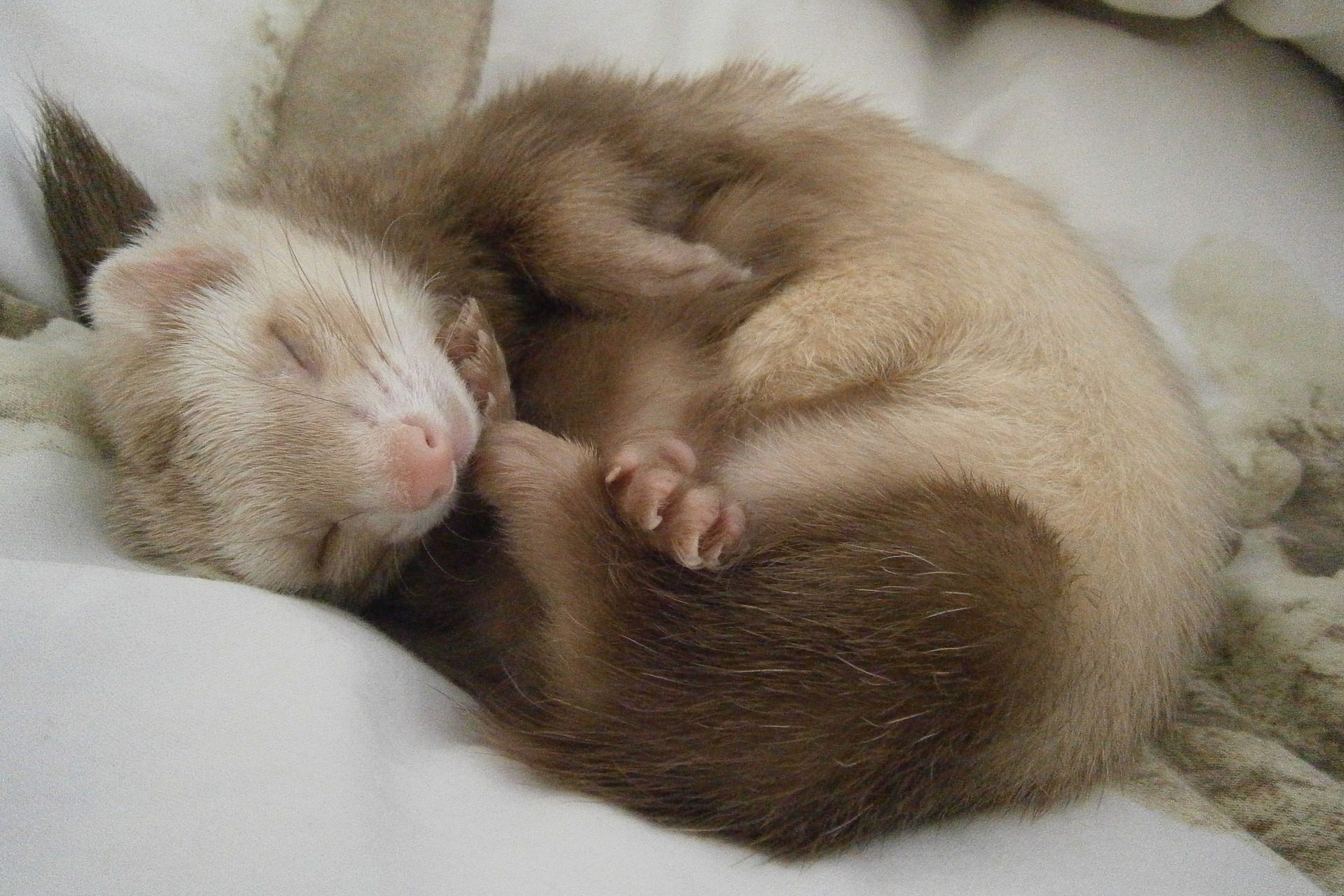
Ferrets make for wonderful companions. As long as you have a basic guide on ferret care, you can train them to respond to you. They can be quite affectionate and offer hours of entertainment. But one thing ferret owners can agree on is that their bathroom habits are the worst. Though they’re small, ferrets go to the bathroom a lot, and boy does it stink!
Litter training is a surefire way to reduce the amount of mess in your home. Will a ferret use a litter box? Yes! With a little bit of patience and training, you can teach your ferret to relieve themselves in a designated litter box. Keep reading to discover everything you need to know about litter training your ferret.
Choosing the right litter and litter box
Before you can start training your ferret, you will need to purchase a litter box and litter. Look for a litter box made explicitly for ferrets. These boxes are triangular to fit snugly in the corners of cages and have higher backs to prevent accidents. Ferrets are very lazy and usually will not climb over the edge of a litter box to use it. Select a box with a low opening that they can easily enter and exit.
For litter, the best material is compressed newspaper. This is affordable and widely available at pet stores. Litter that is used in cat litter boxes, especially clay-based litters, can be harmful to ferrets. The critters like to burrow and dig; when they do this in traditional cat litter it can damage their respiratory systems and digestive tracts. To be safe, use newspaper-based litter.
Where to put the litter box
Training your ferret to use a litter box in their cage is a lot easier than outside of it. Out of the cage, there are so many more spaces to run around and explore. There’s a good chance your ferret will end up far from the box when they need it the most. Ferrets have a speedy metabolism — when they have to go, they will go (no matter where they are).
Often, your ferret will show you where they prefer to go to the bathroom. This is usually in a corner of the cage. Place the litter box in their usual corner. Or you can put in a few litter boxes in different corners to see which one they like the most. If you can, attach the litter box(es) to the cage. Otherwise, your ferrets may try to rearrange their home and move them out of their way so they can go to the bathroom how they’re accustomed to.
Litter training your ferret
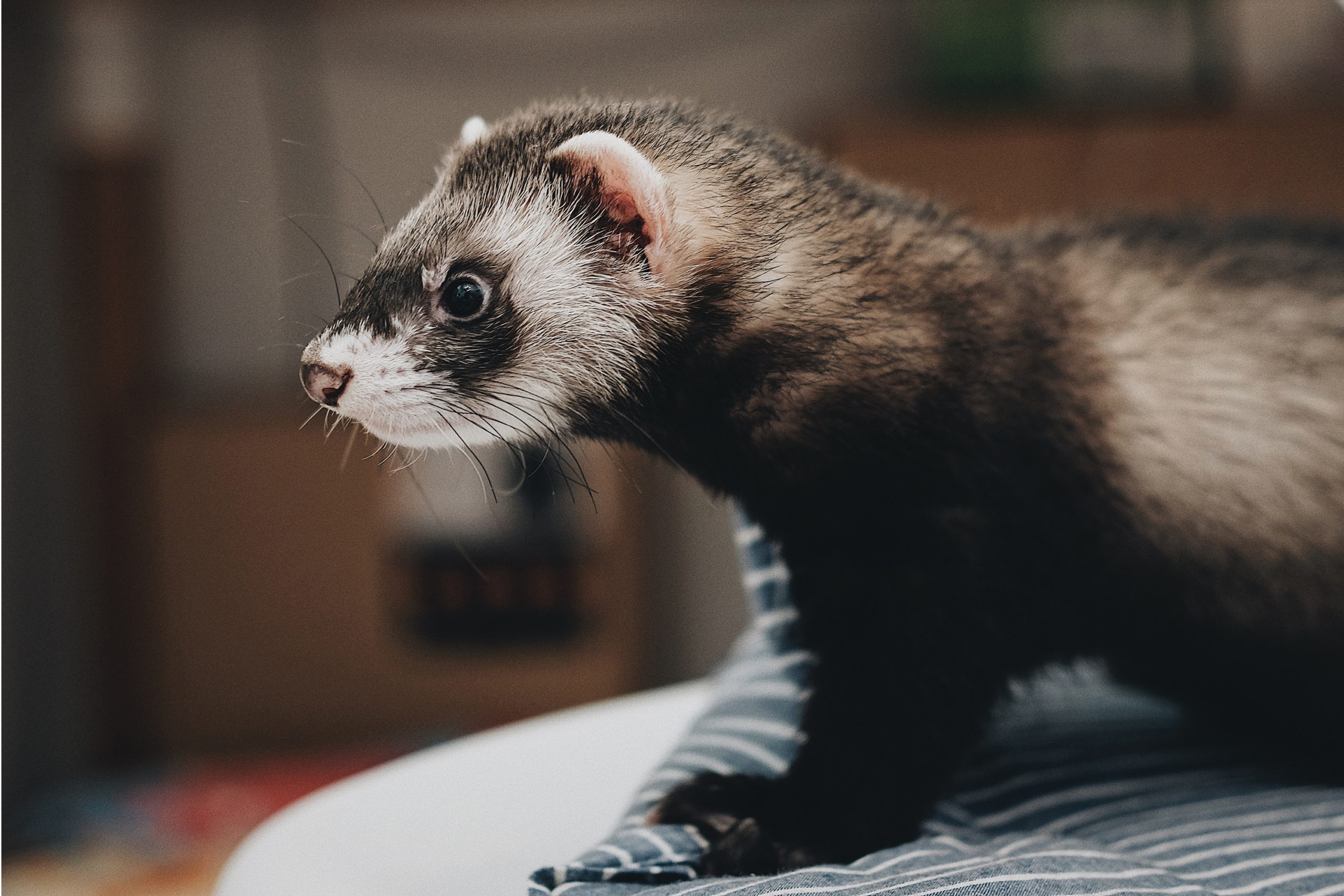
Now that you have all of your materials and have chosen a spot for the box, you can start training your ferret. Put the box in the corner that your ferret likes to use. If there is a small piece of your pet’s waste in their cage, scoop it and move it to the litter box. This will give your ferret a hint that this is where they should do their business. Continue to do this whenever you clean the litter box while you’re still training them.
When you see your ferret wake up from a nap, put them in the litter box right away. Ferrets almost always go to the bathroom as soon as they wake up, so it’s good to get them in the habit. If they walk out of the box, put them back in. Don’t let them out of their cage until they do their business in the litter box.
When your ferret does use the litter box correctly, be sure to provide them with plenty of positive reinforcement. Pet them and give them some treats, so they know they did the right thing. If they do have an accident (which is bound to happen during the training period), don’t scold them or get upset; they won’t understand why you’re angry. Just try again until they get it right.
How to respond to accidents
Litter training a ferret can take a lot of patience. You’ll likely end up cleaning up an accident or two, which can really make you wonder, “Can ferrets be potty trained?” First, take a deep breath and try not to get frustrated with your ferret. Immediately after their accident, lift them and put them in the litter box. This reminds them of where they need to go to the bathroom. Then, thoroughly clean the spot where they had their accident.
If they continue to go to the bathroom in the same spot, consider putting their bed or food bowl there; ferrets usually won’t go to the bathroom where they sleep or eat. Or your ferret may be sending you a message that they would prefer to go to the bathroom in that area. Consider moving the litter box to the spot or placing a second one there.
Litter training a ferret is a tough job. It can take a lot of patience and a bit of luck before your furry little friend starts using it regularly. But all of your hard work will be worth it when you’re no longer cleaning up little messes around your home. With this guide, your ferret will be using the litter box in no time!