Cats are fabulous, but the hair they leave behind isn’t. Some cats, especially long-haired breeds, can shed significant amounts of hair that sticks to your clothes, your furniture, your carpets — everything. You might find that cleaning up after your cat becomes a big job, and cats that shed heavily also may have increased grooming needs. While you may love cats, if you don’t love the grooming and cleaning that come with high-shedding breeds, it might be time to consider low-shedding cats, instead. These cat breeds shed less than others, keeping your home neater and saving you some time.
Sphynx
The sphynx barely sheds — in fact, it hardly has any hair to shed. Instead of hair, the sphynx is mildly fuzzy. That fuzz is super fine and thin, giving the sphynx the look of being a totally hairless cat.
Keep in mind that though the sphynx might not shed, it requires additional care because of that. Your sphynx won’t have the protection from cold and the sun that hair provides, so you’ll need to step in and keep him healthy and comfy.

Cornish Rex
The Cornish Rex has a distinctive curly coat, and that means minimal shedding. This breed has extra-short hair that’s actually an undercoat, and that hair is curled right up close to the body. The hair is also wonderfully soft.
The Cornish Rex’s large ears give it a unique appearance. These cats tend to be highly playful, so while you might not spend too much time cleaning up hair, be prepared to spend plenty of time playing with this active breed.
Burmese
The Burmese is a beautiful cat that makes a fantastic pet. This is a smaller breed with a fine coat. The Burmese tends to have less hair than other cats, so there’s also less hair to shed.
Burmese cats are often highly social and affectionate. They can bond strongly with their families, so if you’re looking for a cat who will be a social addition to your family, the Burmese might be the breed for you.
Siamese
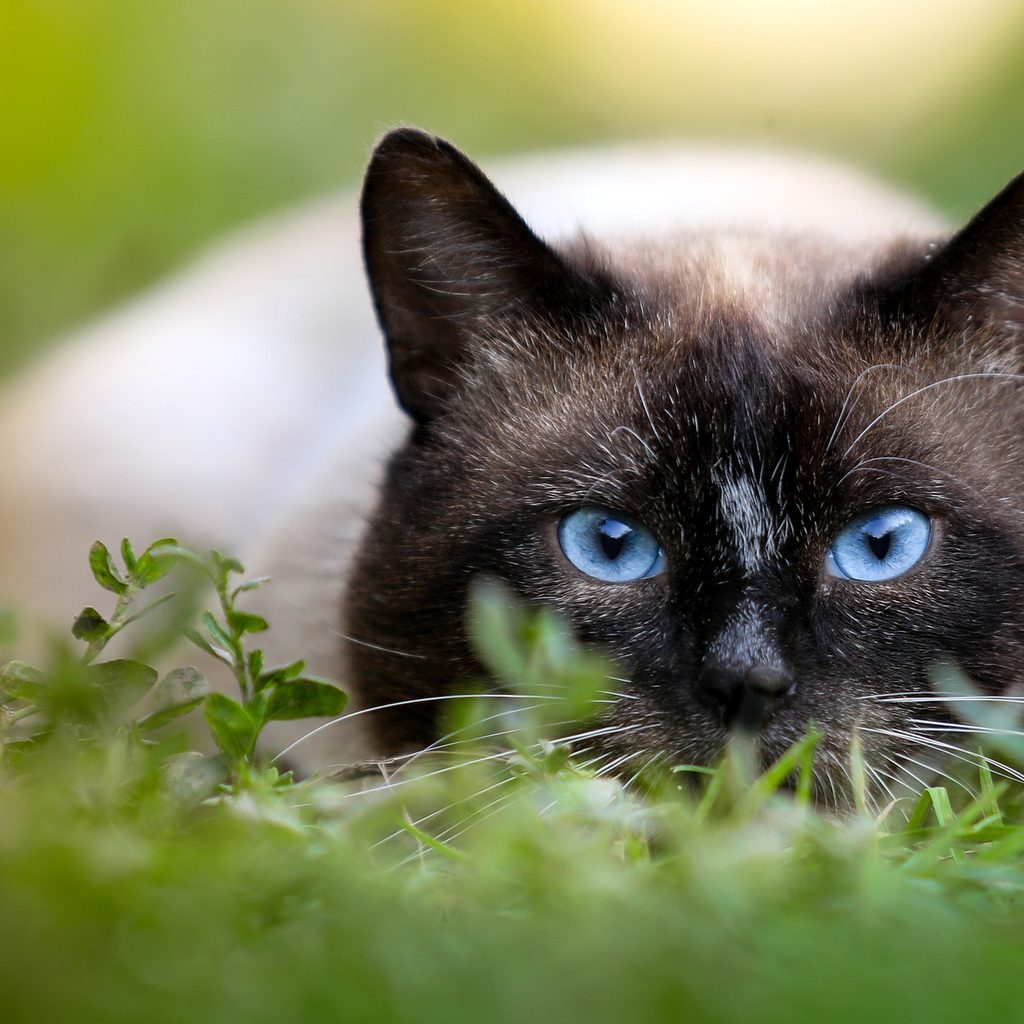
The Siamese is another low-shedding breed, though they still have soft, lovely coats. Combing your Siamese on occasion will be enough to remove any dead hair and minimize any shedding throughout your home.
Siamese cats are wildly popular and make lively additions to any home. Most Siamese are chatty, with a signature attention-grabbing meow. These cats come in three different coat colors and are often rather social.
Russian blue
The Russian blue is another breed with minimal shedding habits. These cats are known for beautiful coats that range from silver to more of a slate gray. Their hair stands out from their body at a 45-degree angle, but they’re soft to pet.
This breed is known for its even temperament and social nature. They’re ultra-loyal and form strong bonds with their families, but they tend to retreat around strangers or houseguests. The Russian blue is a gentle breed that’s ideal for many families.
Siberian
If you love the look of a long-haired cat but don’t want excessive shedding, the Siberian might be the breed you’re looking for. These cats have thick, long coats, but they shed only twice a year. Considering how much hair Siberians have, that’s minimal shedding.
This Russian cat breed is known for being playful and good-natured. They tend to get along well with kids and other pets, and they often enjoy cuddling with their human family members. This breed is relatively rare in the United States, so if you have your heart set on a Siberian cat, be prepared to do a little searching to find the one for you.
These cats that don’t shed much can be a great addition to your home. They feature a wide variety of coat types, including long-haired, so they’re just as enjoyable to pet and fuss over as those breeds who shed much more. However, having one of these low-shedding cat breeds may mean less time with a lint roller or vacuum, and there’s less need for thorough and frequent grooming. Instead, you’ll have more time to spend hanging out with your cat. Any of these breeds tend to be a good choice for family, and one might be a perfect fit for yours.