You love your fur babies, but cat hair can be impossible to remove from your upholstery and clothing — not to mention your sinuses. While it’s tempting to blame your allergies on the annoying cat hair that coats your favorite jeans, cat allergies are actually due to Fel d1, a protein found in your cat’s dander, saliva, and skin. When your cat grooms her fur, the protein is transferred to each strand, leaving behind a nightmare for allergy sufferers: allergen-coated fur that clings to everything. Whether your allergies have you considering non-shedding cats or investigating cat breeds that don’t shed much, we’re here to help you find the perfect breed for your home.
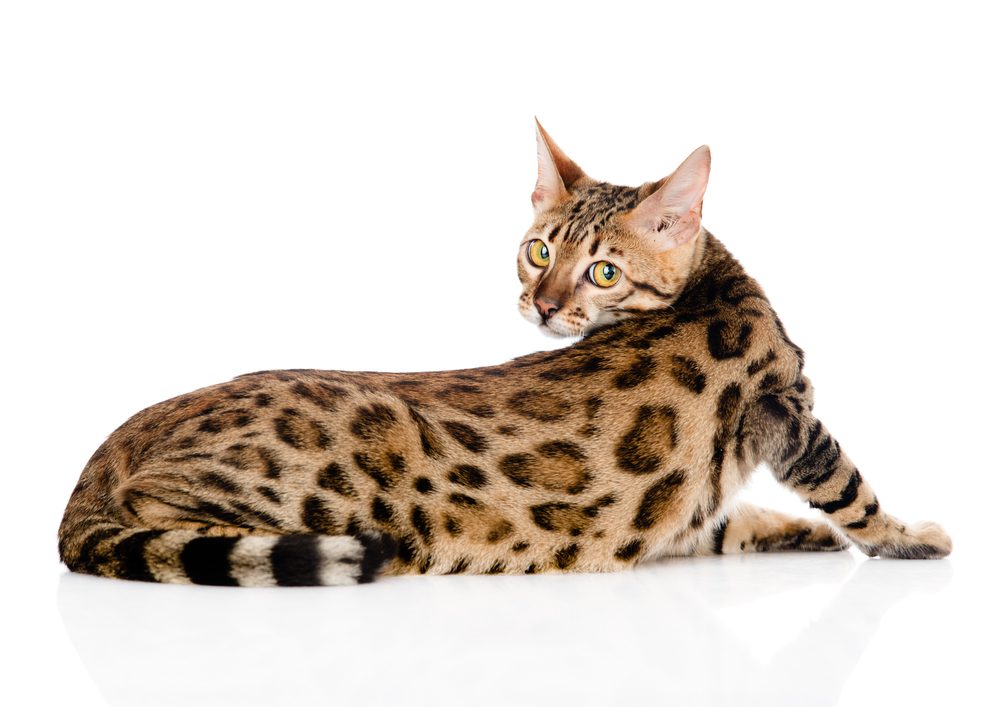
Bengal
Despite their exotic appearance, Bengals actually originated in the United States. They usually weigh about 8–17 pounds, measure 17–22 inches (excluding the tail), and live for an average of 10–16 years. Originally a cross between an Asian leopard cat and a domestic shorthair, the first Bengals were developed in 1963 by Jean Mill, a breeder and conservationist. Bengals are friendly, playful, and extremely intelligent. Bengals have gorgeous short, dense, spotted coats that don’t require much in the way of grooming, though we recommend brushing your cat weekly to help curb shedding and keep her coat glossy and healthy.
Bombay
In the 1950s, breeder Nikki Horner wanted a cat similar to the Burmese but with black coats and unique, copper-colored eyes. After finding an American shorthair with the desired coloring, she bred him with a Burmese cat, and the Bombay was born. Given their mixed backgrounds, Bombays — named for the city in India, home of the black leopard — inherited traits from the American shorthair and the Burmese. Playful, vocal, and affectionate, Bombays tend to be muscular, with an average size of 13–20 inches long (not including the tail), and weigh 8–15 pounds. They have an average life span of 12–18 years, but some Bombays have lived even longer. While they don’t shed much, you should brush your Bombay weekly to evenly distribute the oils in her coat.
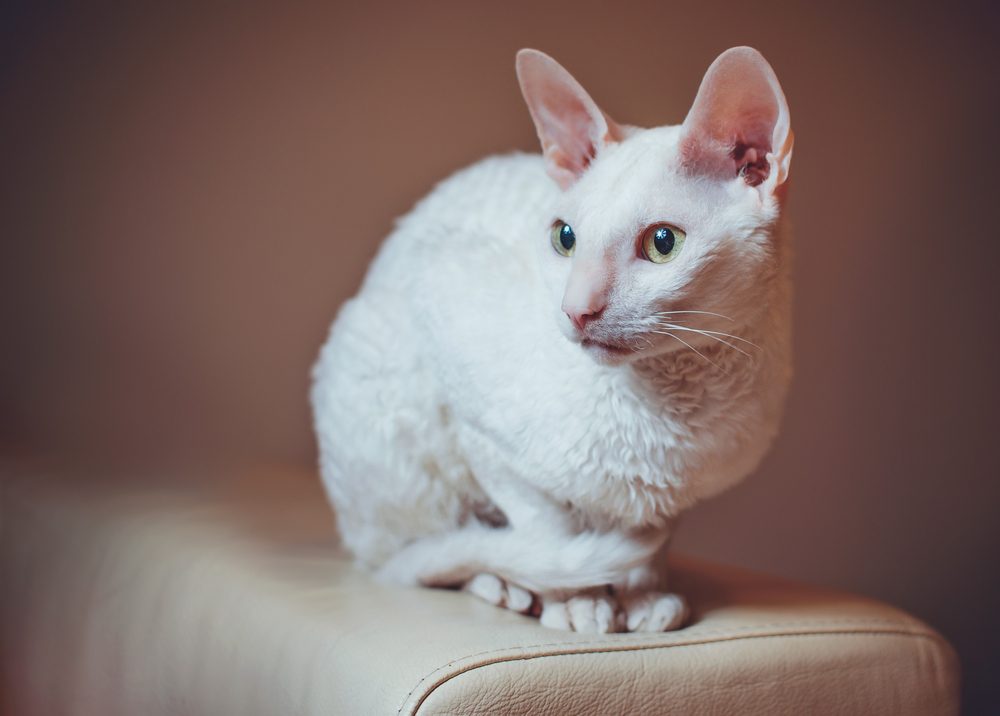
Cornish Rex
With their large ears and eyes, Rexes have a playful, elfin appearance. A small breed, Rexes weigh between 6 and 10 pounds, measure 8–12 inches, and have a life span of around 11–15 years. Hailing from Cornwall, England, the first Cornish Rex was discovered by Nina Ennismore in her barn in 1950. The kitten, whose unique, curly coat stemmed from a spontaneous mutation, was named Kallibunker, and modern-day Cornish Rexes are his descendants. If you’re looking for an energetic kitten you can play with for hours, you may want to opt for a Cornish Rex. In addition to their playful side, Rexes are known for becoming extremely attached to their pet parents, so they aren’t the ideal companion if you travel frequently for work or leisure. Grooming these cats is almost effortless, as their compact, curly coats rarely shed and require minimal maintenance.
Siamese
Originally from Thailand, the Siamese cat is instantly recognizable thanks to their piercing blue eyes and stunning coats. Siamese cats weigh 6–14 pounds on average, they’re 15–20 inches long, and they have a life expectancy of 8–15 years. While depictions of this gorgeous breed have been found in ancient manuscripts, they made their debut at London’s Crystal Palace Cat Show in the late 19th century, taking the world by storm. Their short coats require minimal grooming and need only weekly brushing to maintain a shiny, healthy glow. If you want your cat to be your best friend, you should seriously consider a Siamese. They love to help out around the house, and they may supervise while you wash dishes, do the laundry, or read a book. For that reason, we don’t recommend Siamese cats if you spend a lot of time away from home. However, if you work long hours or travel frequently and still want to get a Siamese, we recommend getting a pair of them so they won’t be lonely.
Sphynx
Measuring 8–10 inches and weighing 6–14 pounds, sphynx cats have a life expectancy of 9–15 years. Often considered hairless, sphynxes are covered in a fine layer of nearly invisible peach fuzz. Also contrary to popular belief, they aren’t actually hypoallergenic. Sphynxes arrived on the scene in Ontario, Canada, in 1966, after a domestic shorthair gave birth to a hairless kitten, Prune. As an adult, Prune was bred with a Devon Rex, creating the first sphynx cats. Despite their lack of hair, sphynxes require a ton of work to maintain healthy skin. They’re also prone to sunburn and hypothermia if they’re not properly cared for, so we recommend ensuring you have enough time to dedicate to your sphynx. If so, you’ll share your life with a cuddly, affectionate cat that aficionados claim will make you a lifelong fan.
If you have cats, investing in a vacuum designed to tackle cat hair is a part of life. You’ll probably also keep several lint rollers on hand at all times. While you can’t eliminate the problem completely, certain breeds shed a lot less than others. With the breeds on our list, you’ll get the loving companion you’ve always wanted, but you won’t have to spend as much time vacuuming your sofa, washing your bedding, or making sure your clothes aren’t covered in fluff.