It probably won’t come as a surprise, but more and more of us think of our pets as members of the family. From dressing them up in designer duds to taking them with us on our vacations, humans are treating their canine and feline family members to the best life can offer. And now that we’ve been spending more time at home together, a quality moment can happen in just about any room in the house — as well as in the backyard. So, if you want peace of mind while your furry family member is hanging out with you on the back porch, here are five DIY tips for making your patio a safe space for your pet.
Set up a hydration station
Unlike humans, who can turn on the tap for a cool drink of water, our pets rely on us to provide this essential nutrient. That’s why it’s important to make sure they always have an adequate supply of clean water — whether they are inside or out.
Although plastic is a popular and inexpensive option, consider purchasing a bowl made of stainless steel. This material is durable and easy to clean and sanitize. Place yours out of the way of traffic and keep it filled with clean water so your pet can refresh himself as needed.
Just to remind you, most dogs and cats drink at least one cup of water per pound of body weight each day. Warmer temperatures and summertime activity may increase water intake, so it’s always a good idea to have an ample water supply available when your pets are playing outside.
Be shady
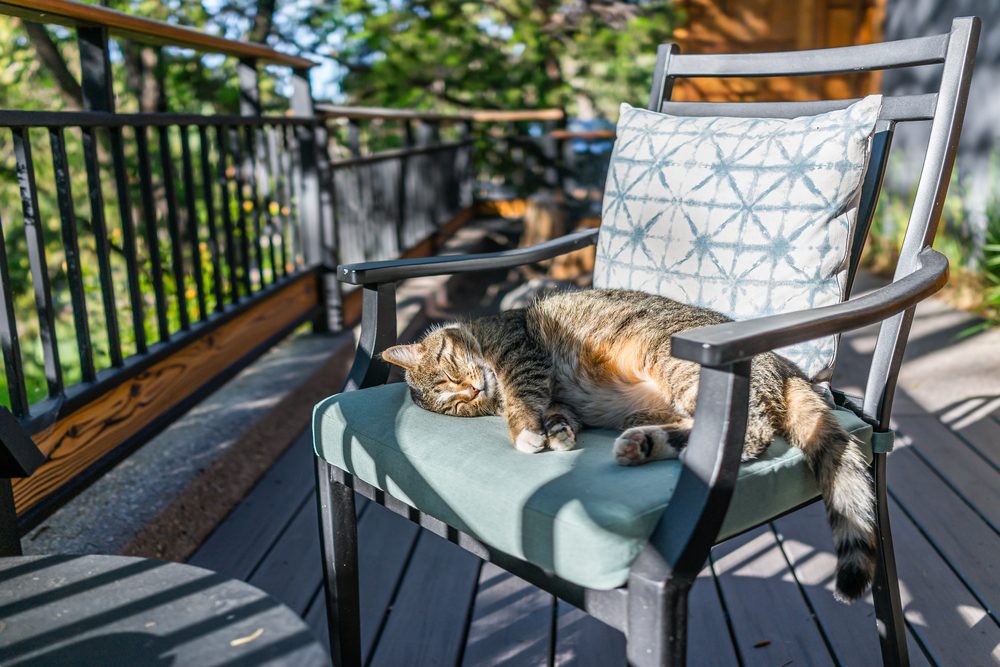
A little sunshine goes a long way, especially when the temperatures rise. To make sure your pet doesn’t overheat, create a place where he can get out of the sun. This can be as simple as establishing a small patch of grass under a shady tree in your yard or, if space is tight, purchasing a small canopy to hang over a cushioned place on the patio. And if your lounge chair is situated near an oversized umbrella, reposition it so that it can shade an area for your pet, too.
A reminder about the sun: If the pavement is too hot for your bare feet, chances are it’s also too hot for your pet’s paws. You also might consider having pet-safe sunscreen on hand, especially if your pet is light haired or pink skinned.
Safeguard your balcony
If you enjoy an outdoor living space on anything other than the first floor, it’s important to make sure the balcony railings protect animals as well as people from falling. Resist the urge to fortify the space with netting or wire mesh as this can become a choking hazard. Instead, attach plexiglass or acrylic to the railings. This material takes nothing from the view but does keep smaller animals from squeezing between balcony railings.
As a reminder, it’s never a good idea to let your pet out on a balcony unsupervised. In addition to protecting him from an accidental fall, your presence will deter attacks by predatory animals like hawks and owls.
Plant strategically
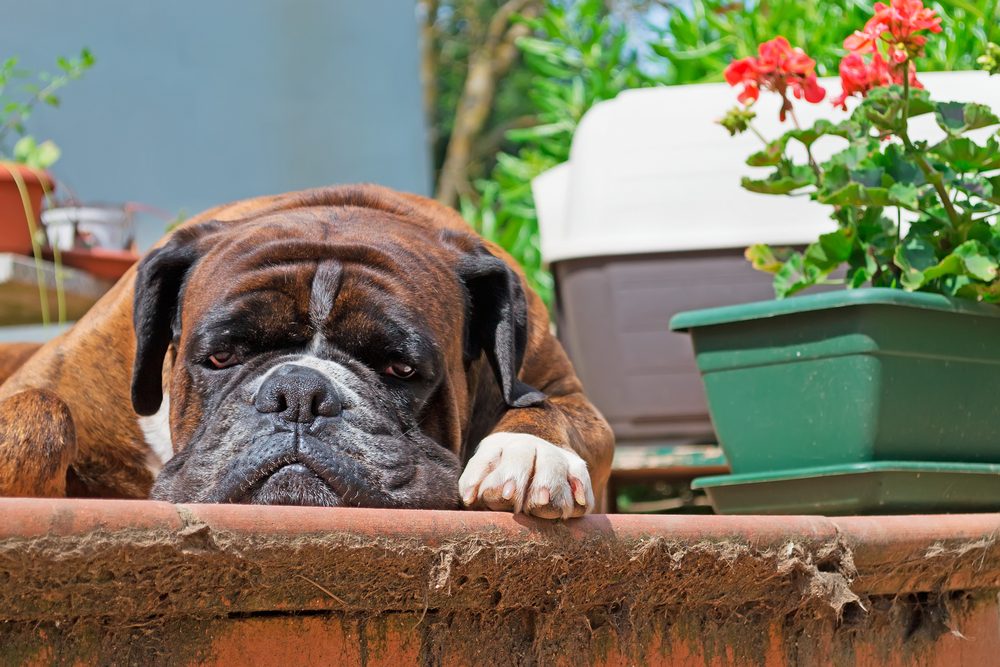
Landscaping isn’t just attractive, it has health benefits as well. That is, unless you choose plants that are toxic for your furry family members. For example, azaleas, tulips, and oleander are poisonous to dogs and cats, while black-eyed-susans, African violets, and hibiscus won’t send you running to the veterinarian if one of your pets gets too curious.
Regardless of what you plant, watch your animals closely. If they ingest anything other than the pet food you feed them, contact your veterinarian immediately if you see any signs of distress. Symptoms of plant poisoning can include nausea, vomiting, drooling, diarrhea, and weakness.
Get cushy
When you’re planning places for guests to sit and relax, don’t forget to include a spot or two for your pets to rest, too. Outdoor furniture is durable, so if you allow your pets on the couch, scoot over and make room. If not, you can always create a little space for them to enjoy on the ground beside you. Since the area will amass fur and dander — plus dust and anything else your pet decides to drag onto it — pick outdoor fabrics and weather-resistant rugs that clean up with a quick spritz from the garden hose.
Enjoy your space
These pet-friendly patio tips can make the additional time you’re spending at home with your furry family members even more enjoyable. Once you’ve made sure your pet can safely share your outdoor space, add a few toys for each of you and designate time each day to relax outside. Studies suggest that regular play with your pet effectively decreases your blood pressure, cholesterol, and triglyceride levels. Plus, some of the best staycations occur at home, where you have all the comforts within arm’s reach. By putting a little thought and effort into your outdoor space, you’ll both benefit from your bonus time together.