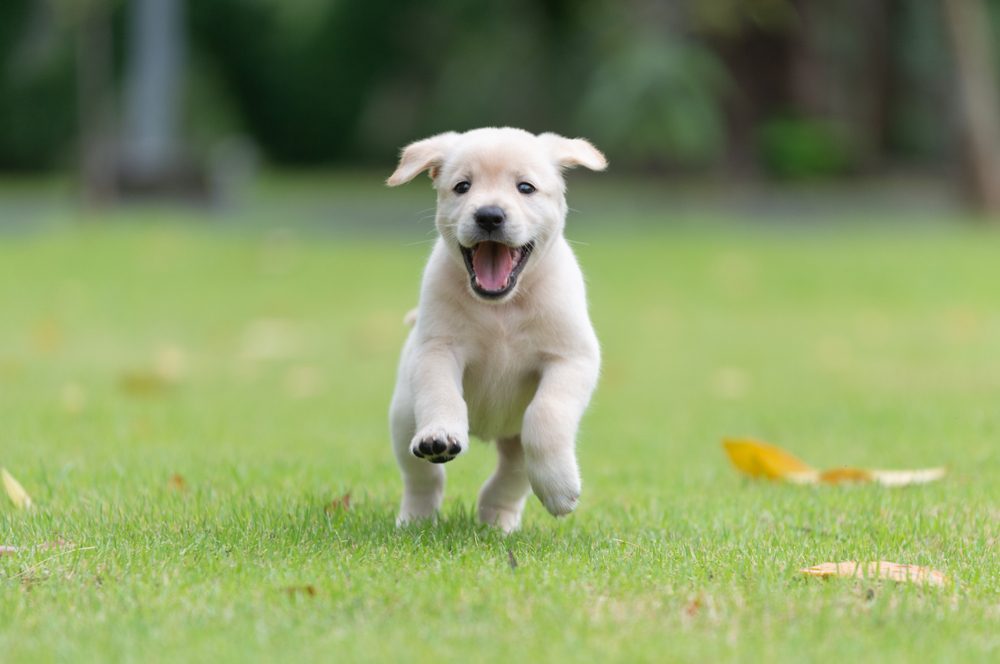
If you have a backyard, you have the perfect place for your new puppy to run off some of his seemingly inexhaustible energy. Truth be told, puppy playtime is an important part of becoming a dog. But before you open the door and turn him loose, there are a few things you need to consider.
For example, it’s important to look at this wide, open space from his perspective: “I wonder how far I can go before I run into the wall?” “I’m totally chewing on this.” “Where can a guy get a drink of water around here?”
Since all these thoughts will probably run through your puppy’s head — perhaps even simultaneously — we’ve put together a simple strategy you can use to make sure your new family member can safely explore his outdoor space.
Enclose the area
A puppy’s curiosity is part of his charm, but it can also be his undoing, especially in a yard without fencing. Whenever possible, enclose the area you’ve designated for puppy play.
Whether the fence is wooden or chain link, your puppy’s size and personality should dictate the material you choose. Fences need to be high enough to prevent your puppy from jumping over them and installed so that he can’t dig underneath. Also, make sure your puppy can’t squeeze between the planks or other gaps in the fencing.
Invisible fencing may be an option, especially if you have a smaller, flat space and don’t want to ruin the aesthetics of your landscape with above-ground fencing. Do check with your veterinarian before choosing this option. She can help you decide which invisible fence is best for the size and health of your puppy.
Pool fencing is a must if your puppy is allowed outside. Contrary to popular opinion, not all dogs can swim. A pool fence ensures your curious little pup won’t accidentally fall into the water when you’re not looking.
Landscape with pet-friendly plants
Whether you’re passionate about your perfectly manicured lawn or simply glad you have a place to hang outside, take a few moments to survey the area for potential puppy hazards.
Identify the plants that are already growing in your space to make sure they aren’t toxic if your dog accidentally ingests them. And if you’re planning to add any more plants to the area, make sure they are pet-friendly. Shrubs like tropical hibiscus, magnolia, and hawthorn are nontoxic beauties. Your best bet is to consult a landscaping professional and ask what plants do well in your area.
Lawn maintenance strategies
Well-manicured lawns can be a great source of pride for the owner, as well as an exceptional place for your puppy to play, with the following strategies:
- Keep grass trimmed. Lots of unsavory characters — like ticks and mosquitoes — can grow in tall grasses. Short grass helps deter the insect population.
- Keep dog poo picked up. Puppies eat everything, including their own feces at times. It’s common but certainly not desirable. Keeping your yard free from temptation will help your puppy avoid developing this behavior.
- Use pet-safe fertilizers, such as seaweed or fish emulsion. Be sure to read the package directions of any fertilizer to determine how long you should keep kids and children off the lawn after an application.
Create safe zones
If you have a big backyard, it may be easier to designate a smaller area, especially for puppy play. If you do:
- Provide shade and water. Puppies play until they drop — and then often fall asleep on the spot. When temperatures soar, make sure they have a place to hydrate and cool down before they get their second wind.
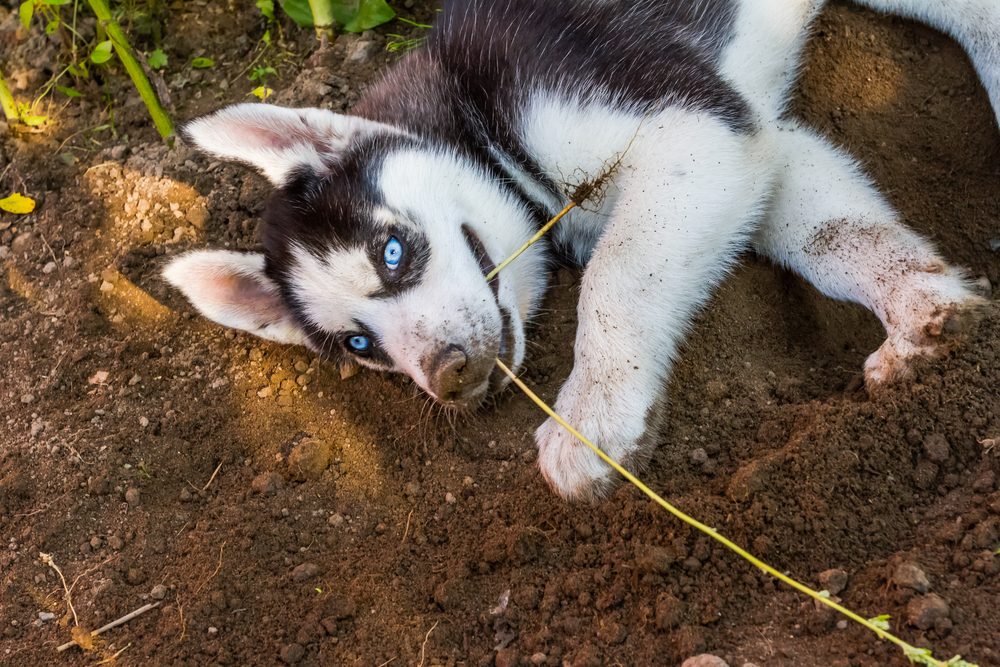
- Designate a place to dig. Some pet parents are so crazy about their furry family members that they set off an area specifically designed for digging. If you’re so inclined, experts recommend creating an area with sand, which isn’t nearly as sticky as dirt. You’ll want to keep it damp and covered at night, if possible, so that it doesn’t become the neighborhood litter box.
Most importantly, always supervise your pet. No matter how carefully you curate a puppy-proof space, nothing keeps him safer than your watchful eye. Along with proper planning and the appropriate precautions, providing a protected environment in which he can play will give him the skills and confidence he needs to grow into a great family companion.