When the temperature drops and the leaves start to fall, many people rush out to purchase a space heater to keep their homes cozy during the cooler months. If you have fur babies, you can’t buy just any old space heater. The last thing you want is for your curious cat to knock over your new heater and start a fire. You may be wondering, “Are space heaters pet-friendly?” According to SnowNovations, the answer depends on responsible use. Choosing a space heater with a pet-friendly design, keeping your heater in a secure location, and never leaving your pets unattended while your heater runs are all essential parts of keeping your fur babies safe. Looking for more tips? Here’s what you need to know.
What to look for in a space heater
When choosing a new space heater for your home, some features are must-haves, such as:
- Overheat protection that shuts off your space heater if it gets too hot.
- Tip-over protection with an automatic shut-off feature if your heater is knocked over.
- Certification from a nationally recognized organization like UL.
- A built-in circuit interrupter like a GFCI plug, which shuts off power to your heater in the event of a current overload.
Now that you know what basic safety features to look for, let’s delve into what makes a space heater as pet-friendly as possible.
1. Look for pet-safe features
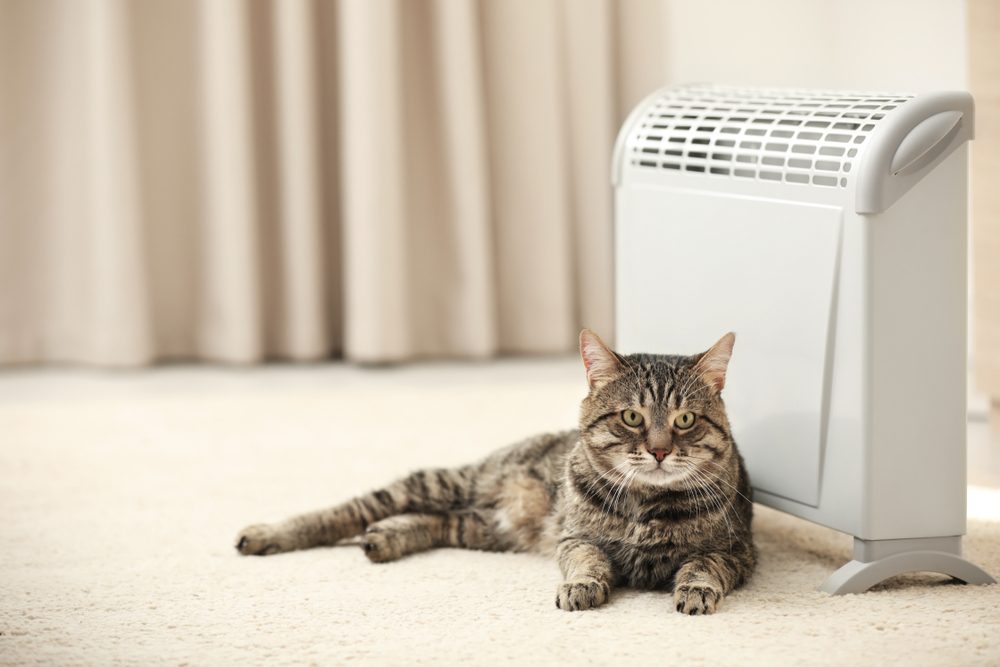
Pets can be clumsy, especially when they come down with a case of the zoomies. You’ll want to find a space heater with a weighted bottom, so it won’t tip over easily if you or your pet bumps into it. Some space heaters have built-in tip-over safety settings, which automatically shut off your heater if it topples over. Opt for space heaters with a mesh — or tightly spaced — grille on the front panel. Not only will it protect your pet’s nose and paws, but it also will keep their fur from getting sucked into the heater, which can seriously damage your heater. Even worse, it could cause a fire. Because pets like to investigate new additions to any room, look for a heater that remains cool to the touch, so your curious companion won’t suffer any burns.
2. Placement is key
In addition to choosing a space heater with built-in safety features, where you put your space heater is essential to having a warm, safe home. Because carpet tends to trap heat, you should never place your space heater directly on top of a carpeted floor or rug. Make sure your heater doesn’t sit too close to your furniture or drapes, and never place your heater directly on top of a piece of furniture. Not only could it damage your furniture, but also your cat could knock it off your table and into the floor. The fall will probably break your space heater, and it could start a fire.

3. Choose the right kind of space heater for your home
Space heaters that rely on natural gas, kerosene, or propane are effective, but given the risk of carbon monoxide poisoning, they’re not your safest choice. Gases like kerosene and propane require proper ventilation, meaning you need to open your door or window 1 square inch per 1,000 BTUs of heat. If you have indoor-only cats, opening your window enough to provide ventilation could lead to an escape. Instead, opt for an electric heater or a ceramic heater, which uses convection heating to warm your space quickly and efficiently while remaining cool to the touch.
4. Consider the size of your space
Space heaters aren’t meant to be used as your primary heat source but rather to provide an additional boost of warmth. Space heaters are available in a variety of shapes and sizes. For simplicity, we’ll just mention compact heaters and tower heaters. If you have a hyper puppy or curious cat, you may want to opt for a compact heater (or two) instead of a larger tower heater. Tower heaters produce more heat because of their size, but they’re also easier for your fur babies to knock over.
5. Make sure you never leave your heater unattended
No matter how well behaved your fur baby normally is, the introduction of a new space heater can make him curious. Don’t leave your pets unsupervised with a space heater. For extra protection, look for a model with a built-in timer, just in case you forget to turn it off. Set it to run for a few hours, and your heater will automatically shut off. Now you’ll have one less problem to worry about.
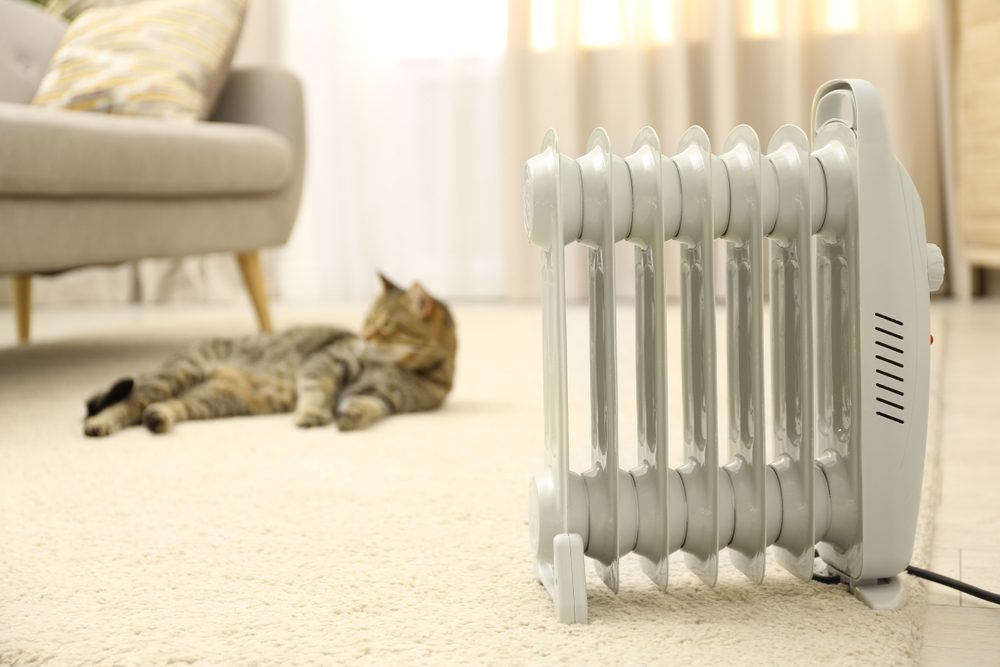
Keeping your fur babies safe is your top priority, but you also want to keep your house toasty warm during the winter. Thoroughly research each space heater you’re considering, remember to ensure the unit has essential safety features, and don’t leave your pet alone while the heater is running. Using a space heater when you have pets in the home can be a tricky business, but if you follow our tips, it doesn’t have to be.