To dog lovers, there are few things in the world cuter than newborn puppies. Just think about those little fluffy paws and tiny wet noses! Puppy care, in contrast, is a little more complex.
From creating the best whelping environment to taking Mom and pups for wellness checkups, there’s certainly a lot to think about before welcoming your furry bundles of joy. Newborn puppy care can be chaotic, so you may want to get a head start and keep a list! Luckily, we’ve laid out some of the most important aspects of raising a puppy to make prioritizing even easier.
Learning how to take care of a puppy can be fun and oh so rewarding, but what, exactly, does it entail?
1. The right environment for raising a puppy
Before the pups arrive, you’ll need to create a comfortable and safe whelping space for Mom to rest and prepare. Hill’s Pet notes that puppies will spend their first few weeks in this partially enclosed space where they’re born, so make sure that it’s easy for you and the pups’ mama to access.
Many pet parents use kiddie pools, large boxes, or pens as whelping spaces—all of which work if Mom can come and go as she pleases. There needs to be enough room for Mom to lie down or stretch out without squishing the pups, but the space should be small enough that the pups can’t get far away from their mother or siblings. This helps them stay both safe and warm, which blankets or heating pads can help with as well, according to Hill’s Pet.
Cesar’s Way notes that you’ll need to change the bedding or newspaper every day in order to keep your whelping space clean, so think through what will be easiest and most affordable for you—as long as canine health and comfort come first!
2. Warmth for puppies
There are many ways to keep newborn puppies warm, but making sure that their mom and siblings are around to share body heat can be especially helpful for several reasons. This not only keeps them toasty but also makes them feel safe and helps them develop many of the social skills that they’ll need when they grow out of puppyhood.
VCA Hospitals explains that since puppies can’t maintain their own body heat until a week or two after birth, consistent heating is vital. There’s less you’ll need to do if Mom stays with the puppies most of the time, but when she’s tending to her own needs, the whelping space will need some external form of heat. In most cases, a heated blanket or warming lamp will do the trick.
The litter’s whelping space should be kept at a temperature of 85–90 degrees during the pups’ first week of life. After a week, you can lower the temperature to about 80 degrees, then to 75 degrees at the end of the second week.
3. Puppy socialization
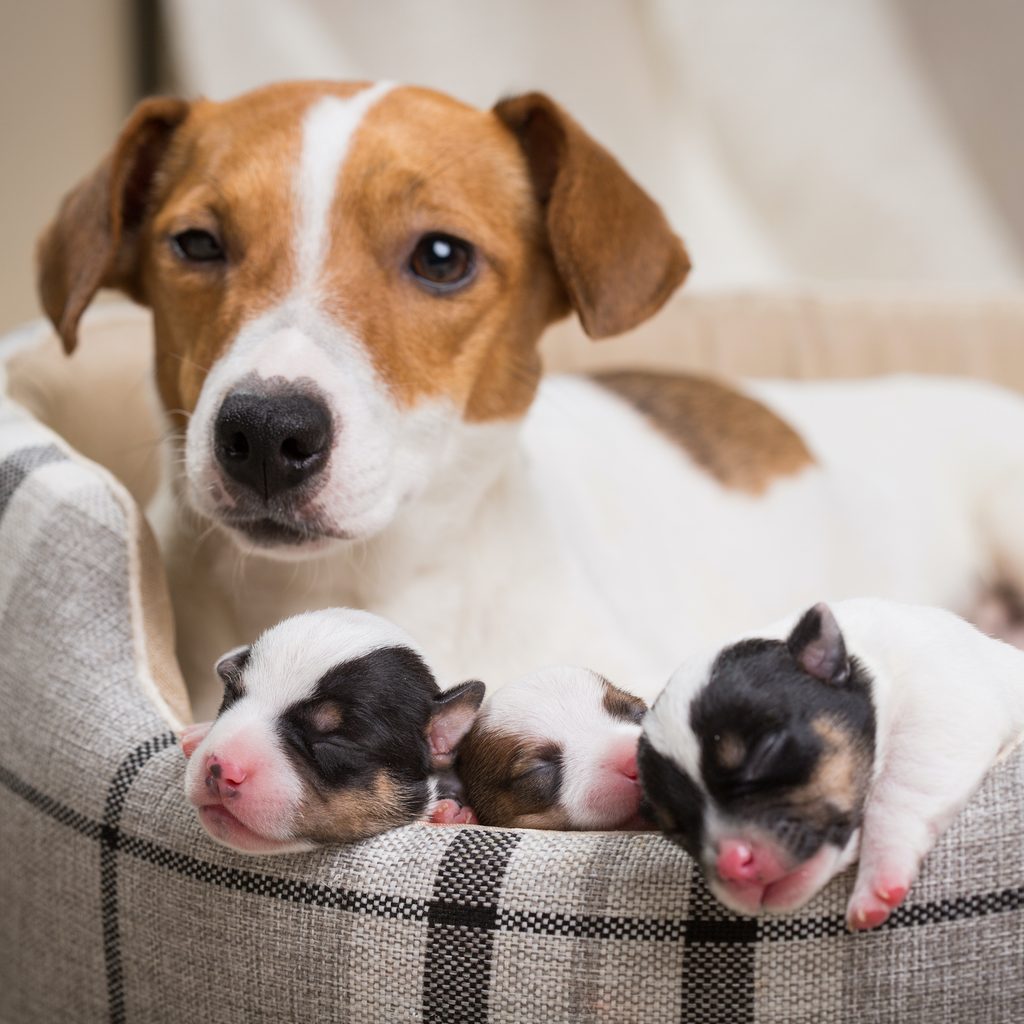
It may seem odd to picture newborn pups socializing, but it just looks a little different than what we typically think of as socialization. Instead of meeting other dogs and people, these new additions socialize by learning to interact with their mother and with one another. This is why it’s so important to encourage Mom to spend most of her time with her babies, though human care and supervision, if needed, can also lead to happy, healthy pups.
In their first few weeks of life, notes VCA Hospitals, puppies will eat and sleep most of the time, so there may not be much to supervise during this period. A restless or noisy puppy, however, can be a sign that something is amiss.
4. Nutrition for newborn pups
Until around four to six weeks of age, when deciduous teeth come in, puppies get nutrients by drinking their mother’s milk. They should be gaining weight daily (a digital scale will come in handy for monitoring weight) and have visibly distended tummies. Crying and acting anxious are signs of a malnourished pup, VCA Hospitals also points out.
Smaller pups, or those who are pushed off the teat by their siblings, can be placed on one of the back nipples for top-quality feeding. Since these teats produce the most milk, they are ideal for pups who need more nutrition.
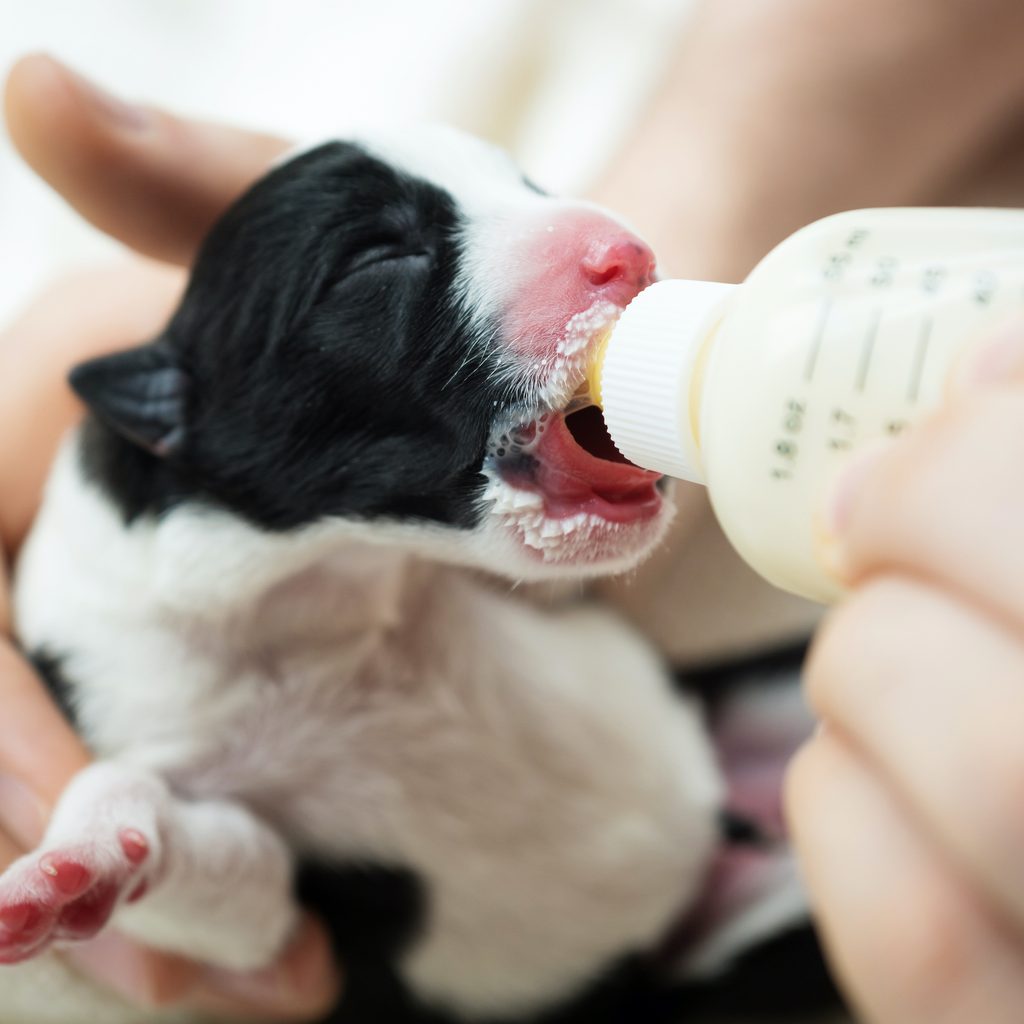
Bottle feeding is always an option too. Your veterinarian can provide you with all the instructions and supplies you need in order to keep the pups healthy, so you should always keep up with postnatal checkups for mom and babies.
5. Keeping newborn puppies healthy
Even the most skilled puppy caretakers need the watchful eye of a doctor as well, so your veterinarian should be part of this process from beginning to end. They can not only keep Mom healthy throughout pregnancy but also make sure that the puppies are developing as they should be.
Vets will give you the chance to get all puppies (and Mom) up to date on vaccinations to boot. Dogs can’t go to doggy daycare or boarding facilities without being vaxxed, and vaccination keeps them safe from a number of serious canine diseases.
Puppies need plenty of TLC
OK, pet parent, deep breath—we know it’s a lot! Don’t forget to ask your vet questions if you have any, and keep notes if you feel like you need to. Caring for newborn puppies requires several weeks, if not months, of TLC and supervision, but you’ll get to watch those sweet pups grow into good doggos when all is said and done—what a gift!