If you are a new fish owner, cleaning the tank might seem scary at first. The most common concern is how to deal with your marine buddies while you clean their aquarium. For those who are just learning how to maintain their first fish tank, it’s normal to wonder about how often you should change the water or how much water you must replace.
The good news is that keeping your fish happily swimming in clean water is much easier than you think. We are here to help you learn how to deep clean a fish aquarium.
Before you get started
Make sure you have all the tools, utensils, and supplies needed to clean your tank. Having the right cleaning kit will make your life easier. Some of the most useful items you need are:
• Gravel vacuum
• Water quality test kit
• Extra bucket for dirty water
• Water conditioner
• Dish sponge for cleaning glass
• Algae scraper and blade
• Toothbrush for cleaning decor
• Glass cleaner
• Towel for wiping up water spills
• Glass-cleaning cloth or paper towel
Leave your fish inside the tank
While it seems better to take your fish out of the tank when you clean it, the stress of capturing them and moving them into a smaller container can be harmful to them. Since you will only be replacing 15% to 30% of the water with every cleaning, the fish will have enough water to swim while you gently go about cleaning.
Turn the equipment off
The most important safety precaution you must take is to turn off the filter, water heater, and any other light fixture in your tank. Prevent any accidents by making sure you have unplugged any power cables as well.
Start by testing the water
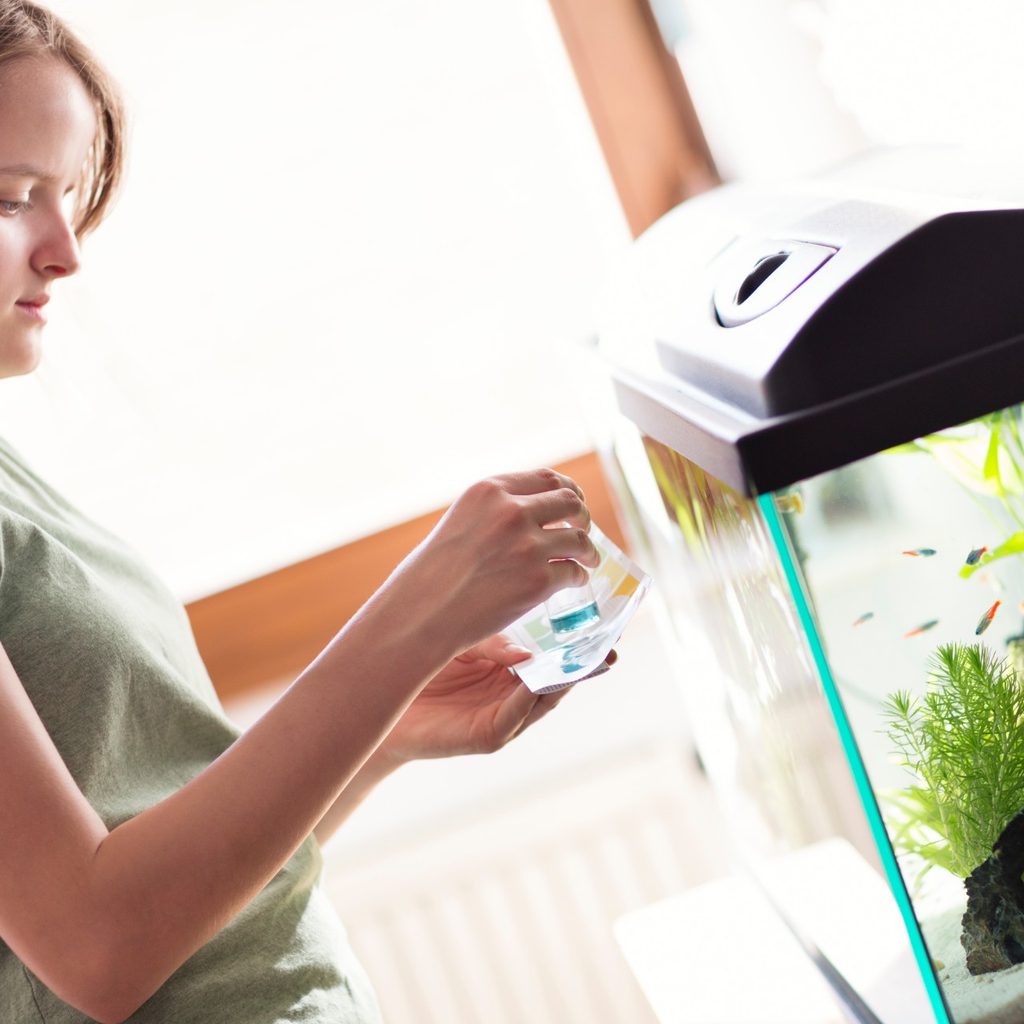
Maintaining the water quality of your tank is the most important part of the process. Use a testing kit to make sure you have adequate levels of certain chemicals:
• Ammonia: 0 ppm
• Nitrites: 0 ppm
• Nitrates: Less than 40 ppm
This will ensure the best balance possible for your fish to thrive. Imbalances in the chemistry of the water can be fatal to your colorful companions.
Remove algae from the glass
To always have a clear view of your pets, you have to clean the algae buildup that accumulates on the glass walls. Use a sponge to scrub the inside of your aquarium. Try to be as gentle as possible, and avoid fast movements that can scare your fish.
Vacuum the gravel bottom
A gravel vacuum or aquarium siphon is a super useful tool that will help you take dirty water out of the tank, move it into an extra bucket, and clean the bottom of your aquarium at the same time. Over time, excess food, fish waste, biological material, and other materials accumulate at the bottom of the tank and can cause bacterial growth.
Replace the water
Once you’ve completed the cleaning, make sure the temperature of the water is ideal and that it’s conditioned with the right chemicals to lessen the shock to the fish.
How often should you clean the tank?
There is no exact schedule for cleaning your aquarium. Cleaning frequency varies from tank to tank. The answer depends on the number of fish you have, the size of your tank, and your filtration system. For the most part, you’ll need to clean your tank every one to two weeks.
Some fish owners choose to do a weekly partial cleaning and a full monthly change. Please note that the full clean does not involve a complete water change. It just means scrubbing the inside of the glass and vacuuming. This is also the time to replace your filters.
With proper care, you can keep a clean and healthy environment for your fish. Use the proper supplies and stay disciplined with your maintenance routine to enjoy a beautiful tank. Experience and discipline are key to proper fish care. Your fish will thank you for the loving care, and your home will look great, too.