If you own a rabbit, you already know how delightfully cuddly and entertaining they can be. There’s almost nothing more endearing than watching a rabbit binky and knowing they are literally leaping for joy as your pet.
Rabbits are prey animals, meaning other animals hunt them for food. That’s why keeping your rabbit in an indoor play area is the safest way for them to get exercise when they’re out of their cage. But that doesn’t mean you can’t take them outside for a little fresh air every once in a while. With a little patience, you can leash and harness train your rabbit so that you may be able to walk them safely outdoors.
What does a rabbit harness look like?
Rabbits throughout their lifespan share harnesses with other small animals like cats and ferrets, so search for “small animal harnesses” online or in your local pet store. You’ll have several options to choose from:
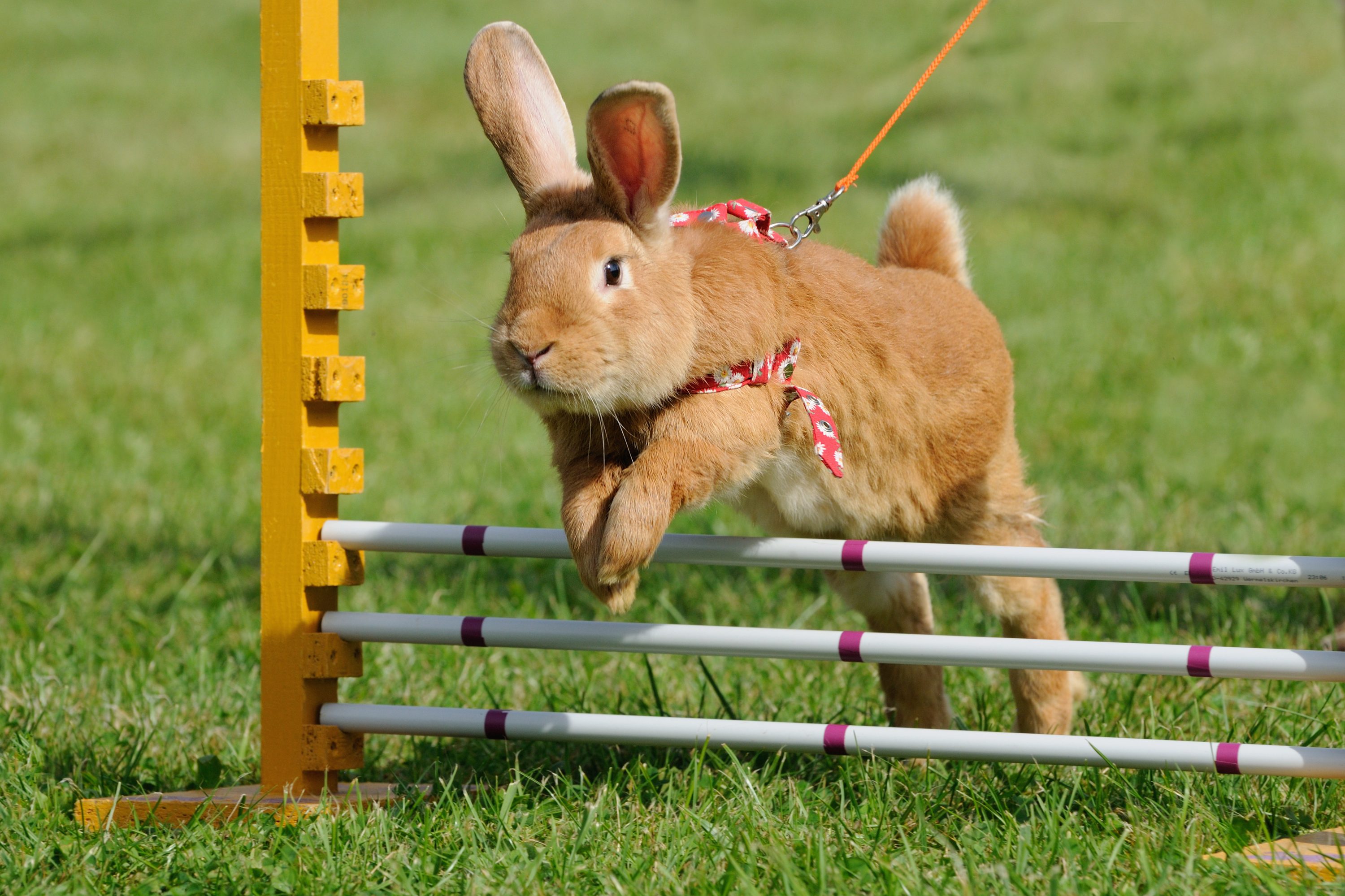
- H-harnesses form the shape of the letter “H” when they lie flat on the ground and are one of the most popular varieties. One strap buckles around the neck, and the other strap buckles around the waist. Many owners use these harnesses to safely guide their pets during bunny-agility competitions.
- Vest harnesses are another popular variety and look much like a sleeveless jacket. They fasten around the head and waist area, usually with hook-and-loop fasteners. Most are made from comfortable, durable mesh material and can be easily adjusted.
- Shoulder and chest harnesses resemble a horse harness with straps that fasten around the chest and belly. These harnesses are commonly used for rabbits competing in jumping competitions and must be custom ordered.
Which harness is right for your rabbit?
Your rabbit’s harness should fit snugly but not too tightly. To determine the correct fit, you’ll need to measure the circumference of your rabbit’s neck, belly, and the width of their breast. Use these measurements to choose a harness that allows you to fit two fingers between the harness straps and your rabbit’s body.
Every bunny is different, so you’ll also want to consider:
- Comfort. A comfortable bunny is a happy bunny — and one that will be more likely to enjoy walking on a leash. If your bunny doesn’t like one style of harness, try another.
- Flexibility. A flexible harness can grow with your bunny and is less likely to cause injury if your rabbit becomes agitated or frightened. Look for harnesses with flexible fabric and fasteners that allow you to adjust the fit as your bunny grows.
- Durability. Choose a harness made of quality material that will hold up after repeated use. Many harnesses are made of mesh or nylon with hook-and-loop or plastic buckles as fasteners.
- Convenience. Look for a harness that fasteners securely but isn’t too difficult to put on. The easier it is, the less stressful it will be for both you and your bunny.
A word about leashes
Many harnesses come with leashes and clip onto the harness at the waist instead of the neck. This helps prevent any injury to your bunny’s neck should it become agitated or frightened.
Flexible leashes are elastic for an added anti-choke feature. These are especially beneficial for rabbits competing in agility competitions or those that become excited easily.
Nonflexible leashes are made of nylon or other durable material, much like those used for small dogs and cats.
How to train your bunny to walk on a leash
Like most animals, your bunny will need to be trained to walk on a leash. Rabbits are smart and will learn quickly, but be patient. Limit your training sessions to 15 minutes at a time and reward your bunny with praise and healthy treats as they learn.
Start indoors by teaching your rabbit to come to you. Reward them with praise and a treat when they comply.
Introduce them to wearing the harness slowly. Begin by allowing them to sniff and inspect the harness and leash. Next, lay the harness on your bunny until they become familiar with its sensation and weight. This may take several days. Once they are comfortable, gently buckle the harness and let them hop around indoors while they get used to wearing it. Rabbits can severely injure their backs if they twist the wrong way, so don’t force it. If your bunny struggles too much, take a break or try again another day.
Let them lead you at first. After they become accustomed to wearing the harness, attach the leash. Let them hop to the end and feel the gentle tug of resistance. Be gentle and patient. Once they get the feel of being tethered to you, entice them to follow you by offering treats as a reward.
Venture outside once your rabbit is comfortable with the new activity. Begin by walking in a quiet area away from bushes and other obstacles in which they can become entangled. Try short walks at first, working up to longer walks as your rabbit adjusts to their new activity.
When should you begin leash training?
Rabbits are intelligent creatures and can learn at any age. While it’s often easier to teach a younger rabbit to enjoy the harness and leash experience, older bunnies often have longer attention spans. The key is to be patient and make your rabbit feel safe at all times. If your rabbit doesn’t like wearing a harness, don’t force it. They may be more comfortable in a pet stroller or enclosed outdoor playpen.
The process of training your rabbit is a great way to discover its distinctive personality and strengthen the bond between you. These social, playful animals respond best to owners who practice patience and loving kindness. Teaching them how to enjoy the great outdoors safely using a harness and leash may just have you both jumping for joy.