You already know that your feathered friend is a great confidant and nonjudgmental companion. Owning a pet bird can even lower stress and reduce your risk for developing depression and cardiovascular disease. But when your bird develops a bad habit — like biting — it can cause an unwelcome rift in an otherwise beautiful relationship.
Why does my bird bite?
The short answer? It’s complicated. Egyptian hieroglyphics depict birds as pets some 4,000 years ago, but no matter how domesticated they’ve become, birds are still wild animals. The best you can do is understand the reasons why your bird bites so that you can minimize the risk. These are some of the most common reasons:
- It’s fearful. Trust is a big factor with your pet. Many birds start biting because they have become afraid of the human hand.
- It doesn’t like you. You may need to spend additional time taming your bird. Use treats as rewards to help it understand you are someone to be trusted and respected.
- It’s feeling playful or inquisitive. Baby birds often use their beaks to explore, much like human babies use their mouths. Older birds, especially parrots, continue to explore anything new in their environment with their tongue and beak.
- It’s trying to hold on! Birds don’t have hands like humans do. Sometimes they use their beaks to steady themselves as they climb and move about.
- It’s protecting its territory. Birds can become territorial of their habitats as well as their favorite people.
- It’s hormonal. During the breeding season, birds can become a bit testy. Your veterinarian can help you recognize the signs and symptoms.
- It doesn’t feel well. This can mean it’s stressed, ill, or just plain tired. If your usually sweet bird has suddenly started nipping you regularly, it might be time for a checkup.
Signs a bird is getting ready to bite
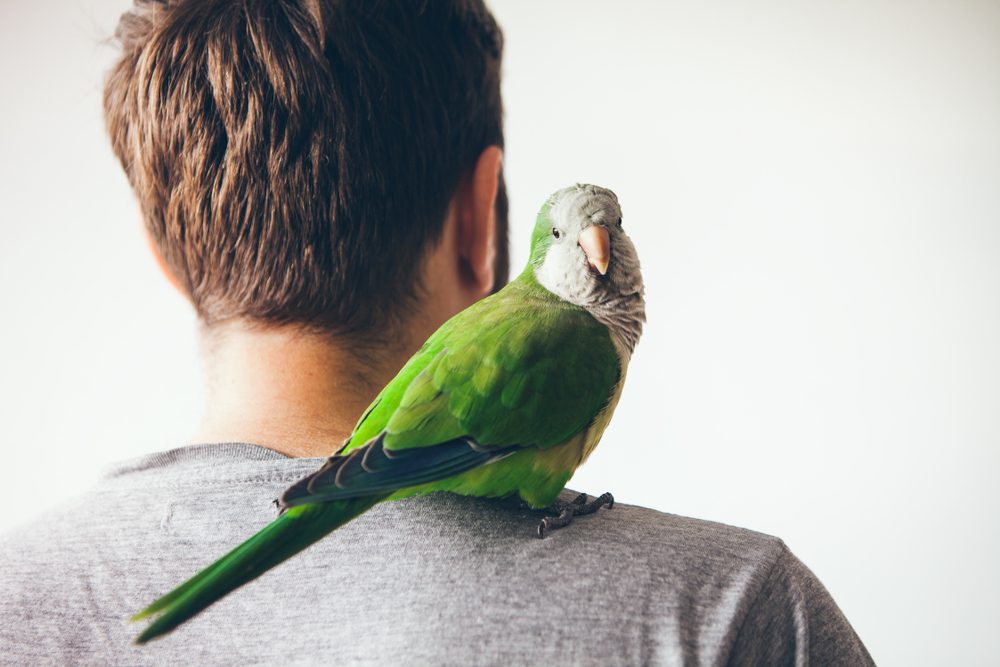
Each bird has its own body language. Knowing how your pet reacts to different stimuli and situations will help you understand when it’s best to leave them alone. Here are a few common cues:
- Fluffed feathers including flexed wings and fanned tail feathers.
- Pinning, or rapid dilation and constriction of the eyes.
- Growling and hissing. Your bird may be upset with you or something in its cage.
- Crouching and weaving also serve as a warning that a bird does not want to be bothered.
How to prevent your bird from biting you
Birds bond best with humans who have earned their trust. That means you will have to spend time taming your bird before it trusts you enough to sit on your finger. As you get to know your pet, you’ll understand when it wants to be left alone:
- Respect your bird’s privacy when it’s tired, hormonal, or recovering from an illness.
- Use a perch to take them to and from their cage instead of your hand. Teach them up and down commands so they can learn how to move from the perch to your finger.
- If they are fearful, determine why. Avoid those objects and situations until you can teach them not to be afraid.
- Move slowly and in a nonthreatening manner. Birds can be startled by loud noises and quick movements. When they feel threatened, they are more likely to bite.
- Set up their cage so that you can change a territorial bird’s food and water from the outside.
What to do when your bird bites
- Resist the urge to scream or yell. Your bird perceives this as attention and only reinforces its behavior. Instead, say “no” firmly in a low voice and show your displeasure with your facial expression.
- Do not hit or slap your bird. This will only make your pet more fearful of your hand. Instead, if the bird is on your hand, lower it. This will distract your pet by causing it to momentarily lose its balance.
- Put your bird down gently and walk away. Like a child having a tantrum, this discourages bad behavior. Return once your pet has calmed down and try holding it again.
- Blow into your bird’s face. This may distract them from biting you.
- Put them on the floor. This will make them feel insecure and less aggressive.
Respect is a two-way street
When you stop to think about it, a bird isn’t much different than a human in many respects. We both get cranky at times. We like to be respected and to know where we stand in the family hierarchy. We don’t like to be bothered when we’re tired or don’t feel well. And sometimes we get a little physical when we get overexcited. Showing your pet bird respect and lots of tender loving care will enhance the bond and lessen the disagreements for the life of your relationship.
Now if the target of your pet’s beak isn’t you, but his or her mates, then read on further to understand the reasons why birds bite other birds.