You may have thought getting a second cat would be good for your “furst” born. Perhaps you hoped the new kitty would give the first one someone to play and cuddle with while you worked.
However, the relationship may be getting off to a rough start. Perhaps the two have literal catfights or show aggressive behaviors, such as hissing or swatting. Though disappointing, it’s common for felines not to get along at first. The ASPCA says aggression is the second-most frequent behavioral problem animal behaviorists see in cats. It may seem harmless given how small cats are, but it can be dangerous. Cat bites and scratches can be painful and cause infections in humans and animals.
It’s also far less stressful for everyone if your cats are friendly towards one another or can at least peacefully co-exist. Here’s how to help encourage your cats to get along.
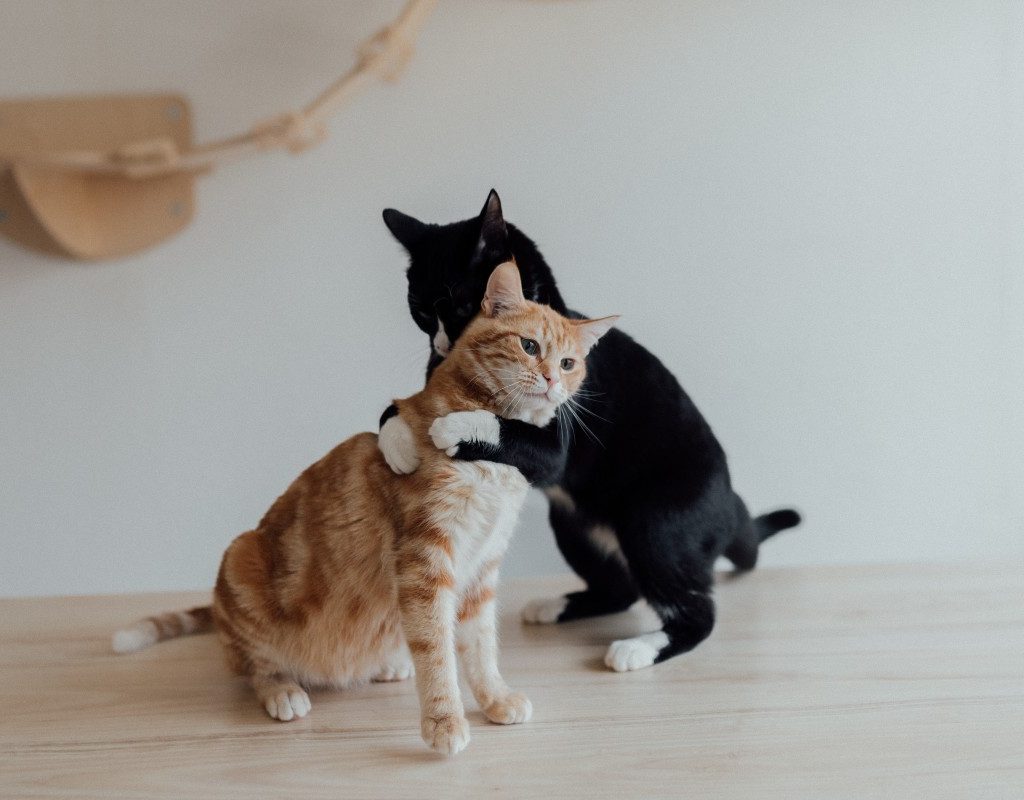
How long does it take for cats to get used to each other?
If your cats are fighting, you may be desperate to see the light at the end of the tunnel. The good news is that there often is one. The bad news is that it’s tough to predict when your cats will get along—or at the very least, ignore each other’s existence. Ultimately, it depends on your cats. Experts say that it can take days, weeks, or even months. Cats may also never truly become best friends, even if that was your hope, but they can usually learn to live under the same roof and be in a room together without issues.
How do you get cats to accept each other?
As the adult human in the room, you have the difficult task of trying to help your cats get along. It can be a challenge, but here are a few tactics to try.
Show patience
You may be in a hurry to have your cats kiss, not hiss, and make up. However, plan to go slowly and show patience. Go at the pace of the cat who is most stressed out, and understand that animals often pick up on your stress. Try to remain calm and loving during the process.
Introduce via scent
Though it’s natural to want to put your cats together and let them work it out, that’s not the best idea. It’s best to have the two of them get used to each other’s scents first. Put the new cat in a cozy spot, like a bedroom. Make sure it’s a space your other cat doesn’t love to lounge in, as that can cause territorial issues. Then, do a blanket swap so the two can smell one another from afar.
Treat them well
Once cats have had at least a couple of days to get used to each other’s scents, you can have them see one another face to face. Keep a baby gate between them—they’re not ready to get too close just yet. Then, give them a high-quality treat or food, like some canned tuna or chopped turkey. Treat them for remaining calm, showing interest in one another between the gate, or even ignoring each other while chilling out near the barrier.
Keep the interaction brief, and try to end on a positive note. If you notice a cat getting stressed, put the new feline back in their safe space.
Extend the time together
Gradually increase their time together, supervising each time and rewarding positive or neutral interactions. After several days or weeks of no-stress interactions, you can graduate to allowing them to be alone together without your watchful eye.
Neuter your male cat
Male cats who aren’t neutered are more likely to show aggressive behavior. Getting the fur baby snipped can help alleviate issues.
Give them their space
Even when your cats are getting along, you’ll want to ensure that they have their own spaces. Put food and litter boxes in separate areas, as these are two necessities cats (understandably) can get especially protective over. Allowing them to have their own tree and bed can give them security and quiet time.

Can I force my cats to get along?
Sadly, not all cats can get along with one another. If you’re struggling to keep the peace between your cats, speak with your vet or an animal behaviorist. They are experts in figuring out how to get cats to get along and may have new tactics to try. Sometimes, the most humane approach is to find a new home for one of the kitties.
Cats aren’t always excited to have a furry friend. They can be downright aggressive towards one another. They may fight, scratch, or hiss. Though kitties are small, catfights can get dangerous. One or both of your cats could get hurt during the fight, leading to an ER visit. You may also get injured trying to break up the fight.
It’s best not to let cats figure it out by fighting, though. You’ll need to step in as the mediator. Keep cats separate, and do a blanket swap so they can get used to each other by smell first. Then, gradually start re-introducing the two, first with a baby gate and then without one. Reward good and neutral interactions with treats. Eventually, you’ll probably be able to leave them alone together. If you’re struggling, speak to a vet or animal behaviorist.