Just like with you, drinking water is essential for your dog’s good health. You might be surprised to learn that the cuddly bundle of fur you just welcomed into your home is actually made mostly of water. Among other things, water is an essential part of your puppy’s dietary needs. Even a 10% loss of body water can cause serious health complications. So just as it’s crucial to observe the frequency of feeding your puppy, it’s also important to make sure they are drinking enough. How much water should a puppy drink? It depends on a few factors.

Ideal water intake for a dog
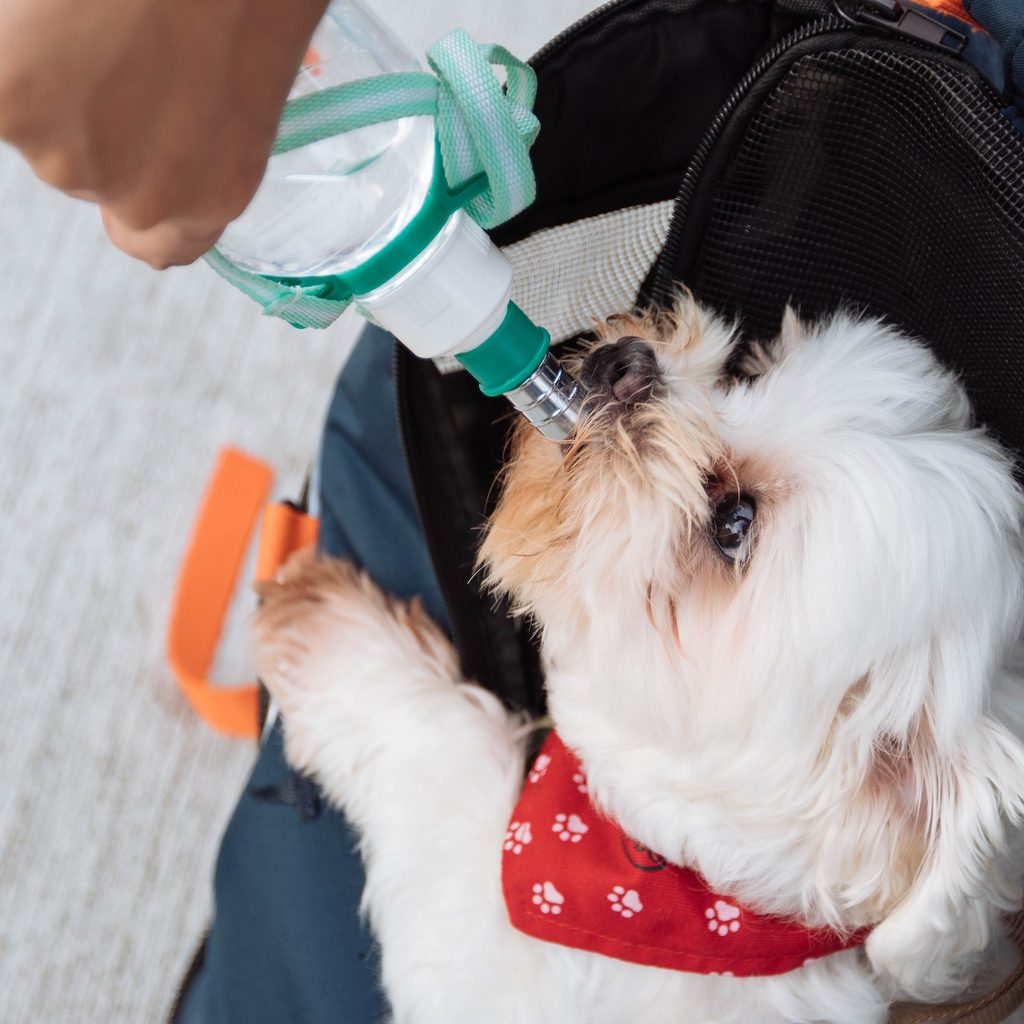
The ideal water intake for a dog depends on their size and activity level. Most experts agree that, on average, a dog should consume 1 ounce of fluid per pound of body weight each day. That means a 45-pound dog should take in about 5.5 cups of fluid on a daily basis. Lactating mothers and puppies need more, as do dogs who are extremely active or live in hot, humid climates.
Why puppies need more water
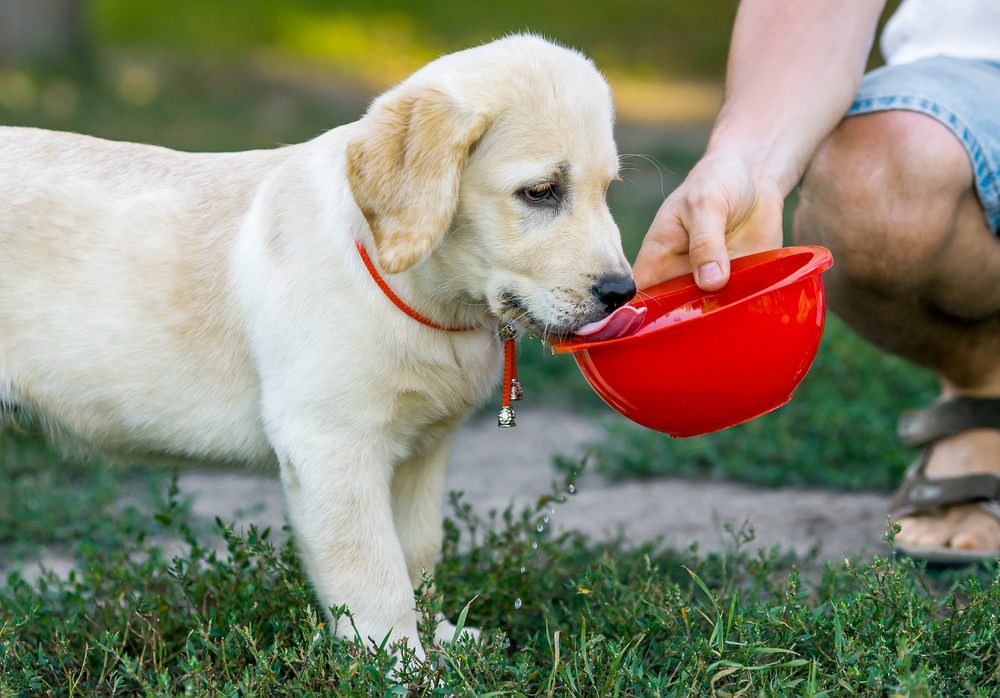
Water constitutes as much as 85% of a newborn puppy, a percentage that changes to 60% when they are grown. As newborns, they receive the hydration they need from their mother’s milk. After they are weaned and begin eating kibble, water becomes essential in helping them digest their food.
Water is an important part of the overall metabolic process, which includes digestion, brain activity, blood flow, and breathing, as well as kidney and liver function. It also helps young dogs grow big and strong.
And, since a dog cools by panting, drinking water is essential for replacing the moisture that evaporates from their tongues, nasal passages, and lungs during the process. Lastly, a well-hydrated dog has a moist nose, which aids in their ability to smell.
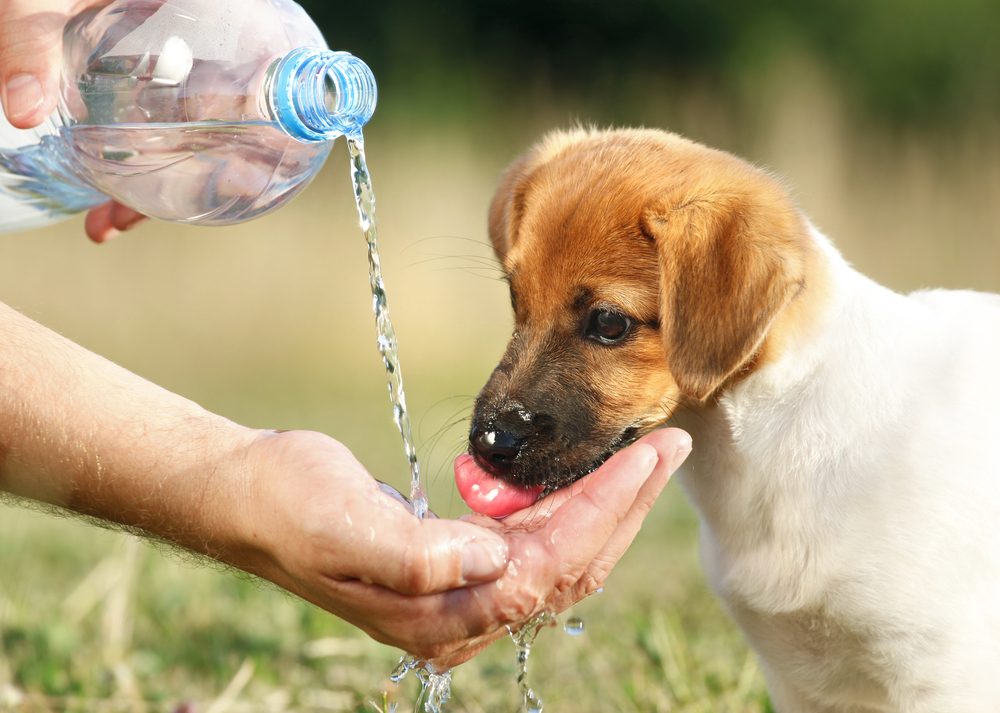
How much water should your puppy drink?
Young puppies who are transitioning from mother’s milk to solid food need 0.5 cup of water every two hours. As they grow, you’ll eventually fall into the recommended 1 ounce per day per pound.
One of the best ways to make sure your puppy is drinking enough water is to set up a schedule. Instead of leaving a bowl out for them to drink at will, ration their intake. Every few hours, measure the appropriate amount of water into their drinking bowl and call your puppy. Encourage your pup to drink the water, and when they do, reward them with praise and a few minutes of playtime.
Most dogs learn to drink enough water all by themselves; however, it’s important to monitor them when they are first learning.
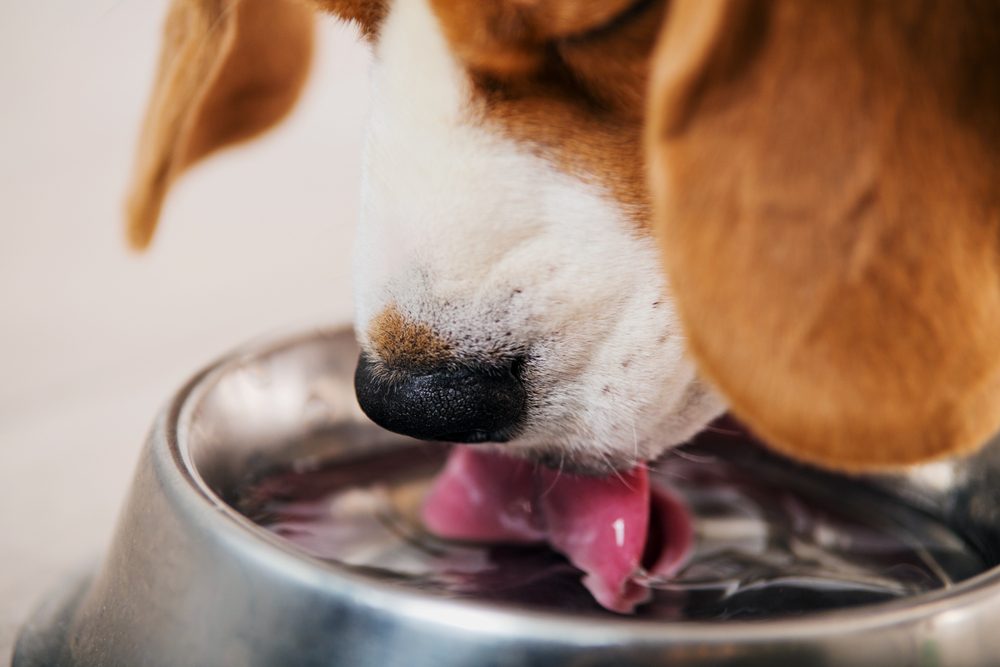
How much water should a puppy drink during potty training?
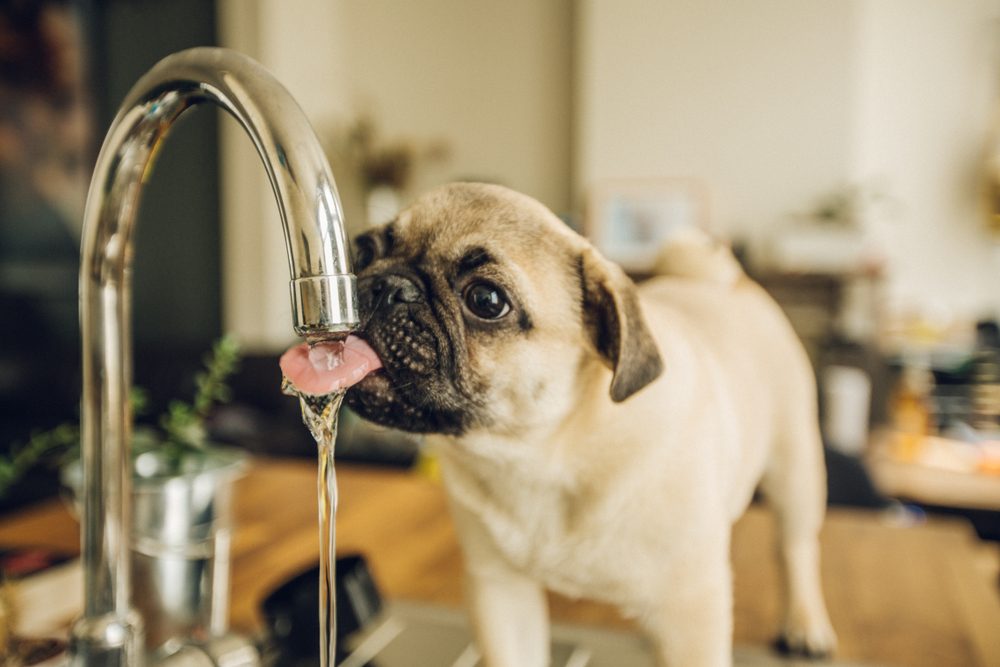
Signs that your puppy isn’t getting the right amount of water
Not enough water intake can cause dehydration and drinking too much water can be just as dangerous.
Dehydration
Puppies who don’t receive an adequate amount of water may suffer from dehydration, a dangerous condition that can be life-threatening. Overheating and illnesses, especially those that include vomiting, diarrhea, and fever, put puppies at risk of dehydration.
Symptoms of dehydration include:
- Dry, pale, or sticky gums
- Loss of skin turgidity, meaning the skin doesn’t snap back into place when gently pinched
- Loss of appetite
- Sunken eyes
- Excessive panting
If your puppy is reluctant to drink (or more inclined to play), try these tricks:
- Place ice cubes in the water bowl. Chewing on ice cubes adds an element of fun while it aids in hydration.
- Flavor drinking water with chicken or beef broth.
- Put a treat at the bottom of the bowl.
Overhydration
If it seems your puppy is drinking too much water, pay attention. Dogs, and puppies, in particular, are super curious. Your little buddy may just be playing in the water bowl, which is more of a behavioral issue than a medical problem.
But if you think your puppy is doing more drinking than playing, they may have an underlying medical issue that needs to be addressed immediately. Excessive drinking may be signs of fever and infection or more chronic conditions, such as diabetes, Cushing’s disease, kidney, and liver disease.
Symptoms of overhydration include:
- Nausea
- Vomiting
- Lack of coordination
- Lethargy
- Bloating
- Dilated pupils
- Excessive salivation
- Pale gums
As you can see, water is an important part of your puppy’s good health (and sleeping well through the night). Remember to supply them with an adequate supply of fresh water every day and take notice of their health frequently. Just as sleep training your puppy is beneficial for their overall well-being in the long run, teaching them good water etiquette while they’re young will help, too. Closely monitor their activity, and you’ll be rewarded with a healthy, active pup and a lifetime of companionship.