If you’ve just become a surrogate parent to a litter of puppies, you have a lot of amazing firsts before you. While the first real bowel movement that you wind up scooping and first walk after their vaccines might be the most memorable, you’ll also never forget when your new pupper opens their eyes for the first time.
Like so many mammals, these bundles of joy are born underdeveloped compared to some of our distant cousins, like turtles that make a break for the ocean and take care of themselves within hours of emerging from the egg. So when do puppies open their eyes? We’ll walk you through what that looks like.
When do puppies open their eyes?
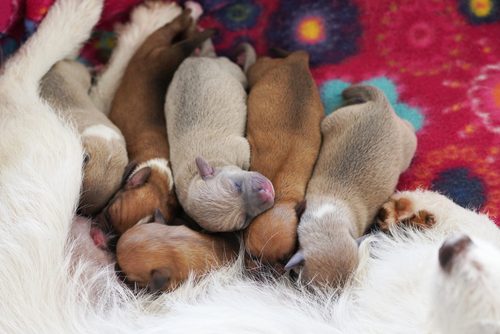
At birth, you’ll see a miniature dog that looks a lot like their parents but with eyes wide shut. That’s because when they’re the age of 0, their optic nerves are incredibly sensitive to light. Keeping the lids fully down helps the eyes develop in the background while the puppy grows and changes outwardly as well. In addition, this protects the very sensitive eyeballs from dirt while they don’t have as much capacity for healing.
Rarely do baby dogs open their eyes in as little as 5 days, but you’ll usually see it between 10 and 14. This can vary by breed, though, and you should check in with an experienced vet or breeder for an exact timeline. The whole process takes a couple of days, and even within the litter, some dogs might start to open their eyes before others.
What do puppies see after opening their eyes?

If you’ve ever had an eye procedure, you know the first hours or days after you open them will be hazy. At the beginning, they will have trouble focusing and still be very sensitive to light. We recommend having a dimly lit area for the emerging explorers so they can get used to their new eyes while they’re fresh.
When you look at the little orbs, they might seem foggy and will still be blueish. Over the next few weeks, they’ll change into brown (or stay blue in a few breeds). At about 4 weeks old, their eyes have fully developed and are ready to make their way into the world.
When do puppies start walking and talking (well, barking)?
Your newborn has a lot of things to learn. You’ll notice the brood start to crawl a bit at around day seven. By two weeks, they can walk a bit and at three weeks, they’re up and moving about. This is certainly a far cry (or bark) from humans, who don’t take their first steps until about a year old.
Similarly, dogs start vocalizing right away (just as with any baby from the animal kingdom), but can bark in two months or so; however, they might start trying out their voice even earlier. Don’t worry — you’ll have a chorus of yippy puppies barking at the mail delivery person in no time.
What about your dog’s hearing?

Just as with his eyesight, a pup’s hearing hasn’t developed right away, either. In fact, they’re born fully deaf. They can’t hear very well at all until 3 weeks of age or so. Since dogs rely so heavily on their ears, you may notice them start to listen and become interested in the noises around them at about that time as well. By 2 months old, they have way better hearing than we do, roughly four times more acute.
Dogs with upright ears can even use those to point the sound into their ear canals, which are a lot deeper, and therefore, better than ours. According to the American Kennel Club (AKC), “This can also make dogs more sensitive to some loud noises than humans — this explains why thunder or fireworks may be puzzling, frightening, or even painful,” explained Dr. Jerry Klein, AKC chief veterinary officer.
When you have your first litter of small dogs, you’ll have to navigate entirely new territory as a pet parent. As with so many parts of being an animal owner, you have to let your brand-new brood do things on their own time. While we’ve laid out the general timeline, you should see some variation across breeds and size and even the individual pet. The important thing is to let your babies figure everything out for themselves. Never help a dog’s eyes open by pulling them back, which can cause blindness if the eyeballs aren’t ready. Instead, if you have a four-legger that seems to be lagging behind in this area, take them to the vet to see what might be behind their lack of sight.