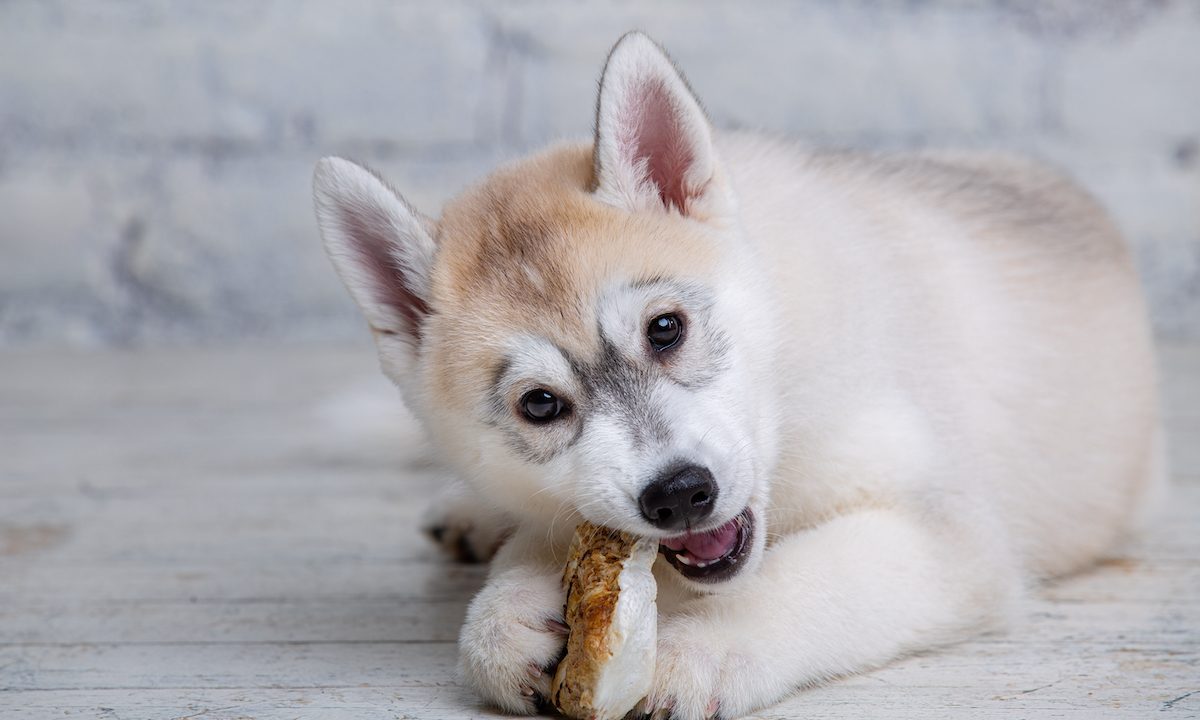
It’s no secret that dogs are carnivores. Meat and protein sources make up a large portion of the canine diet, and the smell of meat can get dogs drooling. Cooking chicken for dogs is a rite of passage among pet parents, but what about other meats?
If you find yourself wondering, “Should dogs eat pork?” — you’re not alone. Pork is a less commonly discussed protein compared to chicken, beef, or even turkey, so it can be tricky to know whether or not to share this food with your dog. Luckily, we’re here to clear things up for your pup’s safety and your convenience.
Should dogs eat pork?
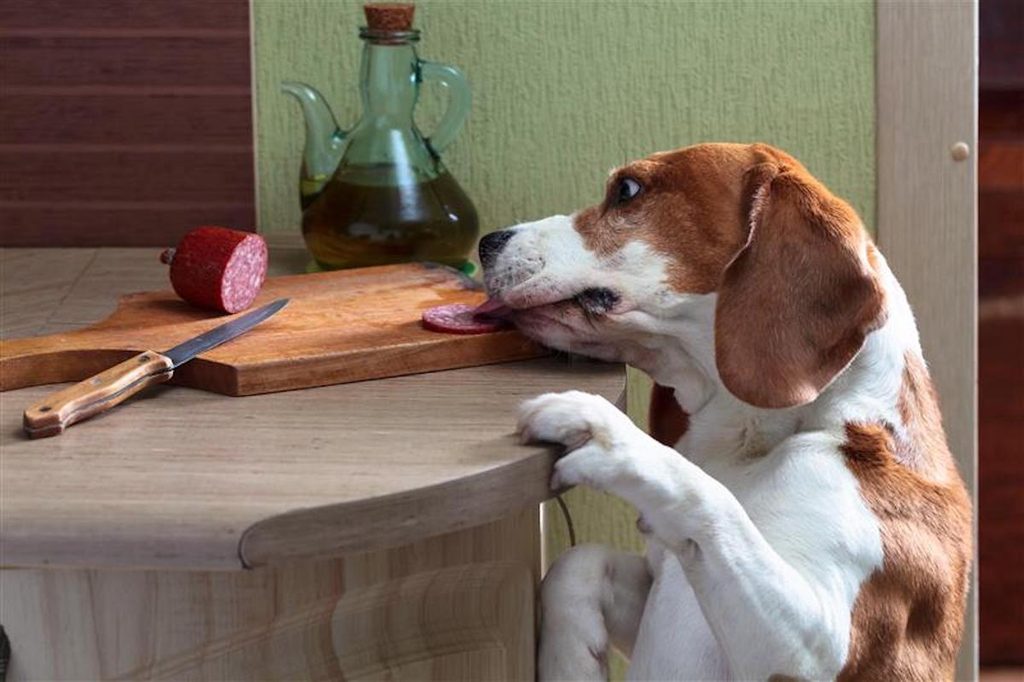
This question has a complicated answer. Although pork is safe for dogs to eat, that doesn’t mean it’s healthy for them. In fact, pet parents should never feed some pork products to their dogs! Fresh or ground pork, however, can even be found in some dog food formulas, so it can have a place in a dog’s daily diet. When you give your dog pork, though, it’s best given as an occasional treat due to its high fat content.
Can dogs eat raw pork?
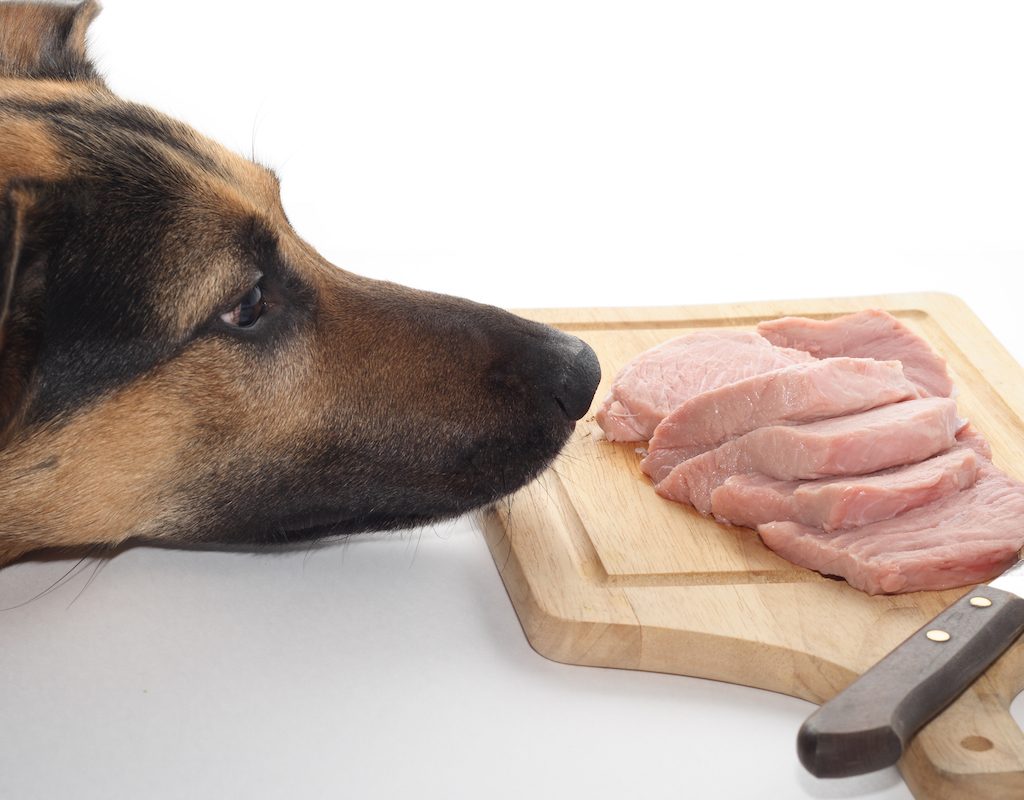
Raw diets for dogs have been around for years, but raw pork is not recommended to feed to your dog. Undercooked pork products may contain harmful bacteria and trichinella parasites — aka pork roundworms — which can cause serious illness. Puppies and senior dogs may be more at risk of severe symptoms that range from muscular to gastrointestinal.
Here are the symptoms of trichinella parasites to keep an eye out for:
- Gastrointestinal upset
- Diarrhea
- Vomiting
- Muscle inflammation
- Muscle pain
- Muscle stiffness
If you notice any of these symptoms or if your dog has gotten into raw pork, don’t wait to book an appointment with your dog’s veterinarian. Humans can contract these illnesses, too! To avoid the risk of bacterial and parasitic infections, be sure to cook pork to at least 145 degrees Fahrenheit before eating or sharing with your dog.
Can dogs eat pork bones?

Dogs have been portrayed alongside bones in cartoons and media for decades, but not all bones are safe for pups to chew. Cooked pork bones can be incredibly brittle and fragile, which makes them more likely to splinter and break in your dog’s mouth. Even worse, pieces can get caught in their throat or digestive tract.
Instead of risking it, you can buy your dog a number of different chew toys, fake bones, or bones meant for chewing. Your local pet store will have so many options to choose from, but it may take some trial and error to find your dog’s favorite bone.
What pork products can dogs eat?
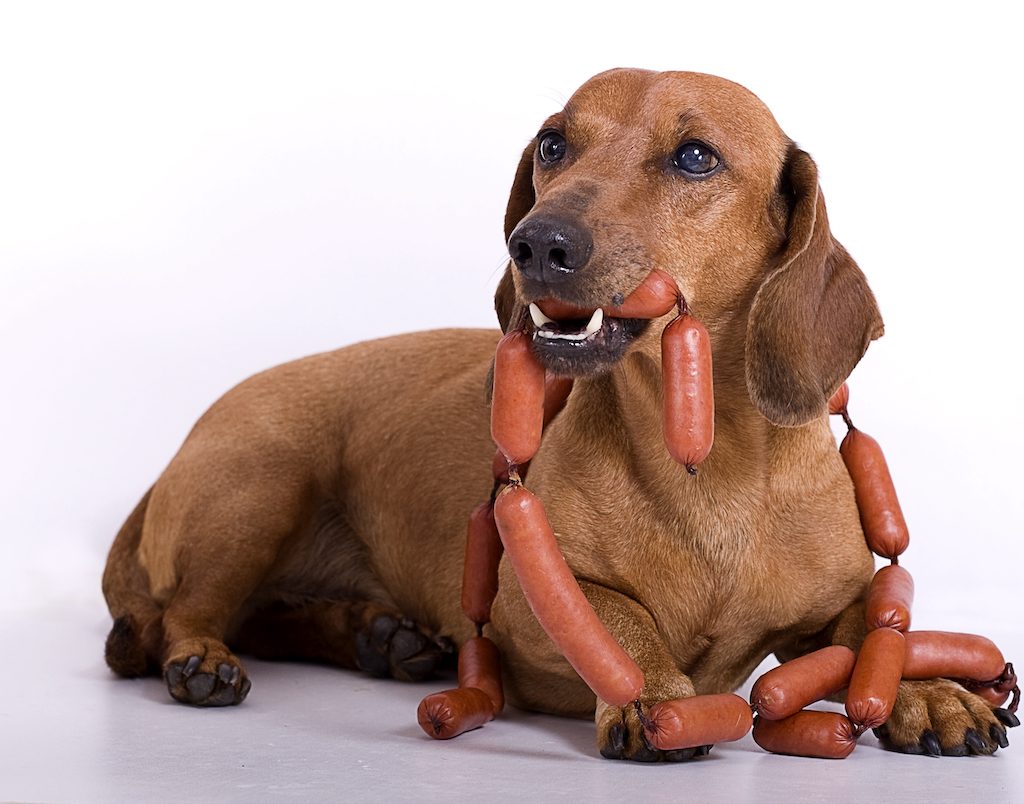
Bacon is one of the most popular pork products around, but your dog shouldn’t have very much of this tasty treat. It’s extremely high in fat and can cause pancreatitis in severe cases, though simple stomach upset is much more common. Because bacon is also high in salt, dogs can experience even more negative side effects.
Ham, like bacon, is also high in salt. It carries the same risks as bacon, so it should only be fed to dogs as an occasional dog treat. Just a bite, please! If your ham is glazed or covered in any kind of sauce, it’s no longer safe to share with your furry friend.
Highly processed pork products, like bologna, sausage, and even hot dogs, can be incredibly high in salt and fat. For this reason, they are not ideal to share with pets. Increased salt intake can cause issues like dehydration, vomiting, diarrhea, and lethargy. In severe cases, salt toxicity can be fatal.
Plain, cooked cuts of pork are the safest option when sharing pork with your dog. If you can, select a lean cut, like a loin or tenderloin, to lower the meat’s fat content as much as possible.
How to prepare pork for dogs
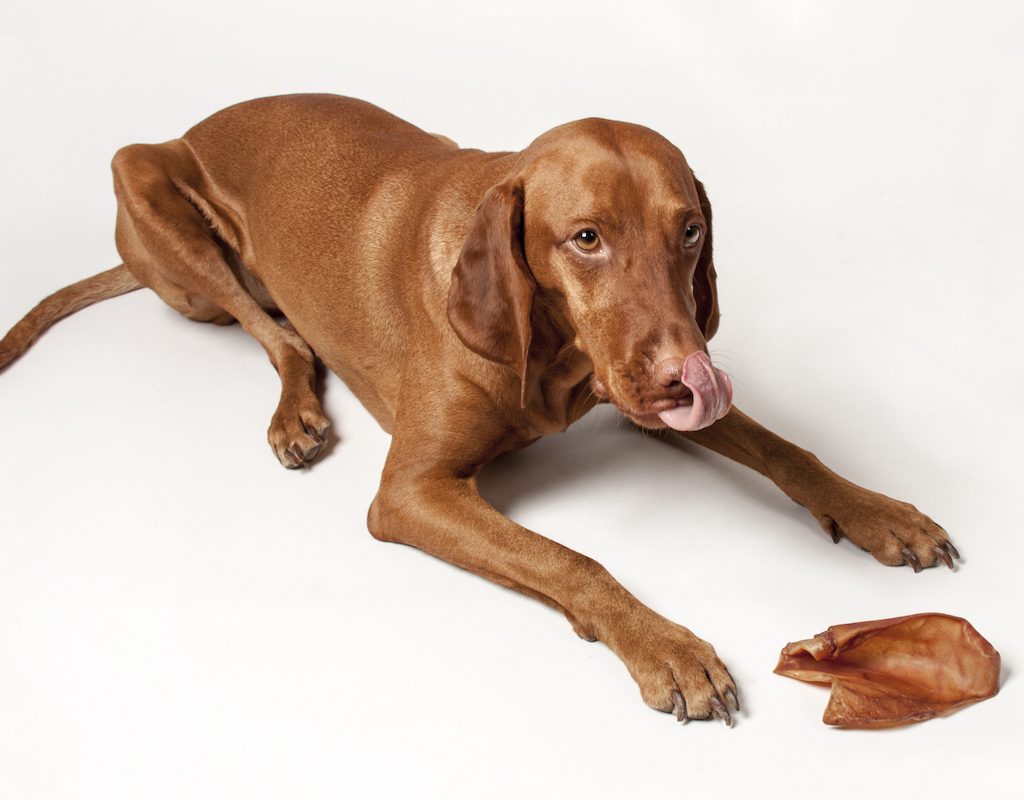
When preparing a cut of pork for dogs, keep it as simple as possible. Trim off as much excess fat as you can before cooking, and skip any seasonings or sauces. Remove bones if necessary! Use a cooking method that uses as little oil as possible, like baking, grilling, or air frying. This way, your dog will be eating nothing except fresh meat, which will get their tail wagging every time.
Preparing pork for your dog at home may be a time-consuming process, but it’s a much safer option than sharing a savory store-bought treat. Besides, if you’re already cooking for yourself, why not think of your furry friend, too?