
When you lie down in bed each night, can you count on your cat to climb on top of you shortly after? Many cats choose to sleep with or on top of their human companions. While this can make for a cozy nap, it might also affect your sleep. You may be wondering, “Why does my cat lie on me,” or, “Why does my cat sleep on my chest?” The answer to these questions can affect how you decide to handle your nighttime companion.
Why does my cat sleep on me?
If you’ve been wondering why cats sleep on humans, there are many different reasons.
- Warmth: They may be seeking you out for your body heat, especially on colder nights.
- Security: Some cats may sleep next to you or on you out of reassurance. They see you as a comforting person who can keep them safe at night.
- Marking territory: Cats are territorial, so they may be marking you with their scent.
- Bonding: Your affectionate cat may want to spend time with you, and snuggling up at bedtime is an easy way to do that without being interrupted by your getting up and leaving the room. As your cat snuggles up, he may be developing his bond with you and showing you that he wants to spend time with you.
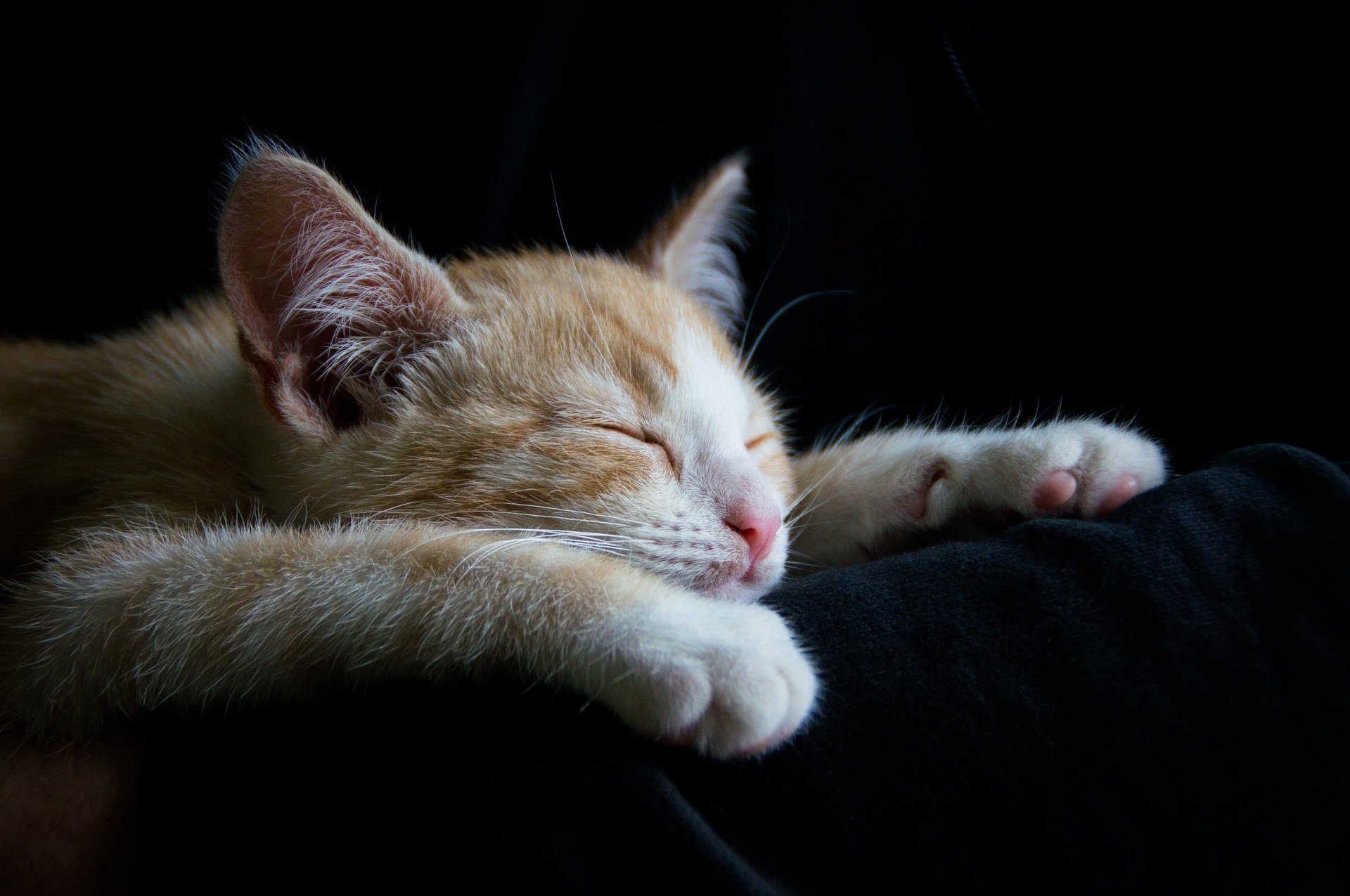
Where your cat sleeps
Your cat may sleep on different parts of your body for different reasons, too. Some cats delight in sleeping on their human’s head. This might be uncomfortable for you, but your cat might prefer it because your head doesn’t move often as you sleep. Your head also radiates heat, so your cat might curl himself up on your pillow to stay warm during the night.
Some cats prefer to sleep on your chest. As you sleep, your slow and steady breathing could be appealing to your cat. Your chest also creates a broad, relatively flat area where your cat can soak up a lot of your body heat.
Understanding cat body language
Looking at your cat’s body language can give you extra insight into what’s motivating him to join you to sleep. A cat who is relaxed, content, and happy to be snuggling up with you may exhibit various signs. He may stretch out on his back, exposing his belly — a vulnerable part of his body — and truly relaxing. He may sleep with his legs extended out from his body instead of curled up tight. He may purr and look at you with squinted eyes, blinking slowly. Your cat might even rub his head against you, marking you with his scents and claiming you as his own. In all these movements, he’s demonstrating that he’s happy and relaxed.
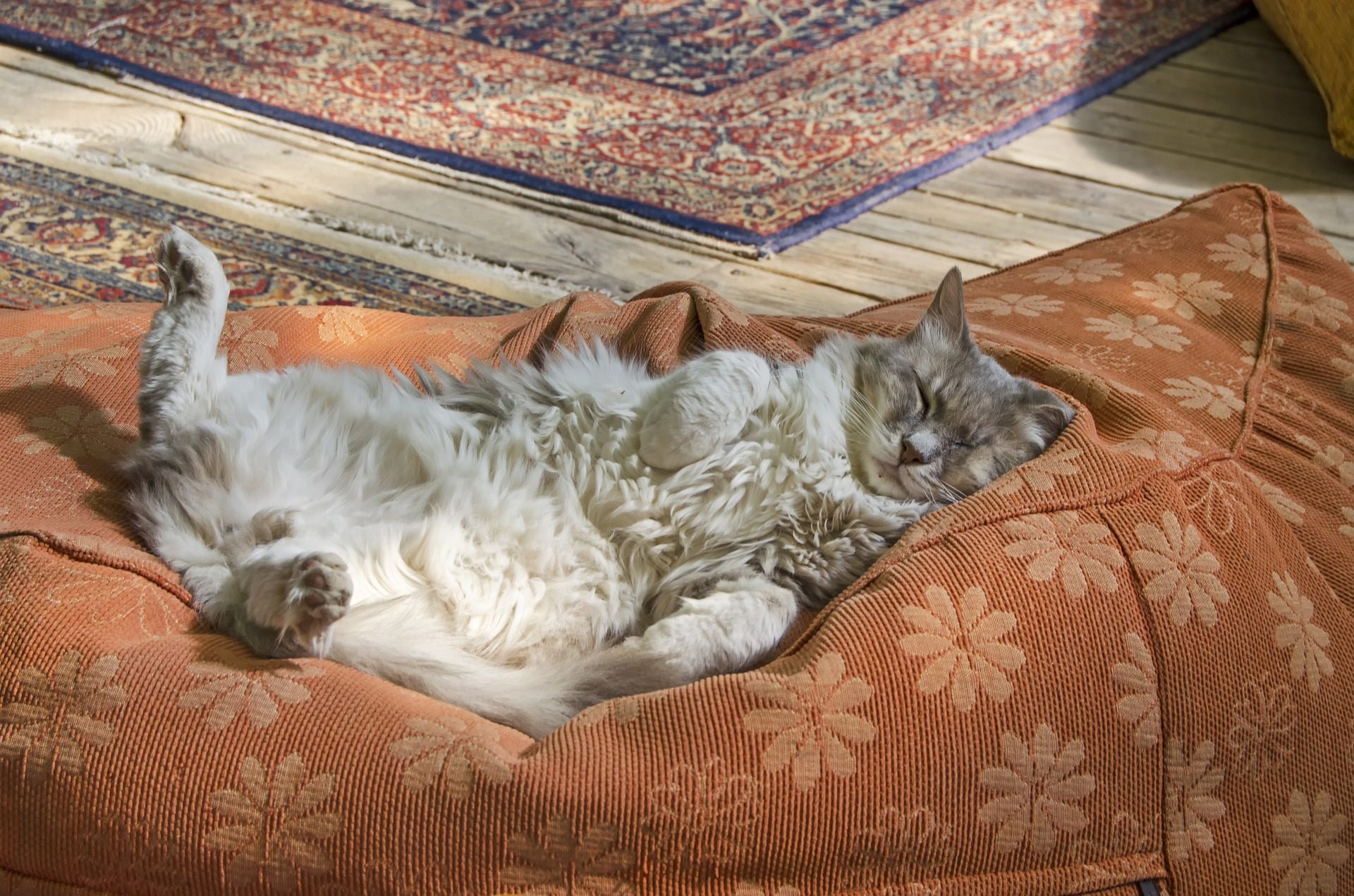
A cat who assumes a different posture might be seeking you out for security or warmth. In these cases, your cat is likely to be curled up tightly, protecting his belly. He may only half-close one or both eyes as he dozes, leaving himself alert enough to easily be fully awake in just seconds. Some cats may assume the “bread loaf” position, where they tuck their front legs under their bodies. In this pose, your cat can lightly doze yet easily jump to his feet if he feels threatened.
Signs of trouble
In most cases, your cat’s choosing to sleep on you is perfectly normal, especially if your cat makes a regular habit of it. A cat who frequently seeks you out for naps may just be highly attached to you or looking to deepen that bond. Every cat is different, so you’ll need to spend some time observing your cat’s preferences to get a sense of whether he likes to regularly join you in bed at night.
Your cat’s sleeping habits can also alert you to potential health issues he might have. If your cat rarely sleeps with you yet suddenly starts sleeping on you constantly, it could indicate that he’s not feeling well. If this behavior is paired with your cat being unusually sedate or sleeping more than usual, then it’s important to schedule an appointment with your vet to have your cat checked out.
Your cat’s sleeping habits can vary with the seasons, with household changes like the addition of a new pet, and even with his moods. However, paying attention to your cat’s sleeping habits over time can help you stay aware of how he’s feeling and might warn you when a health issue is starting.